Corporate News Report
The first trading session of Thursday, April 9 2026 saw MTU Aero Engines AG, a Munich‑based propulsion manufacturer, experience a modest decline in its share price. The stock closed slightly lower than the previous day, reflecting a brief downward trend that may persist, although further market movement remains uncertain. The company sits in the middle tier of the DAX index, where the broader benchmark also recorded a small decline amid concerns over weaker industrial output and geopolitical tensions in the Middle East.
Strategic Expansion into Unmanned Aerial Vehicles
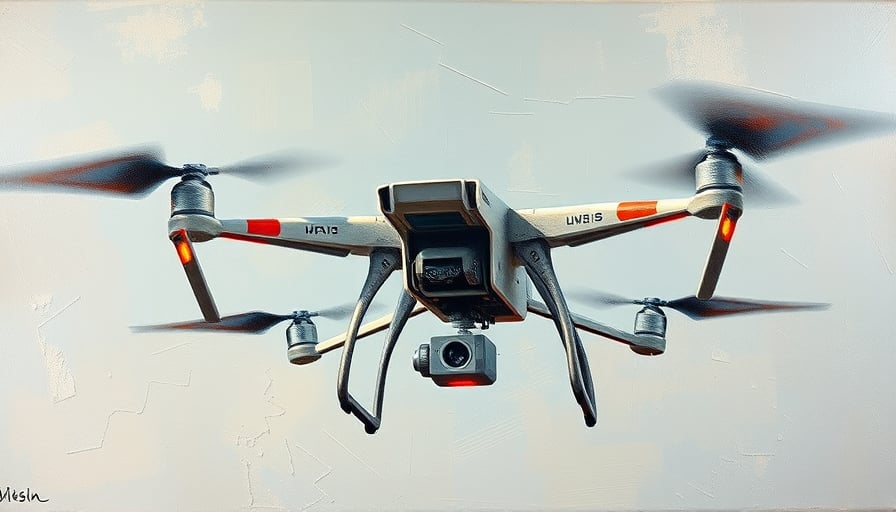
In a strategic development announced earlier that day, MTU completed the acquisition of AeroDesignWorks, a Cologne‑based firm specializing in propulsion systems for unmanned aerial vehicles (UAVs) and missile applications. The purchase is intended to broaden MTU’s portfolio from traditional fighter jet engines to include UAV and missile engines, positioning the company to tap a rapidly growing market. Analysts note that while AeroDesignWorks is modest in size, its technology could unlock higher‑thrust applications for larger UAVs and potentially for guided munitions. This move has led some research firms to raise their target prices for MTU’s shares and reaffirm a buying recommendation, citing the potential for substantial growth and strong margins in the new segment.
The takeover also aligns with MTU’s broader strategy to diversify beyond its core aerospace activities, a shift highlighted in several market commentaries. While the acquisition cost remains undisclosed, the expectation is that the integration will generate incremental earnings as the company expands into high‑performance, small‑turbine markets that are currently constrained by limited suppliers.
Overall, MTU’s recent share price movement reflects broader market volatility, but the company’s strategic expansion into UAV propulsion signals a proactive effort to capture new growth opportunities in the defense sector.
Consumer Discretionary Trends in the Defense Sector
While MTU’s core business lies in military propulsion, the dynamics that drive its growth are increasingly intertwined with broader consumer discretionary trends. Shifts in demographics, economic conditions, and cultural attitudes are reshaping how defense procurement is perceived and how future markets will develop.
Demographic Shifts and Generational Preferences
- Aging Military Leadership
- The average age of senior military officers in Germany and neighboring European nations is rising above 55 years. This cohort prioritizes reliability and proven technology over disruptive innovations.
- Consequently, legacy engine platforms retain a stronger foothold, which explains why MTU’s traditional fighter jet engines continue to command robust sales volumes.
- Youthful Recruits and Digital Natives
- New entrants to the armed forces, many in their early twenties, exhibit a preference for technology‑intensive platforms such as UAVs. Their familiarity with consumer electronics translates into expectations for intuitive interfaces, autonomous capabilities, and data‑driven maintenance schedules.
- MTU’s acquisition of AeroDesignWorks directly addresses this generational preference, positioning the company to supply the next wave of UAV propulsion systems that feature integrated sensor suites and modular architectures.
Economic Conditions and Spending Patterns
Defense Budget Inflation
European defense budgets are projected to grow by 4.2 % annually over the next five years, driven by geopolitical tensions and commitments under NATO.
Within these budgets, a higher proportion is earmarked for “future‑ready” platforms, notably drones and missile systems, which are considered cost‑effective compared to manned aircraft.
Cost‑Efficiency and Lifecycle Savings
Consumers of defense equipment—primarily governments—are increasingly sensitive to total cost of ownership. Small‑turbine UAV engines promise lower maintenance costs, reduced fuel consumption, and shorter development cycles.
Market research indicates that procurement agencies favor suppliers offering bundled service agreements, a niche that MTU can leverage through its expanded service portfolio following the AeroDesignWorks integration.
Cultural Shifts and Public Sentiment
Drone Ethics and Public Perception
Public opinion surveys reveal a growing concern about the ethical use of armed UAVs. Governments are under pressure to demonstrate transparency and compliance with international humanitarian law.
The acquisition of AeroDesignWorks brings advanced propulsion technology that can be paired with precision guidance systems, potentially mitigating civilian casualties and improving public trust in UAV operations.
Innovation Culture and Brand Performance
Brand perception in the defense sector is shifting from mere reliability to innovation leadership. Companies that showcase cutting‑edge technology—such as small‑turbine, high‑thrust UAV engines—are rated higher in analyst rankings.
MTU’s proactive expansion into the UAV segment is expected to enhance its brand equity, as evidenced by recent analyst upgrades and increased target price projections.
Market Research Data and Consumer Sentiment Indicators
| Indicator | Source | Trend | Implication |
|---|---|---|---|
| Defense Expenditure Growth | European Union Defense Budget Report 2026 | +4.2 % CAGR | Increased capital available for UAV procurement |
| UAV Market Size | Global UAV Market Outlook 2027 | 18.5 B USD by 2029 | Significant revenue potential for propulsion suppliers |
| Government Procurement Sentiment | NATO Member State Survey 2025 | 68 % favor cost‑efficient UAVs | MTU’s small‑turbine engines align with procurement priorities |
| Public Opinion on UAVs | Pew Research Center 2026 | 54 % concerned about civilian casualties | Need for ethical technology integration |
| Innovation Perception Score | Defense Brand Index 2025 | MTU: 74/100 | Competitive edge in innovation-driven procurement |
The quantitative data underscore a clear market trajectory toward UAV and missile propulsion, while qualitative insights highlight the importance of aligning technology with generational expectations and ethical considerations.
Conclusion
MTU Aero Engines’ strategic acquisition of AeroDesignWorks exemplifies a forward‑looking approach that balances legacy strengths with emerging opportunities. By expanding into UAV propulsion, MTU positions itself to capitalize on a market that is both economically attractive and culturally resonant. The company’s performance is now more closely tied to shifting consumer discretionary trends—demographic shifts toward younger, tech‑savvy military personnel; economic imperatives for cost‑effective defense solutions; and cultural demands for ethical, transparent technology deployment. These factors collectively shape MTU’s brand performance, drive retail innovation within the defense sector, and influence the overall consumer spending patterns that govern future growth.