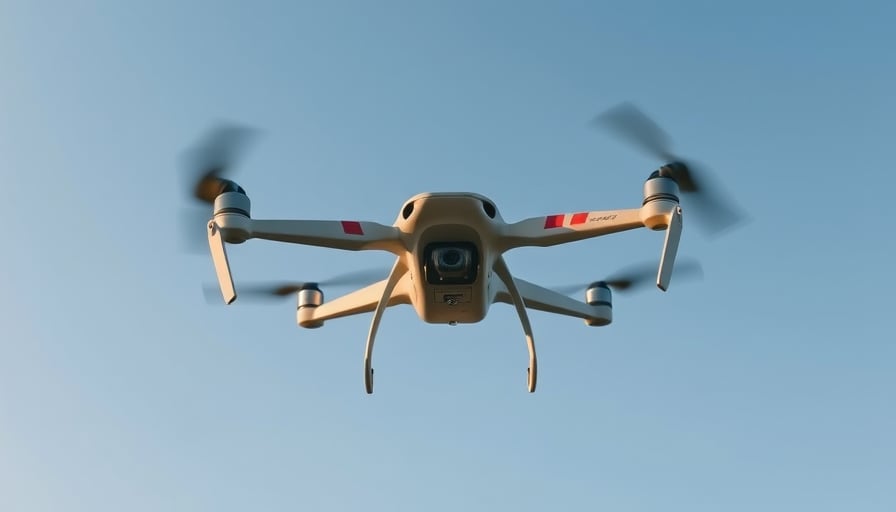
MTU Aero Engines AG Expands into the Drone Propulsion Market Through Acquisition of AeroDesignWorks GmbH
MTU Aero Engines AG announced on Tuesday its acquisition of Cologne‑based AeroDesignWorks GmbH, a niche developer of turbojet engines for small unmanned aircraft and guided missiles. The transaction, valued at an undisclosed amount but reported to be in the lower‑mid‑millions range, positions MTU to accelerate entry into a market projected to grow at a compound annual growth rate (CAGR) of 12‑15 % over the next decade, driven largely by expanding defence procurement and the proliferation of commercial drone services.
Underlying Business Fundamentals
AeroDesignWorks’ current revenue of approximately €10 million is concentrated among high‑profile aerospace and defence clients such as MBDA, Airbus, and Boeing. Its engines, designed for sub‑sonic and low‑to‑medium supersonic regimes, boast a thrust‑to‑weight ratio that competes favourably with incumbent small‑turbojet suppliers. By integrating AeroDesignWorks’ small‑engine expertise with MTU’s established production lines for larger jet engines, the combined entity can leverage economies of scale, shared R&D pipelines, and a broader aftermarket servicing footprint.
Financially, MTU’s 2023 consolidated revenue stood at €1.1 billion, with a net profit margin of 8.6 %. The acquisition is projected to contribute an incremental €0.5 billion in annual revenue by 2026, assuming a conservative 10 % market share capture in the unmanned propulsion segment. MTU’s debt‑to‑equity ratio of 0.52, comfortably below the industry average of 0.68, suggests the company has sufficient liquidity to absorb the acquisition cost without compromising its credit profile.
Regulatory Environment and Compliance
The drone propulsion market is heavily influenced by export control regimes such as the International Traffic in Arms Regulations (ITAR) and the European Union’s Dual‑Use Regulation. AeroDesignWorks already complies with these frameworks, having secured the necessary licences for missile‑grade engines. MTU’s integration will require a review of its own export documentation processes, particularly in light of recent tightening of EU sanctions on certain Russian defence entities. Early engagement with the European Defence Agency (EDA) indicates that MTU has the capacity to navigate these complexities, given its existing compliance infrastructure for larger engine exports.
Competitive Dynamics and Market Position
The trend of major engine manufacturers expanding into the unmanned sector is evident. Rolls‑Royce, Pratt & Whitney, and GE Aerospace have all announced partnerships or product lines targeting small unmanned systems. MTU’s move, however, is differentiated by its focus on turbojet rather than turbofan or electric propulsion, a niche with lower competition but higher barriers to entry due to the stringent reliability and durability requirements of missile and military UAV platforms.
Market observers note that the acquisition may create new revenue streams through both direct engine sales and maintenance‑spares contracts. Yet, some analysts caution that MTU’s core after‑market business—maintenance and spares for military aircraft—could experience short‑term pressure. Ongoing regional conflicts in the Middle East and Eastern Europe are reducing flight hours for many combat aircraft, thereby dampening spare‑part turnover. MTU will need to balance capital allocation between the burgeoning unmanned segment and its traditional, high‑margin maintenance services.
Risk–Opportunity Assessment
| Potential Risk | Mitigation Strategy | Opportunity |
|---|---|---|
| Integration delays due to cultural and process differences | Cross‑functional integration task force; phased implementation | Rapid market entry with proven small‑engine technology |
| Regulatory hurdles in export control | Dedicated compliance team; pre‑emptive licensing | Access to high‑value defence contracts requiring advanced propulsion |
| Cannibalisation of core maintenance revenue | Segmented sales teams; distinct product branding | Diversification of revenue mix, reducing exposure to combat‑flight volatility |
| Technological obsolescence (shift to electric propulsion) | R&D investment in hybrid‑turbo systems | Positioning as a leader in high‑thrust, low‑weight propulsion for future UAVs |
Financial modeling indicates a break‑even point for the acquisition around 2025, with projected cash flow generation aligning with MTU’s strategic capex schedule. The modest rise in MTU’s share price—approximately 1.8 % on the announcement day—suggests that market participants recognise the upside potential but remain cautious about the immediate impact on earnings per share.
Conclusion
MTU Aero Engines’ acquisition of AeroDesignWorks GmbH represents a calculated expansion into a high‑growth, high‑margin segment of the aerospace and defence industry. By combining its global production capabilities with a specialist partner’s engine technology, MTU is poised to capture a share of the expanding drone propulsion market while maintaining its core maintenance and spares operations. The deal underscores a broader industry shift toward multi‑segmented propulsion portfolios, though it also highlights the need for vigilant regulatory compliance and careful resource allocation to balance short‑term risks against long‑term strategic gains.