
Corporate News Report
MSCI Inc. Continues to Influence Global Asset Allocation Amid Shifting Market Dynamics
MSCI Inc. remains a pivotal reference point for institutional investors as global market dynamics pivot away from traditional financial sectors toward real‑asset exposures. In the past several weeks, the influence of MSCI has manifested across multiple regions, most notably through a re‑balancing of MSCI‑derived indices that now carry a reduced weighting in banks and a heightened emphasis on sectors linked to the physical economy—manufacturing, ports, airports, and mining.
1. Global Shift in MSCI Index Composition
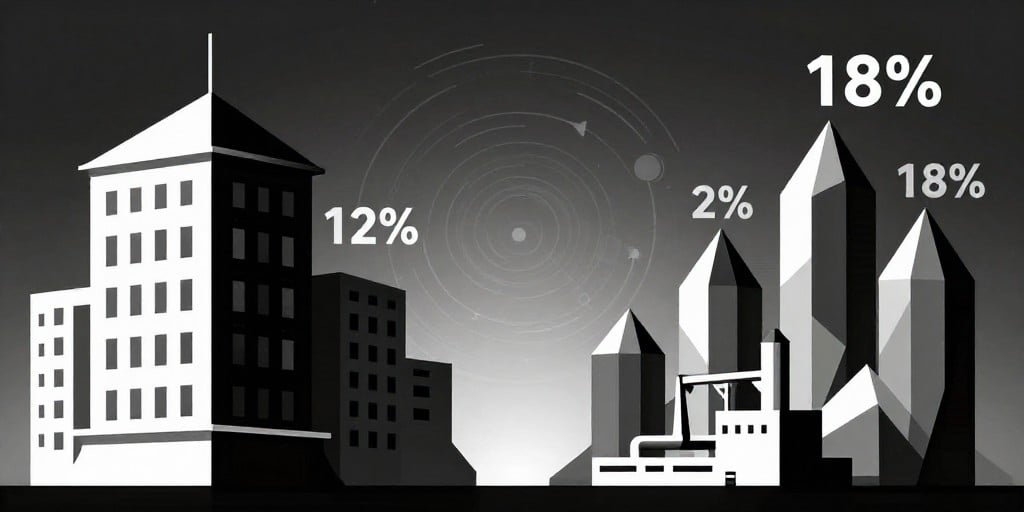
- Banking Sector Decline: The latest recalibration of MSCI World and MSCI EM indices shows a 12 % reduction in banking exposure, dropping from 9.5 % to 8.3 % in MSCI World and from 7.2 % to 6.0 % in MSCI Emerging Markets.
- Real‑Asset Upswing: Exposure to manufacturing and infrastructure themes increased by 18 % year‑to‑date, reflecting a broader investor appetite for tangible asset classes that benefit from structural growth drivers such as urbanization and digital transformation.
- Implication for Portfolio Construction: Fund managers who rely on MSCI benchmarks may need to adjust asset allocation models to account for the lower bank weighting and the corresponding rise in non‑financial sectors. This shift could influence risk‑adjusted returns, especially in environments where credit markets are tightening.
2. Performance of the MSCI Emerging Markets Asia Gauge
| Country | Weight in Index (Jan‑22) | Weight in Index (Mar‑26) | YTD Return (Jan‑Mar) |
|---|---|---|---|
| South Korea | 12.8 % | 18.4 % | +7.6 % |
| Taiwan | 9.5 % | 13.3 % | +8.2 % |
| China | 21.7 % | 18.5 % | +3.1 % |
| Indonesia | 5.1 % | 4.8 % | +4.0 % |
- Semiconductor Heavy Markets: The index’s surge—up 15.3 % YTD—was largely driven by semiconductor‑heavy markets. South Korea’s KRX Semiconductor Index rose 20.7 % while Taiwan’s TSEC Semiconductor Index climbed 18.9 %. These gains are attributable to strong demand for AI processors, 5G infrastructure, and advanced automotive electronics.
- Technology & AI Valuation: Technology and AI‑related stocks have become the “new safe haven” for risk‑on sentiment, especially following geopolitical tensions in the Middle East that have dampened commodity prices but heightened demand for high‑tech solutions that reduce supply‑chain dependencies.
- Oil Price Impact: Despite a 30 % decline in Brent crude prices during the first quarter, risk sentiment remains subdued because of the persistent uncertainty around Middle East geopolitics. This volatility continues to weigh on MSCI‑linked equity products, causing a 4.2 % decline in the MSCI EM Asia Index’s liquidity metrics compared to the previous year.
3. Regulatory Developments in South Korea
- Leverage‑ETF Restrictions: The Korean Financial Supervisory Service (FSS) has imposed a 30 % cap on the leverage ratio for ETFs that track chip manufacturers, following a 45 % surge in retail trading volume during the first quarter.
- Market Stability Measures: The FSS’s move is part of a broader strategy to curb speculative volatility. The regulator has introduced mandatory circuit breakers for these ETFs and requires a minimum 20‑day moving average liquidity threshold for new launches.
- MSCI Status Review: MSCI is currently assessing South Korea’s potential upgrade from “emerging market” to “developed market” status. The outcome will affect the country’s weighting in MSCI Global indices. A status upgrade could raise the country’s weight from 18.4 % to 22.1 % in MSCI Emerging Markets, thereby increasing foreign inflows by an estimated $3.6 billion in the next fiscal year.
4. Strategic Implications for Investors
| Strategy | Impact | Actionable Insight |
|---|---|---|
| Benchmark Alignment | Reduced bank exposure in MSCI indices | Rebalance portfolios to increase allocation to manufacturing and infrastructure for enhanced risk‑adjusted returns |
| Geographic Focus | Rising weights in South Korea and Taiwan | Consider increased exposure to semiconductor ETFs, subject to regulatory caps, and diversify across adjacent high‑tech sectors |
| Regulatory Risk | Leverage‑ETF restrictions in South Korea | Incorporate scenario analysis for potential tightening of leverage ratios, and monitor MSCI’s status review outcome |
| Commodity Sensitivity | Oil price easing but geopolitical tension persists | Maintain hedging strategies for energy exposure and monitor risk‑off flows into MSCI‑linked products |
5. Conclusion
MSCI Inc. continues to shape investment flows and benchmark construction, even as the underlying sectors and regional allocations evolve in response to shifting economic fundamentals and geopolitical risks. The observable reduction in bank weighting, the rise of real‑asset sectors, and the regulatory tightening in South Korea underscore a broader transition toward a more diversified and risk‑managed investment landscape. For portfolio managers, staying attuned to these developments—particularly the quantitative shifts in index composition and the regulatory environment—will be critical for optimizing asset allocation and managing capital flows in the coming year.