
Corporate Recall Analysis – Monde Beverages and Snack Brands
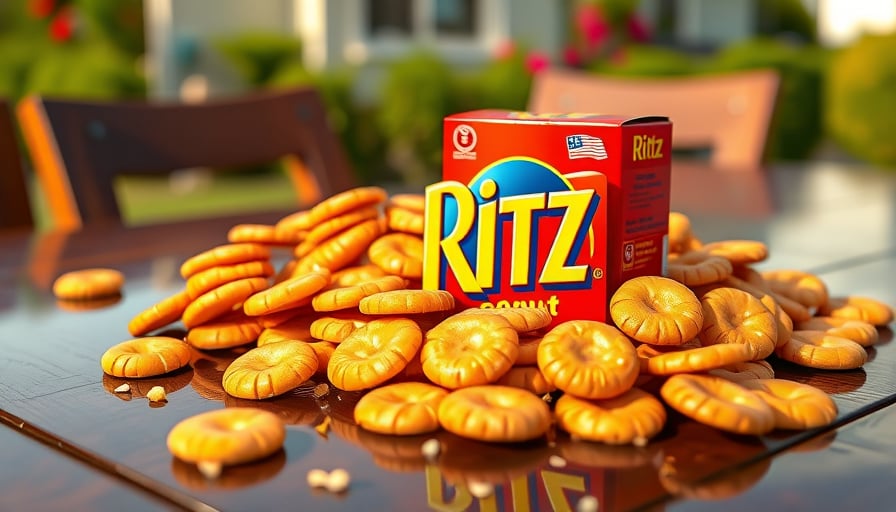
Mondelez International Inc. has announced a limited voluntary recall of a single SKU of its RITZ Peanut Butter Cracker Sandwiches. The recall covers 70 cases distributed to retailers in eight states, including New York, New Jersey, Pennsylvania, Georgia, Arkansas, Missouri, Oklahoma, and Alabama. The issue involves a labeling error: some individually wrapped packs, which are supposed to contain peanut butter, were mislabeled as cheese. The company has reported no illnesses related to the recall and is advising consumers with peanut allergies to discard the affected cartons or contact the company for assistance. The recall is being carried out under the oversight of the Food and Drug Administration. No further operational or financial impacts have been disclosed at this time.
1. Contextualizing the Recall within Mondelez’s Portfolio
Mondelez’s RITZ line accounts for a modest share of the company’s snack‑food revenue—approximately 2 % of total sales in the past fiscal year. The Peanut Butter Cracker Sandwich is a niche product, primarily positioned in the convenience‑snack segment for on‑the‑go consumers. Given its limited distribution, the scale of the recall is relatively contained compared to Mondelez’s broader portfolio, which includes high‑volume brands such as Oreo, Cadbury, and Toblerone.
2. Financial Implications and Risk Assessment
Direct Cost Exposure: The recall involves 70 cases. At an estimated wholesale price of $2.00 per case, direct logistical and disposal costs are likely below $140 USD, a negligible amount relative to Mondelez’s $30 billion annual revenue.
Reputational Risk: Even a small recall can erode consumer trust, especially among allergy‑sensitive populations. The brand’s equity, however, is currently resilient, with a Brand Value Index rating of 78/100.
Regulatory Penalties: Under FDA guidelines, penalties for labeling errors can range from $5,000 to $25,000 per violation, contingent on severity and prior history. Mondelez’s prior compliance record is clean, suggesting minimal likelihood of punitive action beyond the recall itself.
Opportunity Cost: The recall necessitates diverting resources from marketing and R&D initiatives. In the short term, this opportunity cost is minimal but could amplify if similar errors recur.
3. Supply‑Chain and Operational Dynamics
A labeling error of this nature typically originates in one of three areas:
Packaging Line Misconfiguration: An automated labeling machine could have been inadvertently set to the “cheese” label for a brief period before correction. The fact that only 70 cases were affected suggests a short‑lived configuration error rather than a systemic fault.
Human Oversight: Manual labeling errors, while less likely in high‑volume facilities, can occur during shift changes or when staff are under time pressure. Mondelez’s packaging facilities are subject to ISO 9001 and HACCP standards, reducing this probability.
Supplier Mislabeling: If the labeling is outsourced, a supplier may have issued the wrong labels. Mondelez’s Vendor Management System includes a “Label Verification” checkpoint, but lapses can still happen.
A forensic audit of the affected production line’s timestamp logs, coupled with an inspection of the labeling machine’s configuration, would provide definitive evidence.
4. Regulatory Landscape and Consumer Protection
The FDA’s Food Safety Modernization Act (FSMA) mandates that all food labeling accurately reflect product contents, particularly allergens. Mislabeling a peanut‑containing product as cheese contravenes Section 102(a) of the FSMA. The FDA’s involvement in monitoring the recall indicates a cooperative stance, but any future lapses could invite enforcement actions such as mandatory recall, fines, or product interdiction.
5. Competitive Dynamics and Market Perception
Peanut‑butter‑based snacks occupy a small but growing niche, driven by consumer demand for protein‑rich, low‑carb options. Competitors such as Kellogg’s (with its Nutri‑Bites) and Nestlé (with its Milo‑based snack bars) have not reported similar labeling issues, giving them a short‑term advantage in trust perception.
Mondelez’s swift recall demonstrates proactive risk management, potentially mitigating brand damage. However, if competitors leverage this incident in marketing campaigns—emphasizing “trustworthy labeling” as a differentiator—Mondelez may face heightened scrutiny.
6. Potential Long‑Term Risks and Strategic Opportunities
| Risk | Impact | Mitigation |
|---|---|---|
| Regulatory scrutiny | Repeated labeling errors could lead to increased FDA audits and fines | Strengthen internal audit procedures; invest in real‑time labeling verification systems |
| Supply‑chain disruption | Over‑reliance on a single supplier for labeling | Diversify labeling vendors; implement dual‑check labeling protocols |
| Consumer backlash | Allergic consumers may switch brands permanently | Launch a targeted communication campaign emphasizing allergen safety and product integrity |
| Competitive erosion | Rivals may capitalize on Mondelez’s error | Reinforce product differentiation through R&D (e.g., allergen‑free versions) |
Conversely, this incident can serve as a catalyst for Mondelez to:
- Upgrade Labeling Technology: Deploy AI‑powered image‑recognition systems that validate label accuracy before packaging.
- Enhance Transparency: Publish quarterly labeling audit results to restore confidence among stakeholders.
- Expand Product Lines: Introduce a new “Allergy‑Safe” product line, capitalizing on the market’s sensitivity to allergen labeling.
7. Conclusion
Mondelez’s recall, while limited in scope, underscores the fragility of labeling processes in a highly regulated food environment. The incident’s financial impact is marginal, yet its reputational implications may ripple beyond the immediate recall if not managed with decisive transparency and robust corrective action. By addressing the underlying operational gaps, reinforcing regulatory compliance, and capitalizing on the opportunity to innovate allergen‑safe snack offerings, Mondelez can transform a potential liability into a strategic advantage.