Severe Storms Expose Critical Vulnerabilities in Midwest Power Infrastructure
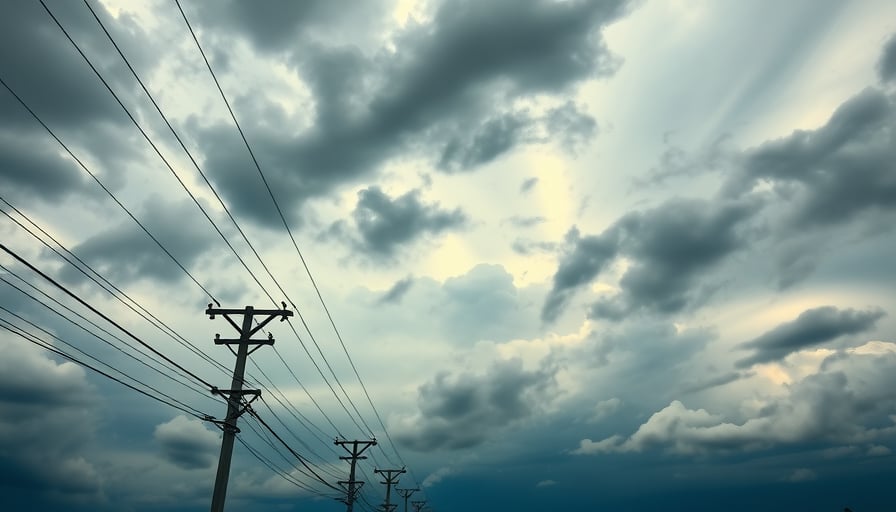
The recent severe weather event that swept across the U.S. Midwest and Mid‑Atlantic region triggered extensive power outages, leaving hundreds of thousands of residential and commercial customers without electricity. Ohio was disproportionately affected, with approximately 250,000 customers experiencing extended service interruptions. Among the utilities impacted, a unit of American Electric Power (AEP) suffered the most significant disruptions, reporting tens of thousands of customers in outage during the storm.
Grid Resilience and the Limits of Conventional Infrastructure
The outage event underscores the fragility of existing power transmission and distribution systems when confronted with extreme meteorological phenomena. Traditional radial distribution networks, designed around predictable load patterns and incremental growth, are ill‑equipped to absorb the rapid, high‑voltage fluctuations caused by high‑gust wind damage and lightning strikes. The loss of critical substations and feeder lines exposed gaps in redundancy—particularly in areas with limited sub‑station interconnections and single‑path feeder architectures.
From an engineering standpoint, the failure modes observed can be categorized into:
- Physical Damage to Conductors and Towers – Wind‑induced sagging or collapse of overhead lines leads to open circuits.
- Transformer Overload and Thermal Stress – Excessive reactive power drawn during voltage sags can exceed transformer ratings, causing overheating and failure.
- Protection System Malfunctions – Inadequate coordination between relays and circuit breakers can result in cascading tripping events, amplifying the extent of outages.
These failure mechanisms illustrate why grid resilience requires a holistic approach that combines hardware upgrades, advanced monitoring, and adaptive control strategies.
Renewable Energy Integration Challenges
The Midwest is witnessing a rapid increase in distributed generation—particularly solar photovoltaic (PV) installations and battery storage systems. While these resources contribute to decarbonization goals, they introduce new complexities in grid stability:
- Voltage Regulation – High PV penetration can cause reverse power flow and voltage rise issues in the distribution network, necessitating the deployment of voltage‑regulating devices such as smart transformers and capacitor banks.
- Frequency Stability – Distributed energy resources (DERs) have limited inertia, making it harder to dampen frequency excursions during sudden load changes or generation losses.
- Protection Coordination – Conventional protection settings assume centralized generation; DER integration demands re‑evaluation of time‑overcurrent and distance protection schemes to avoid false tripping.
The storm event highlighted these vulnerabilities: a sudden loss of a high‑capacity sub‑station forced the grid to rely on distributed sources with insufficient coordination, leading to widespread voltage instability.
Infrastructure Investment Requirements
To safeguard against future outages, substantial investment is required across multiple fronts:
| Investment Area | Objective | Estimated Cost (US$) |
|---|---|---|
| Smart Grid Sensors (SCADA, PMUs) | Real‑time monitoring of voltage, frequency, and power flow | 300–500 million |
| Undergrounding and Re‑rigging of Overhead Lines | Reduce physical damage from weather events | 1.2–2.0 billion |
| Advanced Protection Relays and Control Systems | Improve fault isolation and reduce cascade risk | 200–350 million |
| DER Integration Infrastructure (Inverters, Storage) | Enhance voltage/frequency control and provide ancillary services | 400–600 million |
| Workforce Development & Training | Ensure skilled personnel for operation and maintenance | 50–80 million |
Total capital outlay is projected to exceed $2.5 billion over the next decade for a region the size of Ohio.
Regulatory Frameworks and Rate Structures
Regulatory bodies such as the Ohio Public Service Commission (PSC) are revising rate designs to incentivize resilience upgrades. Key elements include:
- Reliability Performance Incentives – Utilities receiving higher performance ratings on metrics like SAIDI (System Average Interruption Duration Index) and SAIFI (System Average Interruption Frequency Index) may qualify for premium rate adjustments.
- Cost‑Allocation Rules – Investments in undergrounding or advanced monitoring can be recovered through regulated rate hikes, subject to justification and transparent cost‑benefit analyses.
- Renewable Energy Standards – New mandates for grid‑support capabilities (e.g., voltage regulation, frequency response) are being incorporated into interconnection standards.
These regulatory changes aim to align financial incentives with the technical necessity of upgrading the grid, while maintaining consumer affordability.
Economic Impacts on Consumers and the Utility
Upgrades will inevitably affect electricity tariffs. However, a detailed cost‑benefit analysis suggests that the long‑term savings in reduced outage costs (both direct economic losses and indirect health and safety costs) can outweigh the incremental rate increases. For instance:
- Reduction in Outage Duration – A 25 % improvement in SAIDI can translate to $15–$20 per customer annually in avoided costs.
- Energy Theft Reduction – Smart meters can lower losses by up to 2 % of total sales.
- Peak Load Management – Demand‑response programs, coupled with DER storage, can defer peaking plant upgrades by several years.
In the short term, consumers may experience modest rate hikes (e.g., 1–3 % increase in the residential segment). Long‑term benefits include lower outage rates, improved reliability, and potential lower wholesale procurement costs due to increased renewable integration.
Engineering Insights for Future Grid Stability
- Dynamic Line Rating (DLR) – Leveraging real‑time weather data to adjust line loading limits can prevent overloads during storms.
- Wide‑Area Monitoring Systems (WAMS) – High‑frequency phasor measurements help detect voltage collapse precursors.
- Automated Reclosers – Rapidly isolate faults while minimizing service interruptions.
Adoption of these technologies requires cross‑disciplinary collaboration between transmission operators, distribution engineers, and software developers. The resulting grid will be more adaptable, resilient, and capable of supporting the growing share of renewable generation without compromising consumer service.
The analysis presented above reflects current engineering practices, regulatory trends, and market dynamics influencing the United States power sector. Continuous monitoring of weather patterns, technology advancements, and policy developments will be essential for maintaining grid reliability and supporting the broader energy transition.