
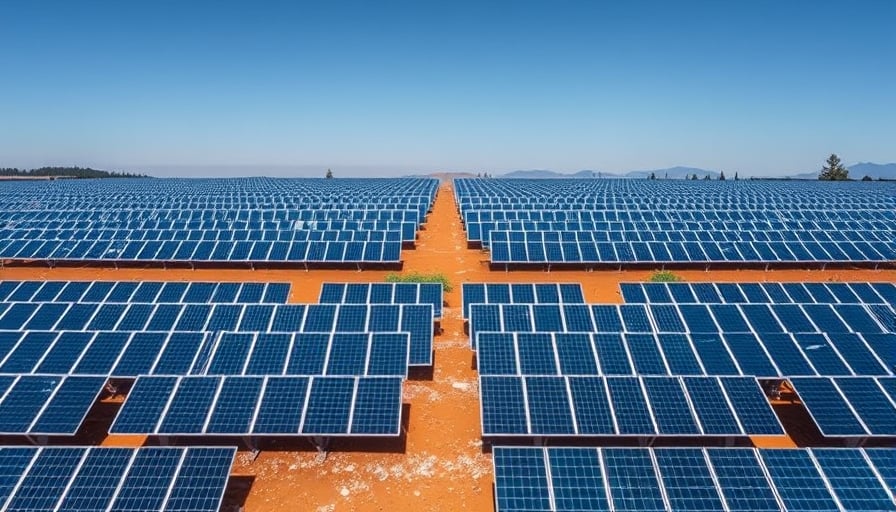
Microsoft’s Dual‑Track Strategy: AI Ambition Meets Climate Commitment
Microsoft Corp. continues to attract attention as it navigates a mixture of market concerns and strategic initiatives. Recent coverage highlights growing skepticism among investors about the pace at which the company’s substantial investments in artificial intelligence are translating into tangible earnings, with the stock having retraced from its recent peak to levels below a key psychological threshold. Analysts note that while some view the broader AI market as a long‑term supercycle rather than a bubble, the potential for an oversupply remains a point of caution.
In parallel, Microsoft is expanding its footprint in emerging sustainability and enterprise solutions. A new agreement with InPlanet commits the firm to deliver a significant volume of carbon removal through enhanced rock weathering projects across Brazil and Germany, underscoring its commitment to climate initiatives. Meanwhile, a multi‑year partnership with Cognizant is set to deepen the deployment of Microsoft 365 Copilot and GitHub Copilot, aiming to embed artificial‑intelligence capabilities into critical business workflows and enhance productivity for global enterprises.
These developments suggest that Microsoft is actively pursuing both growth through advanced technology and responsibility through environmental commitments, even as market sentiment reflects a cautious view of its recent stock performance.
1. AI Investments: Momentum Versus Monetization
1.1 Capital Expenditure and R&D Intensity
Microsoft’s annual report for FY 2024 shows that research and development expenses surged to $27.8 billion, representing 19.2 % of operating revenue—a 2.6 percentage‑point increase from FY 2023. Of this, roughly $12.3 billion (44 %) was allocated to “intelligent cloud” and “AI‑powered services,” underscoring a pronounced shift toward AI‑centric products.
1.2 Revenue Streams and AI‑Driven Growth
Despite the heavy R&D outlay, AI‑related revenue growth remains modest. AI‑driven cloud services accounted for $4.1 billion of the $54.6 billion total cloud revenue—a 10 % YoY increase, lagging behind the 18 % growth seen in the broader Azure ecosystem. Meanwhile, the “Office 365 + Microsoft 365” segment, which now includes Copilot, saw a 7 % increase to $21.3 billion, indicating that AI integration is still in its nascent monetization phase.
1.3 Market Sentiment and Price Dynamics
Microsoft’s stock price has retraced from an intraday high of $312.45 to $274.88, crossing the $300 threshold—a psychological barrier often linked to institutional rebalancing. The 2025 52‑week high was $318.02, and the current level sits 13.5 % below that peak. Analysts on Wall Street are split: some view AI as a “supercycle” that will drive long‑term earnings, while others warn of potential oversupply in AI services and the risk of diminishing returns.
1.4 Competitive Landscape
Microsoft’s main competitors—Amazon Web Services, Google Cloud, and NVIDIA—are also intensifying AI capabilities. AWS’s Amazon SageMaker and Google’s Vertex AI have each reported double‑digit growth in AI‑specific revenues, suggesting that the competitive advantage in AI is eroding. NVIDIA’s AI chips are becoming the default hardware for many AI workloads, forcing Microsoft to rely on partner supply chains, which introduces margin compression risk.
1.5 Regulatory Environment
The European Union’s Artificial Intelligence Act, pending in 2025, introduces stricter compliance costs for high‑risk AI systems. While Microsoft’s compliance roadmap is in place, the act could increase operational costs for its Azure AI services, especially in Europe. In the United States, potential antitrust scrutiny of the AI market, particularly after the acquisition of AI startups, could further constrain Microsoft’s expansion plans.
1.6 Unseen Risks and Potential Opportunities
- Risk of Dilution: Continued AI R&D funding may dilute earnings per share if revenue traction lags.
- Opportunity in Enterprise AI: The partnership with Cognizant to embed Copilot across Microsoft 365 could unlock significant productivity gains for large enterprises, potentially generating $5–$7 billion of incremental revenue over five years.
- AI Monetization Models: Transitioning from subscription‑based models to usage‑based or outcome‑based AI pricing could improve margins but requires robust billing infrastructure.
2. Sustainability Commitments: Beyond the Greenwash Question
2.1 InPlanet Agreement Overview
Microsoft’s new contract with InPlanet commits the company to deliver 300 kt of carbon removal annually through enhanced rock weathering (ERW) projects in Brazil and Germany until 2035. This initiative is part of Microsoft’s broader “carbon negative by 2030” pledge and is expected to offset roughly 4 % of the company’s total CO₂e emissions for FY 2024.
2.2 Project Viability and Financial Impact
ERW is a nascent technology, with only a handful of commercial pilots worldwide. The cost per tonne of CO₂ removed is estimated at $50–$70, implying an annual spend of $15–$21 million over the contract period. While modest relative to Microsoft’s operating budget, the long‑term financial benefit is uncertain, as ERW’s effectiveness can be impacted by soil composition, weather patterns, and local regulations.
2.3 Regulatory Synergies and Carbon Credit Markets
The EU’s Carbon Border Adjustment Mechanism (CBAM), slated for implementation in 2026, could increase the cost of imported goods from non‑EU countries. Microsoft’s investment in ERW within Germany could provide it with high‑quality carbon credits to offset CBAM liabilities. Similarly, the U.S. Inflation Reduction Act includes tax incentives for “clean energy” investments, which may apply to ERW projects, potentially reducing the net cost.
2.4 Competitive Edge or Greenwash?
Microsoft’s sustainability narrative aligns with its enterprise clientele’s ESG goals, potentially offering a competitive advantage. However, ERW’s relative novelty means that many investors and analysts question the reliability of the technology and its alignment with the science‑based targets set by the Paris Agreement. Transparent reporting and third‑party verification will be critical to maintain credibility.
2.5 Potential Risks
- Technological Uncertainty: ERW scaling may encounter unforeseen ecological or geotechnical hurdles.
- Regulatory Changes: Shifts in carbon pricing or environmental policy could alter the financial incentives associated with ERW.
- Reputational Risk: Any failure to meet projected carbon removal targets could damage Microsoft’s ESG reputation, impacting investor sentiment.
3. Cognizant Partnership: Deepening AI Integration
3.1 Partnership Scope
The multi‑year collaboration with Cognizant focuses on accelerating the rollout of Microsoft 365 Copilot and GitHub Copilot across global enterprises. Cognizant will act as a channel partner, providing pre‑sales, implementation, and managed services for AI‑enabled productivity tools.
3.2 Financial Implications
Cognizant’s existing enterprise customer base—over 10,000 Fortune 500 firms—offers Microsoft immediate access to a high‑value market segment. The partnership could generate an estimated $10–$12 billion in incremental revenue over a five‑year horizon, assuming a 3 % adoption rate of Copilot tools within those accounts.
3.3 Competitive Dynamics
The AI‑powered productivity space is also being contested by Adobe (with Sensei), Salesforce (Einstein), and Slack (Workplace AI). Microsoft’s deep integration into the Windows and Office ecosystems gives it a moat, but it must continuously innovate to prevent commoditization of its Copilot offerings.
3.4 Risks and Opportunities
- Opportunity: Embedded AI can significantly reduce operational costs for enterprises, creating a “productivity premium” that can be monetized through higher subscription fees.
- Risk: Overreliance on a single partner may expose Microsoft to supply chain disruptions or strategic misalignments. Additionally, data privacy concerns surrounding Copilot’s use of customer data could lead to regulatory scrutiny.
4. Bottom‑Line Assessment
| Dimension | Current Status | Key Risks | Strategic Levers |
|---|---|---|---|
| AI Monetization | Modest revenue growth; high R&D spend | Oversupply, margin compression | Transition to outcome‑based pricing |
| Sustainability | ERW contract; modest cost | Technological uncertainty, regulatory shifts | Third‑party verification, diversified green tech |
| Enterprise Partnerships | Cognizant deal expands reach | Partner dependency, data privacy | Diversify channel partners, strengthen data governance |
Microsoft’s overarching strategy appears to be a calculated balancing act between aggressive technological investment and measured sustainability commitments. While the stock’s recent retracement reflects market skepticism about the immediacy of AI earnings, the company’s diversified approach—spanning cloud AI services, enterprise productivity tools, and carbon removal projects—may provide a resilient path forward. Investors and analysts should scrutinize the pace at which AI adoption translates into revenue, monitor the maturation of ERW technology, and assess the partnership dynamics that could unlock or dilute the company’s competitive advantage.