
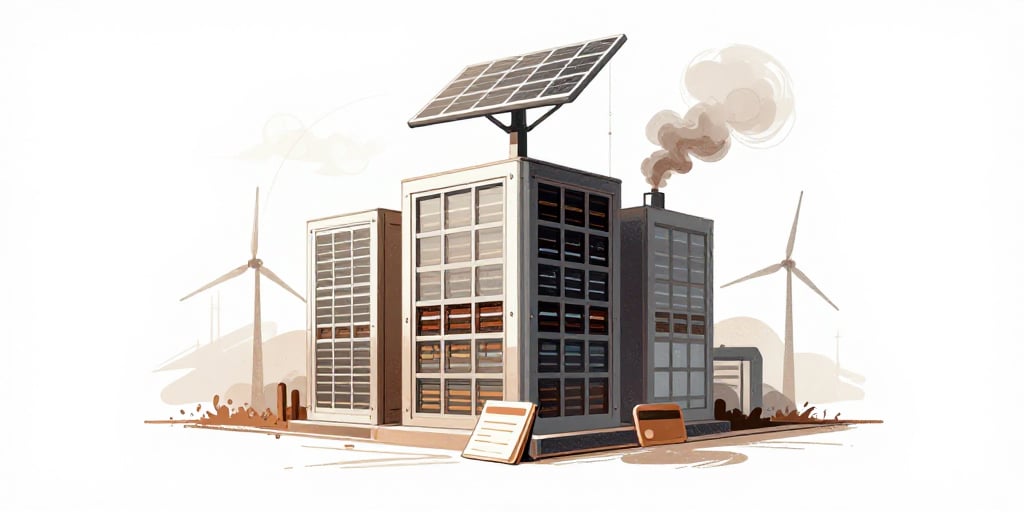
Meta Platforms Inc. Secures $13 billion Financing for New Texas Data‑Center
Meta Platforms Inc. (NASDAQ: META) has announced the structuring of a new data‑center project, codenamed “Sopaipilla,” in El Paso, Texas. The financing package, which could total approximately US $13 billion, is being arranged predominantly through debt, with equity injections anticipated at a later stage. The arrangement is being led by Morgan Stanley and JPMorgan Chase, mirroring the large‑scale bond‑financing strategy the company employed the previous year to fund a Louisiana data‑center facility.
Financing Architecture and Debt Market Dynamics
The debt component of the Sopaipilla deal is expected to be composed of a mix of senior secured bonds and high‑yield debt instruments. Given Meta’s strong credit profile—rated AA‑ by Fitch and AA+ by Moody’s—market conditions have allowed the company to secure favorable spreads that are currently below 200 basis points relative to Treasury benchmarks. Analysts note that the use of debt, rather than equity, preserves Meta’s existing shareholders’ equity base while enabling rapid capital deployment, a strategy that aligns with the broader trend among data‑center operators to tap bond markets for infrastructure expansion.
From a risk perspective, the high leverage exposes Meta to interest‑rate fluctuations and potential covenant breaches if operating cash flows do not materialize as projected. However, the company’s substantial free‑cash‑flow generation from its advertising and social‑media businesses provides a cushion that has historically supported debt service obligations.
Business Fundamentals of AI‑Driven Data‑Center Demand
The Sopaipilla facility is slated for operational readiness in 2028 and is designed to support Meta’s expanding artificial‑intelligence (AI) workloads, including large‑scale language models and real‑time content moderation. According to internal projections, the new data‑center will consume roughly 800 MW of power at peak, requiring a robust local infrastructure and potential partnerships with regional utilities to secure renewable energy credits.
Market research indicates that the demand for AI compute is accelerating across multiple sectors—automotive, healthcare, and finance—fueling a projected 14% CAGR in the global AI hardware market over the next decade. Meta’s investment in dedicated AI infrastructure positions it to capture a larger share of this lucrative market, potentially translating into higher margins from enterprise AI services.
Competitive Landscape and Regulatory Considerations
Meta’s competitors, such as Amazon Web Services, Microsoft Azure, and Google Cloud, have similarly increased their data‑center footprints. Yet, Meta’s strategy differs in its emphasis on in‑house AI data‑processing rather than cloud reselling. This differentiation may reduce exposure to price competition but increases capital expenditure commitments.
Regulatory scrutiny remains a potential risk. Data‑center expansion in Texas may be subject to state‑level environmental regulations, including water usage restrictions and greenhouse gas emission mandates. The company must navigate these regulations while maintaining its commitment to sustainability, a key metric for investors increasingly focused on Environmental, Social, and Governance (ESG) performance.
Human Capital and Operational Impact
The El Paso project is expected to create more than 300 permanent jobs upon completion, with a peak construction workforce of approximately 4,000. This workforce expansion aligns with Meta’s broader workforce optimization strategy, which has seen a net decline in employee headcount over the past two fiscal years. The company’s hiring strategy will likely focus on specialized roles in AI engineering, data center operations, and renewable energy integration.
Investor Sentiment and Stock Performance
Despite the sizable investment, Meta’s share price has slipped over the past year, reflecting market concerns about the return on high‑capital AI spending. Analysts are divided: some argue that the long‑term benefits of AI infrastructure will outweigh the short‑term dilution of cash flow, while others caution that the rapid pace of AI development may outpace the company’s ability to monetize these investments.
A discounted‑cash‑flow (DCF) model incorporating conservative revenue growth assumptions from AI services suggests a modest upside, but hinges on the successful scaling of Meta’s AI offerings and continued demand for its social‑media platforms.
Conclusion
Meta’s Sopaipilla project exemplifies the growing trend among technology giants to secure substantial debt financing for data‑center expansion in the age of AI. While the company’s robust credit profile and strong cash flows mitigate some financial risks, regulatory hurdles, competitive pressures, and investor scrutiny over capital efficiency remain critical considerations. The outcome of this investment will be closely monitored as the company navigates the complex intersection of technology innovation, capital markets, and sustainability mandates.