
Corporate Overview
Mercedes‑Benz Group AG is navigating a challenging fiscal period amid a convergence of macro‑economic pressures, evolving consumer preferences, and strategic realignment within the automotive sector. The company’s performance reflects both sector‑specific dynamics and broader market forces that are reshaping the global vehicle industry.
Market Context
Weak Demand in Key Export Markets
The most immediate driver of the Group’s headwinds is the erosion of demand in critical export corridors, particularly China. Chinese buyers have shifted toward more affordable and technologically advanced models, intensifying competition for the German automaker’s premium offerings. This trend parallels a broader contraction in the automotive index, which has recently fallen to its lowest level since March, underscoring systemic uncertainty across the sector.
Competitive Landscape
Within the premium segment, Mercedes‑Benz faces stiff rivalry from both traditional competitors—such as Audi and BMW—and newer entrants focused on electric‑first platforms, including Tesla and Rivian. The shift from an “electric‑only” to an “electric‑first” strategy signals the Group’s intent to accelerate the adoption of electrified vehicles, aligning with global decarbonisation mandates and consumer expectations.
Operational Strategy
Cost Structure Review in Germany
In response to internal cost pressures, the Group’s German operations are conducting a comprehensive review of the cost base. Emphasis is placed on improving productivity through artificial‑intelligence‑driven processes rather than resorting to workforce reductions. This approach leverages advanced analytics to optimize manufacturing workflows, reduce waste, and enhance supply‑chain responsiveness.
Digital and Software Integration
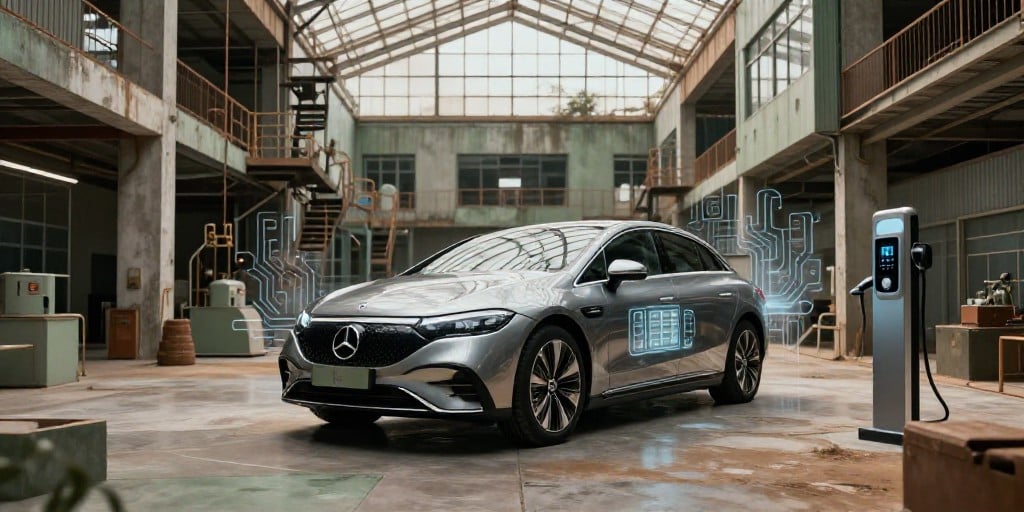
Mercedes‑Benz Energy’s partnership with a battery‑repurposing firm demonstrates the Group’s commitment to integrating digital and software capabilities across its portfolio. By extending the life of retired EV batteries for second‑life energy storage, the company not only bolsters its sustainability agenda but also opens a new revenue channel that aligns with the rising demand for renewable energy solutions.
Financial Implications
Share Performance and Dividend Yield
Shares have experienced a pronounced decline since the start of the year, mirroring the broader downturn in the automotive sector. Despite this volatility, the Group’s dividend yield remains comparatively attractive within its peer group. This stability suggests that investors view the stock as a resilient long‑term holding, balancing short‑term price pressure against a solid payout policy.
Risk Factors
Analysts highlight weak demand in China as a pivotal risk factor. Any further slowdown in the Chinese market could exacerbate pressure on sales volumes and margin compression. Conversely, successful execution of the “electric‑first” strategy and expansion into battery repurposing could generate new growth vectors and enhance the Group’s competitive positioning.
Strategic Outlook
Mercedes‑Benz’s pivot toward an “electric‑first” paradigm, coupled with investment in AI‑powered manufacturing and second‑life battery technologies, positions the company to navigate current market turbulence while preparing for a future dominated by electrified mobility. The Group’s focus on operational efficiency, digital innovation, and sustainability aligns with global economic trends favoring low‑carbon solutions and data‑driven manufacturing excellence.
In conclusion, while the Group confronts immediate challenges—particularly in key export markets—the strategic initiatives underway signal a proactive effort to adapt to a rapidly evolving automotive landscape. Continued monitoring of demand dynamics, especially in China, and the effective implementation of AI and digital solutions will be critical determinants of long‑term success.