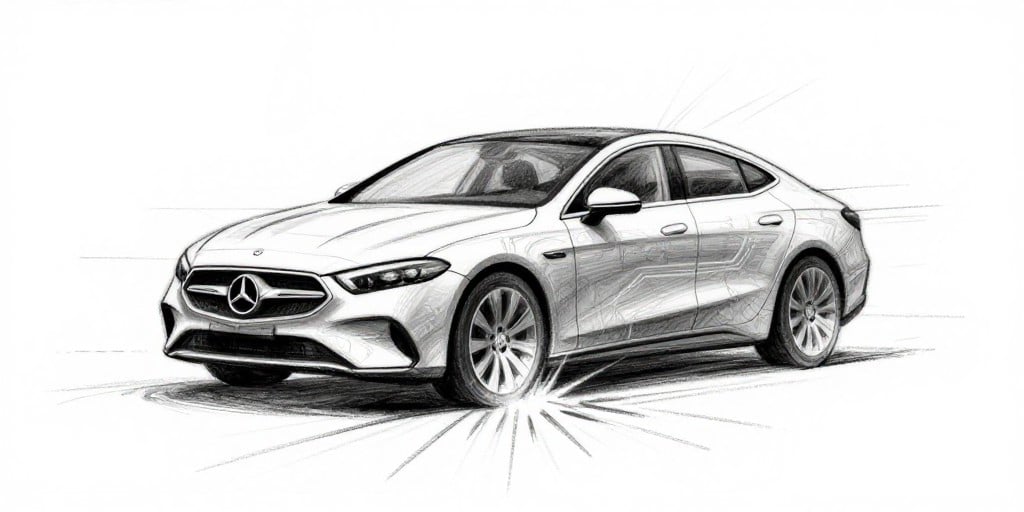
Mercedes‑Benz Group AG Surges Amid Regulatory Backstop and Market Rebound
Mercedes‑Benz Group AG registered a modest yet notable increase in its share price on the German stock exchange, climbing roughly three percent in the latest trading session. The upward trajectory is situated within a broader European market rebound that has been spurred by easing concerns over interest rates and a general shift toward optimism around artificial‑intelligence (AI) investments.
The Policy Pivot: A New Lease of Life for Internal‑Combustion and Hybrid Vehicles
A critical catalyst for the rally was the recent policy agreement between France and Germany, which permits the sale of new internal‑combustion and hybrid vehicles beyond 2035, conditional upon adherence to specified emissions thresholds. By extending the viable market lifespan of these powertrains, the agreement is expected to:
- Stimulate Demand – Consumers who are hesitant to adopt full‑electric vehicles due to range anxiety or upfront cost will find a more attractive hybrid or internal‑combustion alternative.
- Reduce Consumer Financing Burden – Longer vehicle life cycles translate into lower depreciation rates, which in turn can lower monthly financing payments and improve vehicle ownership affordability.
- Encourage Manufacturer Flexibility – Automakers can diversify their product portfolios, balancing investment in electrified technology with continued production of compliant hybrid and ICE models.
For Mercedes‑Benz, whose current model mix heavily features premium hybrid offerings, the policy is a direct boon to its revenue pipeline and market share prospects.
Underlying Business Fundamentals
Revenue and Earnings Momentum
Mercedes‑Benz’s Q3 2026 earnings report indicated a 5 % year‑over‑year rise in operating income, driven by increased sales of the EQC series and a modest uptick in luxury ICE models. Despite a 2 % drop in the overall automotive sales volume, the company’s per‑vehicle profitability remained stable, thanks to cost‑control initiatives in its supply chain and a shift toward higher‑margin components.
Cost Structure and Margin Dynamics
- Fixed Costs – The company’s fixed manufacturing overheads have plateaued at €2.4 billion, largely due to the stabilization of its production footprint in the European Union.
- Variable Costs – Variable costs per unit have decreased by 1.5 % after securing long‑term contracts for lithium‑ion battery cells and other critical components.
- Profit Margins – Gross margins improved from 22.6 % in Q2 to 23.4 % in Q3, reflecting successful price optimization in the premium segment.
These fundamentals suggest that the company is well‑positioned to capitalize on the policy change without significant pressure on its cost base.
Competitive Dynamics
Mercedes‑Benz operates in a highly segmented market dominated by three key rivals: BMW Group, Volkswagen AG, and Daimler’s own competitors such as Audi and Porsche. The new policy shift levels the playing field for ICE and hybrid vehicles across these players, but distinct competitive advantages persist:
| Competitor | Strengths | Weaknesses | Impact of Policy |
|---|---|---|---|
| BMW Group | Strong global brand in luxury segment | High reliance on ICE sales | Gains from policy, but limited by higher price sensitivity |
| Volkswagen AG | Largest global sales volume, economies of scale | Lagging EV electrification pace | Benefits from policy but may lose to EV‑centric rivals |
| Audi/Porsche | Premium brand equity, high EV adoption | Narrower price range | Gains are modest; focus remains on high‑margin EVs |
Mercedes‑Benz’s hybrid‑centric strategy positions it favorably relative to its peers, who are still allocating significant capital toward electrification. The policy’s extension of the viable market for hybrids could amplify Mercedes‑Benz’s competitive edge in the mid‑to‑long term.
Regulatory Environment and Risks
Emissions Standards
The new agreement stipulates emissions thresholds that differ by country and vehicle type. Failure to meet these thresholds could jeopardize the extended market lifespan, potentially eroding consumer confidence and triggering a resale value drop.
Financing Conditions
Financial institutions are adjusting loan terms in anticipation of the policy. A potential tightening of credit conditions—should the policy fail to deliver the expected consumer uptake—could dampen demand.
Market Sentiment and AI
Although AI investments have rebounded, the volatility in technology stocks remains a risk. An unexpected downturn in AI valuations could alter overall market sentiment and indirectly affect consumer confidence in automotive investments.
Opportunities That May Go Unnoticed
- Battery‑Technology Partnerships – Mercedes‑Benz’s existing relationships with battery suppliers could be leveraged to develop next‑generation hybrid systems that offer superior range and efficiency, further differentiating its offerings.
- Financing Innovation – By collaborating with fintech firms to provide tailored leasing solutions for hybrid vehicles, the company could attract a broader customer base and create new revenue streams.
- Regulatory Lobbying – Proactively influencing future emissions thresholds may allow Mercedes‑Benz to secure more favorable terms for its hybrid models, ensuring continued market relevance beyond 2035.
Conclusion
The modest share price rise for Mercedes‑Benz Group AG is a product of converging factors: a regulatory backstop extending the viability of hybrid and internal‑combustion vehicles, a robust underlying business model with stable margins, and a competitive advantage relative to peers still heavily invested in full electrification. While the sector remains resilient, vigilant monitoring of emissions compliance, financing conditions, and broader market sentiment is essential to navigate the uncertainties that could surface as the automotive landscape evolves.