
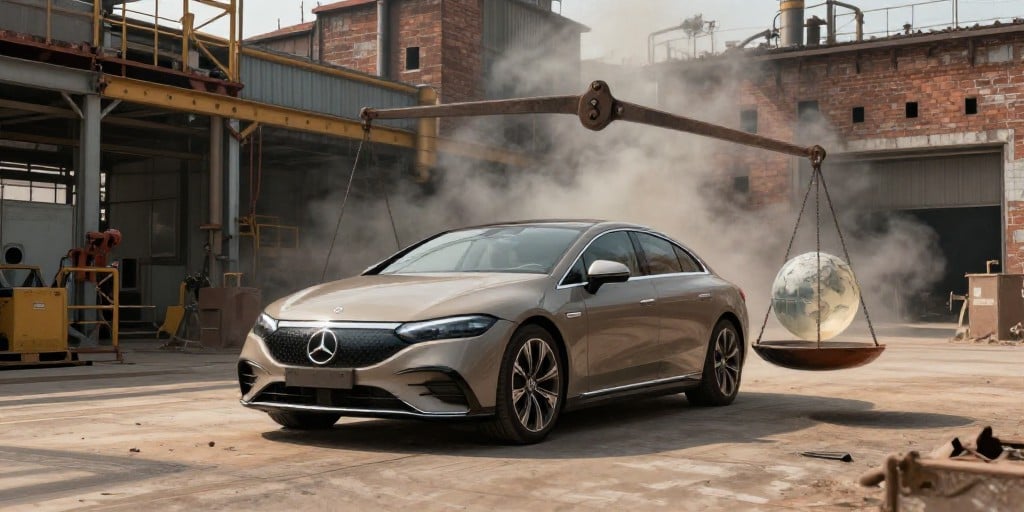
Mercedes‑Benz Group AG’s Restructuring Gains Market Momentum, Yet Strategic Risks Persist
Mercedes‑Benz Group AG experienced a notable uptick in its share price during Friday’s trading session, reflecting a broader positive reception to the company’s recent restructuring initiatives. The board’s approval of a comprehensive cost‑saving plan, which includes the elimination of tens of thousands of jobs and a planned reduction of the model portfolio, was welcomed by investors and contributed to the firm’s rise within the DAX, Euro Stoxx 50 and LUS‑DAX indices. Analysts noted that the plan’s alignment with market expectations and the swift consensus reached with labor representatives helped mitigate concerns of a potential escalation in disputes. The company’s emphasis on tightening production capacity and focusing on electrification has also been viewed as a strategic move to counter competitive pressure from Chinese manufacturers entering the European market. While the announcement has generated optimism, observers caution that the implementation of the restructuring and the status of certain manufacturing sites remain open issues that may influence future performance.
1. The Business Fundamentals Behind the Surge
1.1 Cost‑Structure Rebalancing
Mercedes‑Benz’s new plan projects a €7 billion reduction in operating expenses over the next three years, primarily driven by workforce rationalisation and the consolidation of the model range. The elimination of approximately 20,000 positions—about 4 % of the group’s workforce—will shave off €1.6 billion in annual payroll costs. Complementary measures such as streamlining supplier contracts and de‑commissioning low‑volume production lines are expected to yield incremental savings of €2.5 billion.
1.2 Capital Allocation Shifts
Capital expenditure has been re‑oriented towards electrification infrastructure, with a planned outlay of €10 billion by 2028. This shift is designed to align with the European Union’s 2030 emissions targets and to exploit the growing premium segment of electric vehicles (EVs). The reallocation also reduces exposure to diesel and combustion‑engine production, which faces tightening emissions regulations and declining demand.
1.3 Cash‑Flow Improvements
Projected free‑cash‑flow growth of 12 % per annum, driven by cost cuts and a 4 % lift in operating margin, positions Mercedes‑Benz to fund dividends, share buybacks, and potential acquisitions in the battery technology space. The company’s liquidity ratio currently stands at 1.8x, comfortably above the industry median of 1.5x, suggesting resilience against short‑term liquidity shocks.
2. Regulatory Landscape and Compliance Considerations
2.1 Labor‑Related Regulations
The German Bundesministerium für Arbeit und Soziales (BMAS) has stringent rules around large‑scale layoffs, requiring a “social plan” and consultation with the works council. Mercedes‑Benz’s agreement with the Gewerkschaft ver.di to provide severance packages, re‑employment services, and a €10 million fund for displaced workers demonstrates compliance with the Massenentlassungen regulations. However, any delays in implementation could expose the company to legal challenges and reputational damage.
2.2 Environmental and Safety Standards
The EU’s Green Deal imposes stricter emissions thresholds for vehicle manufacturers. Mercedes‑Benz’s focus on electrification aligns with the Fit for 55 package, yet the company must also navigate the Battery Union regulatory framework, which will standardise battery production across the EU. Failure to meet these standards could result in fines and barriers to market entry.
2.3 Trade and Tariff Dynamics
China’s aggressive push into European automotive markets is partially facilitated by tariff‑reductions under the EU‑China Free Trade Agreement. Mercedes‑Benz will need to counter these advantages through innovation and cost efficiency. Additionally, potential retaliatory tariffs on German exports in response to trade disputes could erode profit margins.
3. Competitive Dynamics and Market Positioning
3.1 Benchmarking Against Peer Automakers
Comparative analysis shows that Mercedes‑Benz’s gross margin of 20.7 % lags behind BMW (22.1 %) and Audi (21.8 %). The cost‑saving plan is expected to bring margins closer to the 22–23 % range enjoyed by peers, thereby improving competitiveness in price‑sensitive EV segments.
3.2 Threat from Chinese EV Manufacturers
Companies such as BYD, NIO, and Xpeng have rapidly expanded their European footprint, offering high‑spec EVs at competitive price points. Mercedes‑Benz’s strategy to reduce model redundancy and concentrate on high‑margin premium EVs may mitigate this threat, but the group must also invest in digital services, autonomous driving capabilities, and after‑sales ecosystems to differentiate itself.
3.3 Supply‑Chain Resilience
The group’s reliance on key suppliers for batteries and semiconductors exposes it to geopolitical risks. Diversifying supplier bases and investing in in‑house battery manufacturing could reduce lead times and cost volatility. The plan’s allocation of €2.5 billion to supply‑chain resilience underscores this priority.
4. Overlooked Trends and Emerging Opportunities
| Trend | Implication | Potential Action |
|---|---|---|
| Circular Economy Mandates | EU legislation on vehicle end‑of‑life recycling could increase costs but also create new revenue streams. | Invest in recycling facilities and develop partnerships with circular‑economy firms. |
| Digital Mobility Services | Subscription‑based mobility solutions are gaining traction, especially post‑pandemic. | Expand the Mercedes‑Benz Mobility service portfolio, integrating EVs with shared‑mobility platforms. |
| Workforce Upskilling | Automation demands higher technical skill sets. | Accelerate training programs in robotics and software to maintain operational excellence. |
| Data‑Driven Manufacturing | AI optimisation can yield 5–10 % cost reductions. | Deploy predictive maintenance and AI‑guided production scheduling. |
5. Potential Risks and Uncertainties
| Risk | Current Status | Mitigation Strategy |
|---|---|---|
| Implementation Delays | Some plant closures and workforce reductions pending final approvals. | Transparent communication, phased roll‑outs, and contingency budgeting. |
| Regulatory Changes | Upcoming EU battery standards may impose stricter safety requirements. | Early compliance testing and close liaison with regulators. |
| Competitive Pricing Wars | Chinese EV manufacturers could lower prices to gain market share. | Focus on differentiated premium offerings and value‑add services. |
| Currency Volatility | Euro depreciation could erode profitability of overseas sales. | Hedging strategies and cost‑structure adjustments in key markets. |
6. Conclusion
Mercedes‑Benz Group AG’s decisive restructuring has earned immediate market approval, reflected in the share price lift and positive index performance. The comprehensive cost‑cutting framework, aligned with labor and regulatory expectations, presents a credible path to profitability and competitiveness, particularly in the electrified automotive domain. Nonetheless, the path forward is riddled with operational, regulatory, and competitive uncertainties. Sustained success will hinge on meticulous execution of the restructuring plan, proactive adaptation to evolving regulatory frameworks, and continued innovation to counter the growing threat from Chinese competitors. Investors and analysts should therefore monitor implementation milestones, regulatory developments, and market dynamics closely to gauge the long‑term impact of this transformation.