
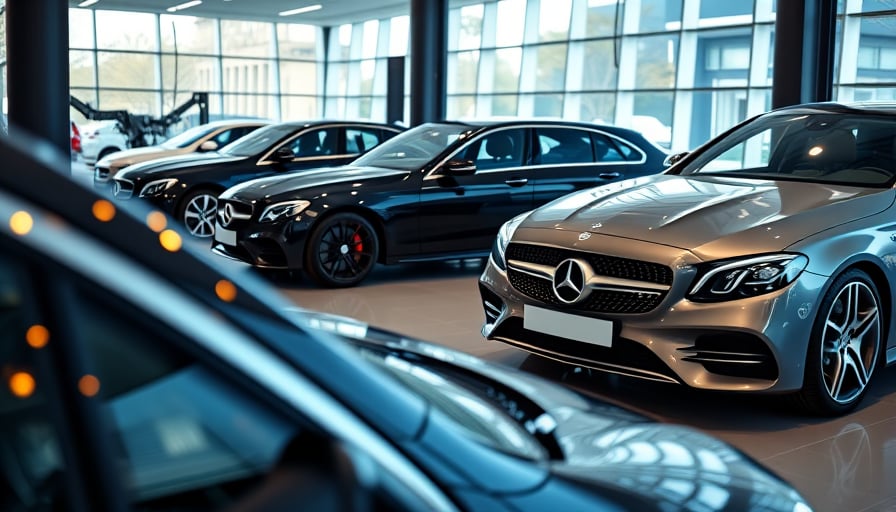
Mercedes‑Benz Group AG Faces a 2025 Vehicle Sales Decline
Mercedes‑Benz Group AG disclosed that its vehicle sales for 2025 fell by roughly ten percent compared with 2024, marking a significant contraction in a year that was already challenging for the global automotive industry. The decline is reflected across the company’s product mix, though certain segments performed comparatively better.
Quarter‑by‑Quarter Performance
- Fourth‑quarter strength: The final quarter of the year was the company’s most robust period, with deliveries surpassing those of the third quarter. This uptick suggests a potential rebound in consumer demand as the year progressed.
- Segment variations: While overall sales dipped, the high‑margin Mercedes‑AMG line experienced growth in both volumes and profitability. Conversely, the all‑electric portfolio saw a modest decline in deliveries, indicating that electrification momentum, though sustained, has encountered headwinds.
Geographic Drivers of the Decline
- China: The largest market for Mercedes‑Benz, China saw the sharpest contraction. Competitive pressure from domestic manufacturers and escalating tariff barriers contributed to a noticeable drop in deliveries.
- United States: Similar downward pressure emerged in the United States, where broader market conditions—including inventory gluts and shifting consumer preferences—impacted volumes.
Strategic Focus Amid Weak Sales
Despite the weaker sales trajectory, Mercedes‑Benz maintains its commitment to long‑term value creation. The company continues to emphasize the delivery of high‑quality products and technology solutions, underscoring its belief that sustained investment in innovation will secure future competitiveness.
Market Sentiment
J.P. Morgan has retained a buy rating on Mercedes‑Benz shares, signalling confidence in the company’s strategic direction and resilience. The rating reflects an expectation that the firm’s focus on quality, technology, and market diversification will mitigate short‑term sales fluctuations and support long‑term growth.
Analytical Context
Competitive Positioning
Mercedes‑Benz’s ability to sustain growth in the premium and high‑performance segments, despite a broader market contraction, highlights the strength of its brand differentiation and engineering prowess. The company’s competitive positioning is further reinforced by its investment in autonomous driving and electrification, which align with regulatory trends and consumer expectations.
Economic Factors
The downturn in key markets such as China and the United States mirrors global macroeconomic uncertainty, including supply chain constraints, rising commodity costs, and changing consumer spending patterns. These factors are not unique to the automotive sector and resonate across industries facing similar disruptions.
Cross‑Sector Implications
The shift in consumer preferences toward electrified vehicles, coupled with regulatory incentives, is influencing not only automotive manufacturers but also battery producers, charging infrastructure providers, and software firms specializing in vehicle connectivity. Mercedes‑Benz’s continued emphasis on technology solutions places it at the nexus of these interconnected supply chains, potentially unlocking new revenue streams outside traditional vehicle sales.
Conclusion
Mercedes‑Benz Group AG’s 2025 vehicle sales decline underscores the volatility currently characterizing the automotive sector. However, the company’s strategic focus on quality, technology, and long‑term value creation, coupled with a resilient premium segment, positions it to navigate the immediate downturn while preparing for the next phase of industry evolution. Market confidence, as reflected by J.P. Morgan’s buy rating, suggests that stakeholders view the company’s trajectory as fundamentally sound despite short‑term sales challenges.