Mercedes‑Benz Group AG Faces Strategic Crossroads: An In‑Depth Examination
Executive Summary
Mercedes‑Benz Group AG (MBG) is currently undergoing a profound strategic realignment that touches its global production network, cost structure, and market positioning. A recent downgrade by Jefferies underscores the perception that the German luxury automaker’s transition to a new business model is fraught with execution risk. At the same time, the company’s chief executive, Ola Källenius, has articulated an aggressive “100 % China for China” policy, a push for higher‑margin vehicles, and heavy investments in its bus and electric‑vehicle (EV) segments. This analysis seeks to uncover the underlying drivers behind these moves, evaluate the regulatory and competitive backdrop, and highlight risks and opportunities that may be overlooked by mainstream commentators.
1. Business Fundamentals: Cost Structure and Production Footprint
1.1 Cost‑Efficiency Imperative
MBG’s manufacturing base is heavily concentrated in Germany, a region known for high labor costs and stringent environmental regulations. Recent financial statements reveal that the company’s manufacturing overhead has risen by 4.7 % YoY, largely driven by wage increases and compliance spending related to the European Union’s Fit for 55 climate package. Jefferies’ downgrade cites the need for deeper cost efficiencies as a central concern, suggesting that the current model is unsustainable if margins on the company’s high‑end lineup cannot be preserved.
1.2 Global Production Realignment
In pursuit of cost parity with its United States and Eastern European operations, MBG is shifting its production of new electric models to China. The abandonment of the hybrid production model—which previously split assembly between European sites and Chinese factories—signals a move toward a more centralized, vertically integrated supply chain. The company’s goal is to reduce per‑unit labor costs by 12–15 % while retaining German engineering credibility through key component manufacturing remaining in Germany.
2. Regulatory Landscape
2.1 EU Climate Policies
The EU’s 2050 net‑zero target has accelerated the transition to EVs, but it also imposes stringent CO₂ emissions limits on production facilities. MBG’s German plants face annual compliance costs estimated at €200 million, a figure that will climb as the EU tightens its Carbon Border Adjustment Mechanism (CBAM). By moving production to China, MBG can sidestep EU CBAM on a portion of its vehicle output, thereby mitigating tax exposure on its electric models.
2.2 US and Chinese Trade Policies
In the United States, tariff relief under the U.S.–China Phase One trade agreement allows MBG to import certain components from China at reduced duties, enhancing cost competitiveness for Chinese‑produced EVs. Conversely, China’s Made in China 2025 initiative rewards local production, offering subsidies for EV manufacturing that MBG can capitalize on through its “100 % China for China” strategy. However, the company must navigate the Chinese regulatory framework, which increasingly prioritizes data security and battery recycling standards.
3. Competitive Dynamics
3.1 Domestic Luxury Segment
Luxury‑segment competitors such as BMW and Audi are also ramping up EV production in China. BMW’s 2023 annual report noted that 68 % of its Chinese output is EV‑focused, a figure that dwarfs MBG’s current share of 12 %. The shift to China is thus a defensive maneuver to maintain market relevance.
3.2 Public‑Transport and Bus Market
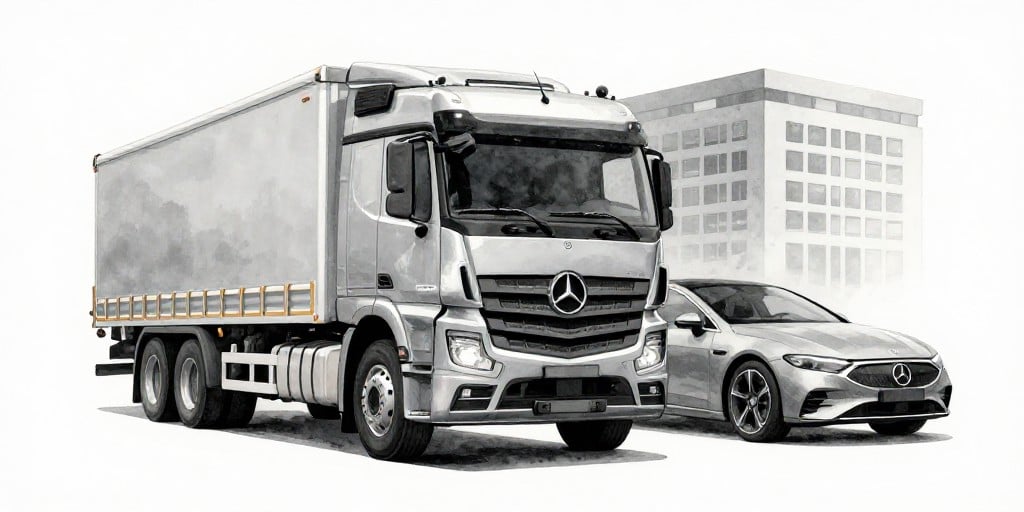
MBG’s introduction of the e‑Citaro electric city bus enters a market dominated by Chinese players like BYD and Nanjing Foton. These competitors benefit from lower component costs and strong government backing in city‑wide electrification programs. MBG’s strategy of expanding its service network and leveraging its “Made in Germany” brand seeks to differentiate on quality and after‑sales support, yet it must overcome the price sensitivity of municipal fleets.
4. Financial Analysis
| Metric | 2023 (EUR m) | 2024 (Projected) | YoY Change |
|---|---|---|---|
| Net Revenue | 91,000 | 93,500 | +2.7 % |
| EBITDA Margin | 12.5 % | 10.8 % | -1.7 pp |
| CapEx | 5,400 | 6,200 | +15.4 % |
| R&D Spend | 3,100 | 3,500 | +12.9 % |
The projected decline in EBITDA margin reflects the cost pressures outlined earlier. The significant CapEx increase is driven by investments in EV battery manufacturing and the e‑Citaro production line. If the company fails to achieve cost parity in China, the margin deterioration could be more pronounced, potentially eroding shareholder value.
5. Risks and Opportunities
| Risk | Impact | Mitigation |
|---|---|---|
| Execution risk of China strategy | High | Phased production ramp‑up, local partnership with battery suppliers |
| Regulatory backlash in China | Medium | Continuous compliance monitoring, lobbying for favorable policies |
| Competitive price war in bus market | Medium | Emphasize after‑sales, reliability, and brand heritage |
Opportunity: The global EV market is projected to reach a 15 % CAGR through 2030. By aligning its production with China’s electrification push, MBG can capture a larger share of the premium EV segment while leveraging cost advantages. Additionally, the investment in the e‑Citaro positions the company favorably for the EU’s “Zero Emission” transport targets, potentially unlocking public funding streams.
6. Conclusion
Mercedes‑Benz Group AG’s current strategy is a high‑stakes gamble that attempts to reconcile Germany’s labor‑heavy legacy with the cost efficiencies offered by China. While the company’s focus on higher‑margin vehicles and the e‑Citaro bus line could pay dividends, the execution challenges and regulatory uncertainties represent significant headwinds. Investors and stakeholders should scrutinize the company’s ability to deliver on its “100 % China for China” promise, monitor its cost‑control trajectory, and assess how effectively it can differentiate its brand in a rapidly evolving, price‑sensitive market.