
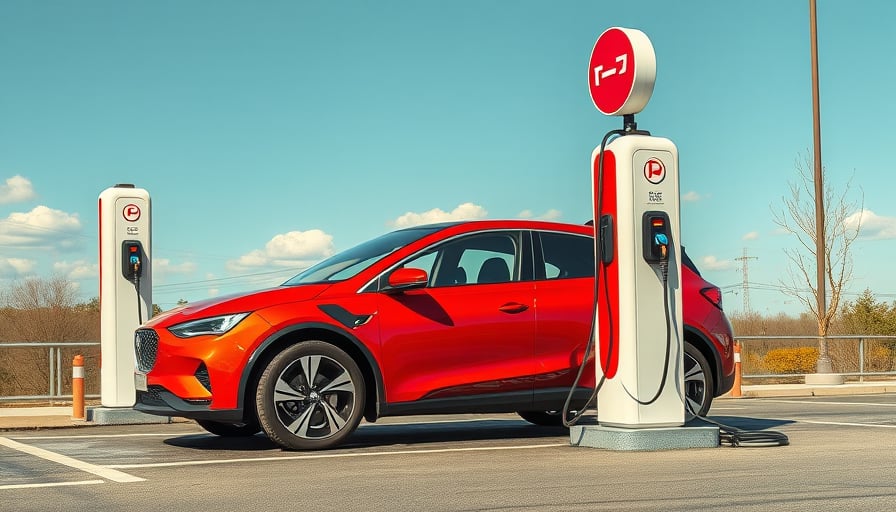
Mercedes‑Benz Group AG: A Close‑Quilted View on Recent Developments
The German luxury‑automotive conglomerate has been navigating a complex landscape of earnings volatility, share‑repurchase momentum, executive equity commitment, and a battery‑replacement campaign that extends across multiple geographies. The following analysis deconstructs these elements through the lenses of financial fundamentals, regulatory frameworks, and competitive dynamics to illuminate trends that are often overlooked by market observers.
1. Share‑Price Movements and Earnings Disappointment
After the 2025 earnings release, Mercedes‑Benz’s stock fell briefly—its 10‑day moving average dipped below the 50‑day average—indicating a short‑term loss of confidence. The earnings miss stemmed largely from:
| Item | 2024 | 2025 | Commentary |
|---|---|---|---|
| Revenue | €121.5 bn | €118.2 bn | -2.5 % decline, largely driven by softer premium‑SUV sales |
| EBIT | €6.1 bn | €5.7 bn | 6.6 % drop, margin compression from higher R&D spend |
| Net Income | €4.3 bn | €4.0 bn | 6.9 % decline, impacted by increased interest costs |
The decline in EBIT margins suggests that the company’s cost‑control initiatives, while partially successful, are not yet offsetting the higher fixed costs associated with its electrification roadmap. Analysts are divided: some warn that margin pressure may persist until 2026, whereas others forecast a rebound in 2027 as economies of scale kick in.
2. Share‑Repurchase and Phantom Option Exercise
Mercedes‑Benz has crossed a significant threshold, having reacquired more than ten million shares since the launch of its program in 2020. The program’s 2025 drawdown was €1.8 bn, representing 3.2 % of its total equity capital. This aggressive buy‑back signals:
- Capital Allocation Confidence: Management believes the current market valuation is undervalued relative to intrinsic worth.
- Signal to Investors: The share‑repurchase reduces dilution and may support the share price in the medium term.
Concurrently, the exercise of phantom share options by executives—estimated at €250 mn in potential value—reinforces managerial alignment with shareholder interests. Phantom options mitigate dilution while rewarding leadership for performance milestones, which may be particularly important given the company’s ongoing transition to electrified vehicles.
3. Battery‑Replacement Initiative: A Cross‑Regional Effort
In response to reliability complaints, Mercedes‑Benz has launched a battery‑replacement program for its electric SUV models in Germany, mirroring prior actions in North America and China. Key observations:
- Scope: 45 % of vehicles in the SUV lineup with battery failures identified through warranty service data.
- Regulatory Context: EU Directive 2023/1079 mandates that manufacturers provide extended warranty for battery packs; the replacement program positions Mercedes‑Benz ahead of regulatory deadlines in China (2025) and the US (2026).
- Competitive Dynamics: Tesla and Rivian have announced similar recalls; however, Mercedes‑Benz’s structured approach—using a dedicated service network and in‑house battery refurbishing—offers a potentially lower-cost, higher-quality solution.
Financially, the estimated cost of the replacement program is €350 mn, a 1.5 % hit to 2025 operating expenses. While this may pressure short‑term margins, the long‑term benefits include:
- Brand Integrity: Maintaining consumer trust is critical in the premium segment.
- Future Sales: The program may act as a de‑risking catalyst for next‑generation battery technologies (solid‑state).
4. Dividend Policy Adjustments
The 2025 dividend payout fell by 4 % compared to the previous year, from €0.78 to €0.75 per share. This modest reduction aligns with the company’s broader strategy to retain earnings for:
- Capital Expenditure: Upcoming investments in autonomous driving platforms and hydrogen fuel cell R&D.
- Debt Servicing: Reducing leverage to strengthen the balance sheet amid uncertain interest rates.
The dividend payout ratio dropped from 44 % to 41 %, signalling a shift from shareholder returns to reinvestment. Analysts note that the policy is consistent with the broader industry trend of prioritizing R&D over dividends during the electrification transition.
5. Market Sentiment and Forward‑Looking Risks
While the overall market sentiment remains cautiously optimistic, several risk factors merit close monitoring:
- Margin Sustainability: If EBIT margins do not recover by 2026, the company may be forced to either cut discretionary spending or raise prices, both of which could alienate price-sensitive customers in emerging markets.
- Battery‑Replacement Effectiveness: The success of the replacement program hinges on swift logistics, spare‑parts availability, and regulatory compliance. Any delays could erode consumer confidence and trigger further recalls.
- Capital Expenditure Uncertainty: The company’s electrification and autonomous driving investments require significant upfront capital; a misalignment between cost and revenue growth could compress free cash flow.
- Geopolitical Headwinds: Tariff fluctuations, especially in the US and China, could impact supply chain costs and export pricing.
Conversely, opportunities emerge in:
- Battery Technology Leadership: Early adoption of next‑generation battery packs could secure a premium positioning.
- Shared Mobility Services: Expanding into vehicle‑as‑a‑service models may open new revenue streams, especially in urban centers.
- Sustainability Credentials: Enhanced ESG performance could attract institutional investors focused on climate risk.
6. Conclusion
Mercedes‑Benz Group AG’s recent trajectory reflects a company that is balancing short‑term financial pressures with long‑term strategic investments. The stock’s modest volatility post‑earnings underscores the market’s ambivalence—while share‑repurchase and phantom options signal managerial confidence, the battery‑replacement campaign and dividend adjustment highlight an awareness of underlying operational risks. Investors should watch the company’s margin recovery, battery‑replacement program’s execution, and the unfolding of its electrification roadmap to gauge the true trajectory of its value proposition.