
Corporate Update on Mercedes‑Benz Group AG
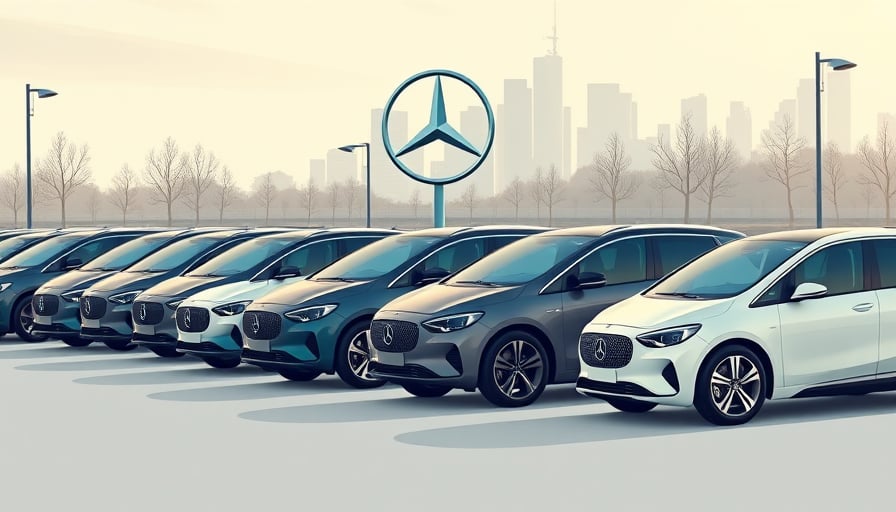
The German automotive conglomerate Mercedes‑Benz Group AG has attracted considerable attention from market participants following a series of developments that have unfolded in early December. The company’s shares advanced modestly on the first day of the month, closing near the intraday high. In parallel, the firm complied with EU capital‑market disclosure obligations by announcing a post‑admission duty notification, and it reported a favorable legal outcome against the Federal Motor Transport Authority (KBA). Additionally, the Group unveiled a new electric‑vehicle (EV) model dubbed a “range king,” which is anticipated to reinforce its competitive stance in the rapidly evolving EV segment.
Share Performance and Analyst Sentiment
- Price Action: The stock experienced a slight upward trajectory on the opening day of December, with a final close close to the session’s peak. The move, while not dramatic, indicates market confidence in the company’s near‑term prospects.
- Analyst Coverage: Updated price targets reveal a spectrum of viewpoints. While a subset of analysts recommend a buy rating—highlighting the Group’s robust brand equity and expanding EV portfolio—others adopt a hold stance, citing ongoing supply‑chain uncertainties and potential margin compression.
- Valuation Context: Relative to peers such as BMW AG and Volkswagen AG, Mercedes‑Benz’s price‑earnings and price‑sales multiples remain within the industry median, suggesting that the market has largely priced in expected growth trajectories.
Regulatory Compliance and Legal Developments
- Capital‑Market Disclosure: In accordance with EU Regulation (EU) 2019/881, the Group filed a post‑admission duty notification, confirming compliance with the regulatory framework governing continuous disclosure obligations for listed entities. The disclosure included a summary of material developments that may affect the Group’s financial position and risk profile.
- Legal Victory: The Group successfully contested a regulatory decision by the Federal Motor Transport Authority (KBA) that had imposed compliance measures related to vehicle safety and emissions. The Court’s ruling absolves Mercedes‑Benz of the contested obligations, potentially reducing future regulatory exposure and associated costs.
Product Innovation: The “Range King” EV
- Introduction: The newly launched electric vehicle, branded as a “range king,” represents a significant addition to the Group’s EV lineup. With an estimated driving range exceeding 600 km on a single charge (based on WLTP testing), the model aims to address range anxiety—a key barrier to EV adoption in Europe and North America.
- Strategic Impact: The introduction of a high‑range model aligns with the Group’s broader electrification strategy, which targets a 50 % share of its vehicle sales in the EV segment by 2026. The model is expected to strengthen Mercedes‑Benz’s positioning against competitors such as Tesla, Lucid, and Rivian, who are aggressively expanding their range capabilities.
- Supply‑Chain Considerations: The new vehicle’s production relies on a secured supply of battery cells from Tier‑1 suppliers. The Group has entered long‑term procurement agreements to mitigate price volatility in lithium‑ion materials, a critical factor amid global supply constraints.
Broader Economic and Industry Context
- Macro‑Drivers: The automotive sector remains sensitive to macroeconomic variables, including interest rates, fuel price volatility, and fiscal stimulus earmarked for green mobility. Recent monetary policy tightening by the European Central Bank may influence consumer financing costs for premium vehicles, potentially tempering short‑term sales growth.
- Cross‑Sector Dynamics: The rise of the “shared‑mobility” ecosystem, driven by autonomous‑driving research and the proliferation of mobility‑as‑a‑service platforms, presents both opportunities and competitive pressures. Mercedes‑Benz’s investment in autonomous technologies and strategic partnerships with tech firms positions it advantageously to capture emerging mobility services.
- Sustainability Imperatives: Global regulatory trends, including the EU Green Deal and the upcoming Corporate Sustainability Reporting Directive, reinforce the necessity for automotive manufacturers to demonstrate transparent ESG performance. Mercedes‑Benz’s commitment to carbon neutrality in its production facilities and its roadmap to a fully electric fleet by 2030 align with these policy trajectories.
Conclusion
Mercedes‑Benz Group AG’s recent actions—solid share performance, regulatory compliance, a favorable legal ruling, and the launch of a high‑range electric vehicle—illustrate the company’s ongoing efforts to balance traditional automotive strengths with emerging mobility trends. While the Group faces headwinds such as supply‑chain volatility and evolving regulatory frameworks, its strategic initiatives position it to maintain a competitive edge in both the premium automobile market and the broader shift toward electrified, sustainable mobility solutions.