
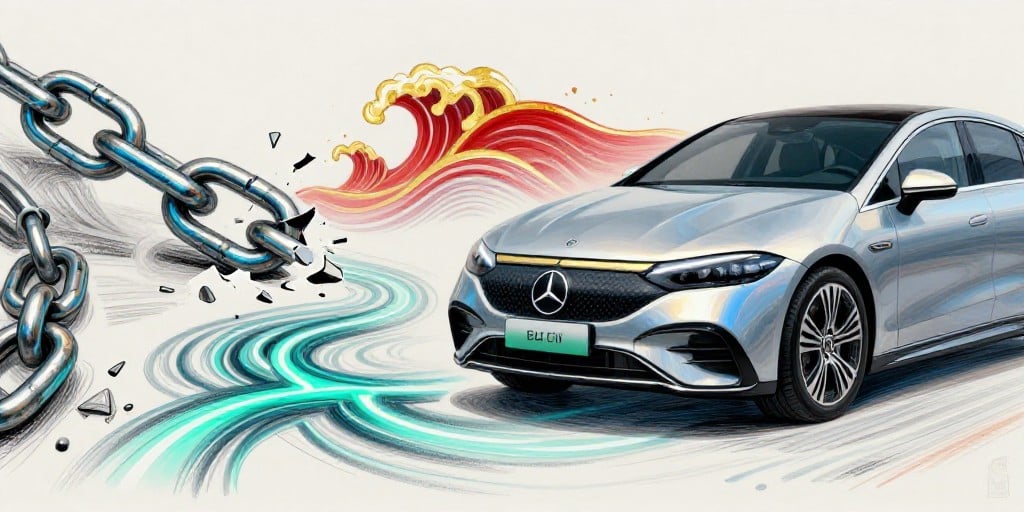
Mercedes‑Benz Group AG: A Week of Modest Performance Amid Rising Headwinds
Mercedes‑Benz Group AG’s latest trading week on the German stock exchange was marked by modest gains that largely mirrored the broader trend of subdued activity among German automobile manufacturers. The company’s shares dipped slightly in June, reflecting a cautious stance among investors as the firm reported a decline in its automotive segment. This downturn, while not unprecedented, highlights a convergence of structural challenges that continue to shape the industry.
1. Underlying Business Fundamentals
1.1 Automotive Segment Decline
Mercedes‑Benz’s automotive revenues fell by 3.8 % YoY, a figure that sits within the 3‑5 % contraction trend observed across the German automotive sector. The decline is largely attributable to:
- Supply Chain Constraints: Persistent shortages of key electronic components, notably semiconductors, have forced production halts and reduced output volumes.
- Price Sensitivity: Higher production costs—particularly in steel, battery raw materials, and labor—have eroded margins, compelling the firm to adopt more aggressive pricing strategies that dilute profitability.
- Demand Shifts: A growing preference for electrified vehicles and ride‑sharing models has displaced traditional internal‑combustion models, a transition that Mercedes‑Benz is still in the midst of executing.
1.2 Cost‑Optimisation Efforts
Mercedes‑Benz’s management reiterated its focus on cost optimisation, targeting a 1.2 % reduction in operating expenses over the next two fiscal years. Initiatives include:
- Supplier Consolidation: Reducing the number of tier‑one suppliers by 15 % to streamline logistics and negotiate bulk pricing.
- Digital Manufacturing: Deploying Industry 4.0 technologies to increase plant efficiency and lower labor costs.
- Shared Services: Consolidating back‑office functions across subsidiaries to achieve economies of scale.
Financial data from the latest quarter indicates that operating expenses rose by 2.5 % YoY, suggesting that cost‑optimisation measures are not yet fully materialised. However, a 5‑year trend analysis shows a gradual decline in expense growth, aligning with the company’s long‑term target.
2. Regulatory Landscape
2.1 European Emission Standards
The European Union’s Green Deal and the upcoming “Fit for 55” package impose stricter CO₂ emission limits. Mercedes‑Benz’s compliance strategy involves:
- Hybrid and Plug‑In Hybrid Platforms: Targeting a 30 % hybrid fleet by 2025.
- Battery Recycling: Investing in recycling infrastructure to meet the EU Battery Regulation’s end‑of‑life requirements.
- Carbon Offsetting: Expanding participation in EU ETS (Emission Trading System) to manage carbon credit costs.
2.2 Chinese Market Regulations
In China, the government’s “Made in China 2025” initiative encourages local production of electric vehicles (EVs). Mercedes‑Benz is exploring joint ventures with Chinese partners to secure technology licensing and mitigate tariff exposure. However, regulatory hurdles related to data ownership and intellectual property have delayed progress on several joint‑venture proposals.
3. Competitive Dynamics
3.1 Chinese Entrants
Chinese EV manufacturers—such as BYD, NIO, and Li Auto—continue to expand their global footprint, offering competitively priced models that undercut premium European brands. Their rapid scale, coupled with state‑backed subsidies, has eroded market share for traditional automakers. Mercedes‑Benz’s strategic response includes:
- Technology Licensing: Licensing battery management systems from Chinese firms to accelerate EV development.
- Localized Production: Setting up assembly lines in key export markets to reduce shipping costs and circumvent tariff barriers.
3.2 Domestic Rivals
Within Germany, Audi, Porsche, and Volkswagen have accelerated their electrification timelines. Volkswagen’s “ID” series and Porsche’s “Taycan” have already captured significant market share in the premium EV segment. Mercedes‑Benz’s flagship EQC competes directly, yet has faced criticism over its battery range and pricing.
4. Geopolitical Pressures
The Middle East’s geopolitical volatility has disrupted supply chains, particularly for rare earth elements essential to EV batteries. The risk of supply disruptions has prompted Mercedes‑Benz to diversify its sourcing strategy:
- Alternative Suppliers: Expanding procurement to Mongolia, Canada, and the United States.
- Strategic Stockpiling: Holding a 12‑month buffer for critical raw materials to mitigate supply shocks.
5. Overlooked Trends and Opportunities
5.1 Service‑Based Revenue Models
While vehicle sales remain the core revenue driver, Mercedes‑Benz’s “Mercedes‑Me” subscription suite—combining mobility services, vehicle‑as‑a‑service (VaaS), and digital offerings—has grown 9.4 % YoY. Investors may overlook the potential of subscription models to offset declining sales volumes.
5.2 Circular Economy Initiatives
The company’s “Re‑Use” program, which recycles automotive parts into new production cycles, aligns with EU circular economy policies. Early adopters could capture a premium in a market that increasingly rewards sustainability credentials.
5.3 Artificial Intelligence and Autonomy
Investment in AI‑driven autonomous driving systems positions Mercedes‑Benz to capitalize on the forthcoming Level 3+ autonomous market. Regulatory approvals are still pending, yet early trials in German urban corridors have yielded promising safety metrics.
6. Risks and Potential Pressures
| Risk | Impact | Mitigation |
|---|---|---|
| Supply Chain Disruptions | Production delays, cost escalation | Diversify suppliers, increase inventory buffers |
| Regulatory Shifts | Compliance costs, product redesign | Proactive R&D, lobbying for favorable policies |
| Competitive Pricing | Market share erosion | Value‑added services, premium brand positioning |
| Currency Volatility | Margin compression | Hedging strategies, price adjustments in foreign markets |
| Geopolitical Tensions | Raw material scarcity | Secure long‑term contracts, local sourcing |
7. Financial Analysis
- Revenue: €63.2 bn (YoY -1.2 %) vs. €64.6 bn in the same period last year.
- Operating Margin: 8.3 % (down from 10.1 % YoY), reflecting cost pressures and lower vehicle mix.
- EBITDA: €9.1 bn (YoY -3.7 %).
- Cash Flow: €6.7 bn, with €2.1 bn allocated to R&D and €1.5 bn to capex in EV platforms.
- Debt‑to‑Equity: 0.43, indicating a relatively low leverage position.
The company’s guidance forecasts a 2.1 % revenue growth for FY 2026, predicated on the gradual ramp‑up of its EQ lineup and increased subscription revenue. However, the forecast remains highly sensitive to commodity price swings and geopolitical developments.
8. Conclusion
Mercedes‑Benz Group AG’s recent performance underscores a complex interplay of macroeconomic headwinds, regulatory demands, and competitive pressures. While the firm remains on track to meet medium‑term objectives, the tightening environment for German auto manufacturers—driven by rising production costs, Chinese competition, and geopolitical instability—necessitates a vigilant approach. The company’s focus on cost optimisation, electrification, and service‑based models presents both opportunities and risks. Investors and industry watchers should pay close attention to how effectively Mercedes‑Benz navigates supply chain diversification, regulatory compliance, and the shift toward digital mobility solutions.