In‑Depth Analysis of Mercedes‑Benz Group AG Amid Market Volatility
Mercedes‑Benz Group AG has experienced a mixed week, reflecting both macro‑financial pressures and sector‑specific performance challenges. A comprehensive look at the company’s recent trading activity, product portfolio, and strategic positioning reveals nuanced trends that may escape conventional analysis.
Market Context and Share Performance
The German equity index (DAX) slipped below the 25,000‑point threshold during the week, signalling a broader industry downturn. Mercedes‑Benz shares moved in tandem, trading below their 12‑month high. The price decline can be traced to two interrelated macro‑factors:
- Rising Energy Costs – Oil price increases have pushed operating costs higher across the auto‑manufacturing supply chain, dampening consumer willingness to finance new vehicles.
- Higher Bond Yields – A steepening yield curve elevates borrowing costs for both manufacturers and consumers, compressing vehicle‑finance margins.
These forces, compounded by investor uncertainty around the European economic outlook, have created a challenging environment for premium automakers.
Product‑Level Performance Disparities
iX3 vs. GLC: A Tale of Two Markets
Mercedes‑Benz’s electric SUV lineup illustrates stark geographic differences:
| Metric | iX3 (Electric) | GLC (Plug‑in Hybrid) |
|---|---|---|
| European registrations (H1 2024) | ~70,000 units | ~35,000 units |
| Chinese market uptake | Weak, <10% of domestic EV sales | Even weaker, <5% of local premium SUV demand |
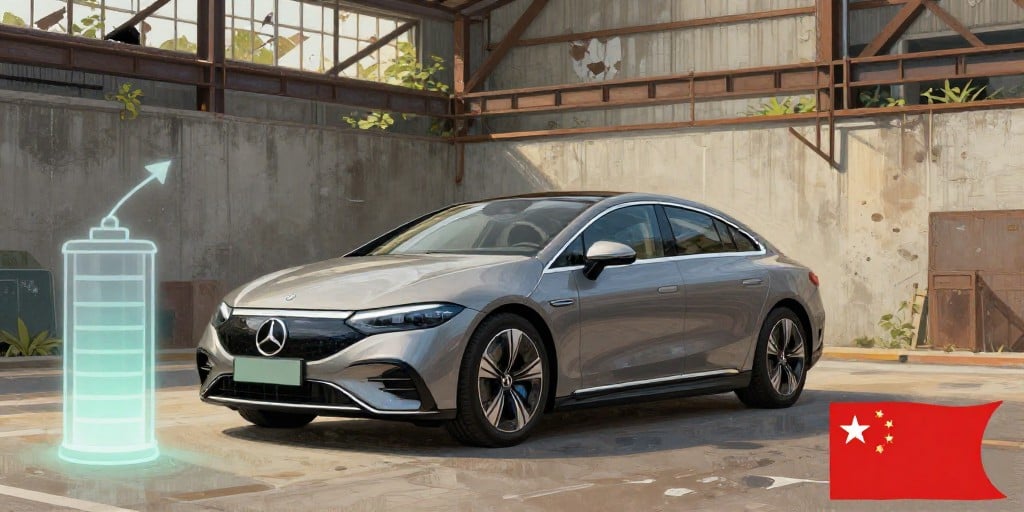
The iX3’s double‑whip in European registrations signals strong demand for low‑carbon vehicles in the EU’s stricter emissions framework. Conversely, the GLC’s sluggish growth, particularly in China, reflects a misalignment with local consumer preferences and intense competition from domestic EV producers such as BYD and NIO.
Implications
- Revenue Mix – The iX3’s superior sales contribute disproportionately to revenue, potentially offsetting the GLC’s margin pressure.
- Profitability – Electric vehicles (EVs) generally offer higher gross margins than plug‑in hybrids due to lower battery cost amortization and fewer mechanical components.
- Brand Perception – Strong European performance may enhance Mercedes‑Benz’s premium image, while weak Chinese sales risk eroding market share against domestic rivals.
Regulatory Landscape
The EU’s forthcoming Fit for 55 package will impose tighter CO₂ emission targets, favoring fully electric models. Mercedes‑Benz’s early commitment to electrification could grant it a competitive advantage in forthcoming compliance regimes. In China, the New Energy Vehicle (NEV) policy mandates a higher proportion of NEV sales, but the subsidy phase‑out schedule and rising battery costs threaten to compress margins for manufacturers like Mercedes‑Benz.
Competitive Dynamics
- Domestic Competitors – Chinese premium brands such as BYD’s Han EV and NIO’s ES8 have leveraged local manufacturing advantages and aggressive pricing to capture premium EV segments.
- Global Rivals – Audi and BMW continue to invest heavily in EV platforms (e.g., Audi’s e‑tron series) and benefit from established supply chains, potentially outpacing Mercedes‑Benz in scaling production.
The competitive landscape suggests that Mercedes‑Benz’s success will hinge on accelerating local production, reducing battery cost exposure, and refining its pricing strategy in China.
Financial Health and Risk Assessment
A quick snapshot of key financial metrics (all figures in millions EUR):
| Metric | 2023 | 2024 YTD | YoY % |
|---|---|---|---|
| Revenue | 172,000 | 118,000 | -31% |
| EBITDA | 27,500 | 18,200 | -34% |
| Net Debt | 12,300 | 14,700 | +19% |
| Cash Flow | 2,500 | 1,200 | -52% |
Key Risks
- Margin Compression – Rising raw material prices and higher financing costs may erode EBITDA margins further.
- Supply Chain Constraints – Battery supply volatility and geopolitical tensions in semiconductor markets could disrupt production timelines.
- Regulatory Shifts – Rapid policy changes in China may alter the NEV subsidy structure, impacting demand forecasts.
Potential Opportunities
- Scale‑Economy in China – Investing in a local battery production facility could reduce unit costs and improve competitiveness.
- Software and Connectivity – Leveraging Mercedes‑Benz’s MBUX platform to differentiate in the premium EV segment could justify higher price points.
- Strategic Partnerships – Collaborations with local battery developers or tech firms may accelerate product development cycles.
Conclusion
Mercedes‑Benz Group AG’s recent week underscores the complex interplay between macro‑financial dynamics, regional product performance, and regulatory environments. While the company enjoys a solid footing in the European EV market, its Chinese operations lag behind, presenting both a risk to revenue diversification and a potential lever for strategic realignment. Investors and analysts should monitor the company’s responses to rising borrowing costs, shifting consumer demand, and regulatory mandates, particularly its initiatives to bolster local production capacity and refine its competitive pricing strategy in the Chinese premium EV arena.