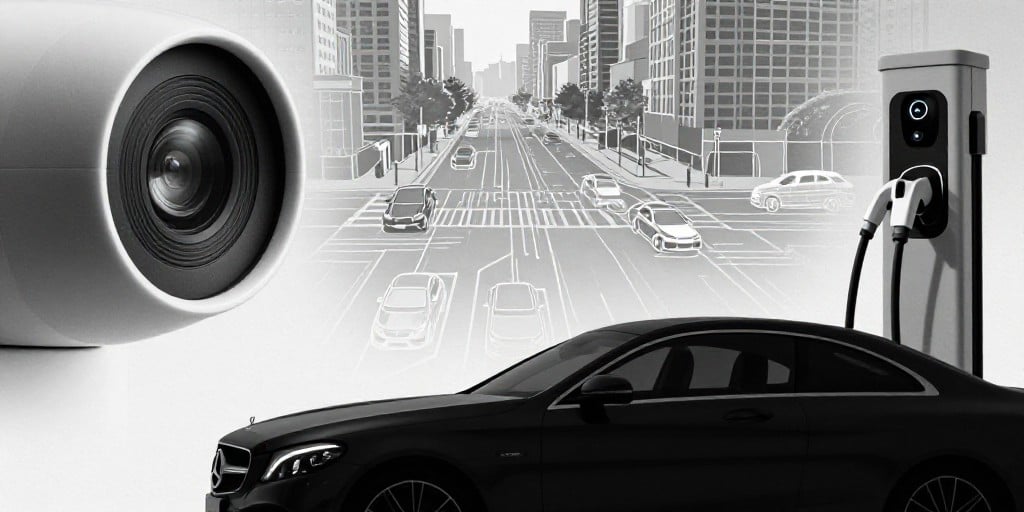
Mercedes‑Benz Group AG Expands HCT Luna Smart‑Camera Deployment
Mercedes‑Benz Group AG has announced a significant expansion of its high‑performance smart‑camera system, the HCT Luna, across a wide range of passenger vehicles. The solution, which is powered by QNX OS for Safety and built on Horizon Robotics’ Journey 6B compute platform, has secured a major programme win with a German automaker. Production is slated to begin in 2027, with the first three years expected to see volumes in the millions of units as the system is rolled out in China and selected markets in Australia, New Zealand, Japan and South Korea.
Technical and Commercial Foundations
The partnership between QNX and neueHCT brings together two complementary strengths:
| Element | Contribution |
|---|---|
| QNX OS for Safety | Long‑standing safety certification and real‑time performance |
| neueHCT architecture | Scalable intelligent‑driving framework adaptable to diverse vehicle platforms |
| Horizon Robotics Journey 6B | High‑performance compute platform tailored for automotive safety workloads |
This combination allows the HCT Luna system to deliver core active‑safety features—including automatic emergency braking, lane‑departure warning and traffic‑light recognition—while maintaining flexibility to accommodate regional regulatory requirements and platform variations. The joint venture exemplifies a broader shift within the automotive industry toward software‑centric safety and connectivity solutions that can be deployed across multiple models and markets with minimal redesign.
Market Timing and Volume Outlook
Mercedes‑Benz’s decision to deploy the HCT Luna in 2027 aligns with its broader electrification and autonomous‑driving roadmap. The projected production volumes, reaching several million units over the first three years, reflect confidence in the system’s commercial viability in high‑growth regions such as China, Japan, South Korea, Australia and New Zealand. These markets have increasingly demanded advanced driver‑assist systems (ADAS) as a precondition for new vehicle approvals and consumer expectations.
Industry and Economic Context
The German automotive sector remains sensitive to commodity cost fluctuations and currency movements. Recent adjustments in pricing strategies by several manufacturers—including Mercedes‑Benz—highlight the ongoing pressure to balance cost inputs with market competitiveness. In this environment, the company’s emphasis on advanced driver‑assist technologies and strategic software partnerships positions it to mitigate price volatility risks and accelerate its transition toward electric and autonomous vehicles.
Cross‑Sector Implications
The HCT Luna’s scalable architecture and reliance on a proven safety‑oriented operating system illustrate a growing trend that transcends the automotive sector. Similar models are emerging in the commercial‑vehicle, aerospace, and industrial automation markets, where safety‑critical software and modular hardware platforms enable rapid deployment across diverse product lines. By adopting a modular approach, Mercedes‑Benz reduces development time, lowers per‑unit costs, and enhances the ability to adapt to evolving regulatory landscapes.
Conclusion
Mercedes‑Benz Group AG’s expanded deployment of the HCT Luna smart‑camera solution represents a strategic alignment with industry trends toward software‑centric safety, scalability, and cross‑market applicability. Coupled with its focus on electrification and autonomous driving, the initiative is poised to support the company’s long‑term competitiveness in a landscape defined by commodity cost volatility and rapid technological evolution.