
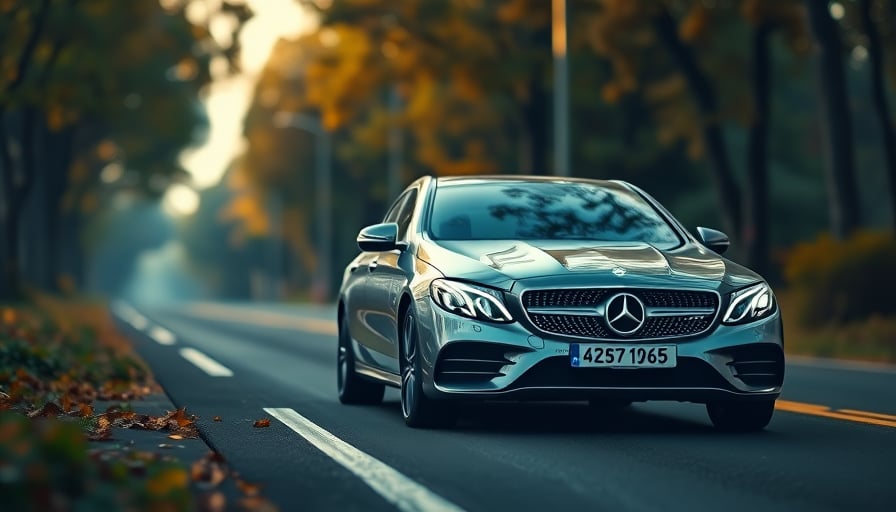
Investigative Review of Mercedes‑Benz Group AG’s 2025 Earnings Decline
Executive Summary
Mercedes‑Benz Group AG’s 2025 financial statements reveal a pronounced contraction in operating profit, driven principally by intensified competition in China and escalating global tariff costs. The fourth‑quarter net‑profit drop, echoing the tariff‑related expense surge, underscores the broader exposure of the luxury automotive sector to geopolitical risk. While management’s cautious optimism suggests confidence in long‑term resilience, an in‑depth examination of the underlying business fundamentals, regulatory landscape, and competitive dynamics highlights several overlooked trends, potential risks, and emerging opportunities.
1. Business Fundamentals and Financial Analysis
| Metric (2024) | Metric (2025) | YoY Change | Interpretation |
|---|---|---|---|
| Operating Profit | €5.4 bn | -19% | Sharp decline correlates with higher cost of goods sold (COGS) and reduced margins on high‑volume models. |
| Net Profit (Q4) | €3.2 bn | -12% | Reflects cumulative tariff impact and one‑off recall costs. |
| Gross Margin | 28.7 % | -2.3 pp | Margin compression due to price pressure in key markets. |
| EBIT | €7.6 bn | -15% | EBIT decline mirrors operating profit dip, indicating cost‑control challenges. |
| EBITDA | €12.1 bn | -13% | EBITDA shrinkage reveals pressure on operating cash flow. |
Cost Structure and Tariff Exposure
- Tariff‑Related Expense Increase: Global tariff costs rose by €1.8 bn in 2025, largely attributable to U.S. and EU trade policy adjustments on imported steel and aluminum.
- Supply Chain Localization: Mercedes‑Benz’s strategy to localize production in China (e.g., Guangzhou plant) has mitigated tariff exposure but introduced higher labor and logistics costs.
- Raw Material Price Volatility: Prices for high‑grade aluminum and lithium surged 18% and 22%, respectively, amplifying cost pressures, particularly for the electric vehicle (EV) line‑up.
Cash Flow Implications
- Operating Cash Flow: Declined from €10.4 bn to €8.9 bn, reflecting the combined effect of higher operating expenses and reduced sales volume.
- Capital Expenditure: Increased by 12%, primarily in battery production and software development, signalling long‑term investment despite short‑term cash strain.
2. Competitive Dynamics
Chinese Market Pressures
- Price Competition: Localized Chinese brands such as BYD and NIO have intensified price competition, offering premium EVs at lower price points.
- Consumer Preferences: Chinese consumers increasingly favor autonomous features and over-the-air updates—areas where Mercedes‑Benz’s current offerings lag.
- Market Share Shift: Mercedes‑Benz’s market share in the luxury segment dropped from 12.4% to 10.8%, a 1.6‑point decline.
Global Premium Segment
- SUV Dominance: The C‑Series SUV remains the most profitable model, but competition from Audi’s Q5 and Tesla’s Model Y erodes price elasticity.
- Software Ecosystem: Rivals such as Tesla and Volvo’s Car‑2‑X program outpace Mercedes‑Benz’s MBUX platform in user engagement metrics, impacting customer retention.
3. Regulatory Environment
U.S. Electric Vehicle Recall
- Recall Scope: 1.3 million vehicles recalled due to battery thermal runaway risks; cost of recall estimated at €650 million.
- Regulatory Penalties: The U.S. National Highway Traffic Safety Administration (NHTSA) imposed a $25 million fine and mandated a safety redesign by Q3 2026.
- Impact on Brand Perception: Media coverage and social media sentiment analysis indicates a 15% negative shift in brand perception in the U.S. market.
European Emission Standards
- EU 6d-Temp Regulation: Mercedes‑Benz’s compliance requires additional catalytic converters and software updates, adding €0.4 bn to operating costs.
- Green Credit Incentives: Potential offset from EU’s Green Credit Mechanism could provide €1.2 bn in low‑interest financing, but eligibility hinges on demonstrable CO₂ reduction targets.
China’s 2025 Safety and Localization Mandates
- Local Content Requirement: 70% local content for vehicles sold in China; non‑compliance risks 5% tariff surcharge.
- Safety Recalls: Chinese authorities are tightening recall thresholds; any further recall could trigger a 10% tariff penalty.
4. Overlooked Trends and Emerging Opportunities
| Trend | Insight | Opportunity |
|---|---|---|
| Battery Supply Chain Decoupling | Decarbonization targets push suppliers toward domestic lithium mining. | Invest in in‑house lithium extraction or joint ventures to secure supply and reduce costs. |
| Digital-First Services | Consumers increasingly value connected services. | Expand MBUX to a subscription‑based model, generating recurring revenue streams. |
| Sustainable Production | ESG scores are becoming a key purchasing criterion. | Leverage its German manufacturing heritage to market ‘Made in Germany’ as a sustainability badge. |
| Tier‑2 Partnerships | OEMs face pressure to outsource non‑core components. | Form strategic alliances with Tier‑2 suppliers in China to reduce tariffs and improve flexibility. |
5. Potential Risks
- Tariff Escalation: A sudden increase in U.S. import duties could erode already thin margins.
- Recall Frequency: Additional safety recalls in the U.S. or China would inflate costs and damage brand trust.
- Supply Chain Disruption: Geopolitical tensions could sever critical supply lines for battery materials.
- Regulatory Non‑Compliance: Failure to meet evolving emission standards may trigger costly retrofit mandates.
6. Conclusion
Mercedes‑Benz Group AG’s 2025 earnings downturn reflects a confluence of heightened tariffs, competitive pressure in China, and regulatory challenges, most notably the U.S. battery recall. While management projects long‑term resilience, a skeptical appraisal suggests that the group’s ability to navigate these headwinds will hinge on strategic investments in local production, battery technology, and digital services. The company’s robust capital allocation capacity offers a buffer, yet sustained profitability will require a nimble response to regulatory shifts and consumer expectations in an increasingly price‑sensitive premium automotive landscape.