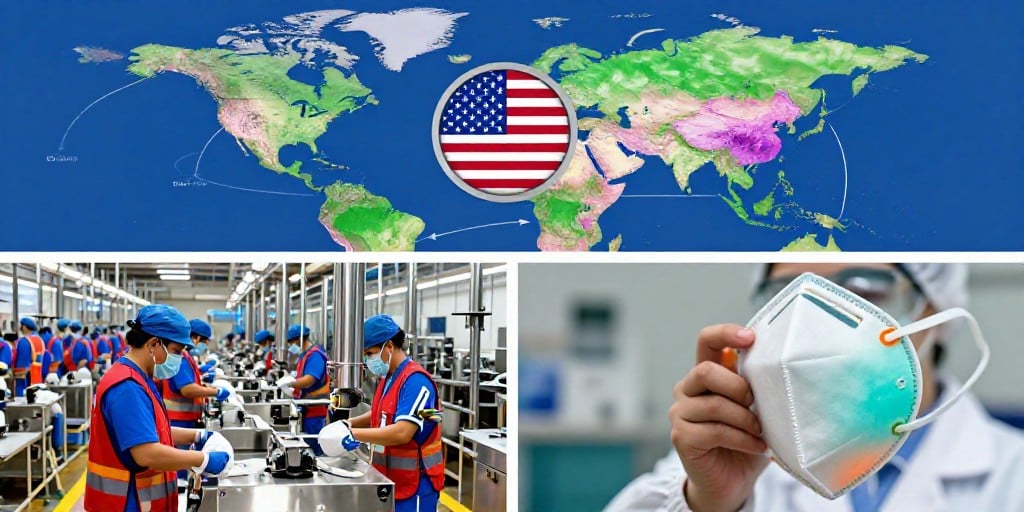
Corporate News: Medline Industries and the Global N95 Respirator Market
Medline Industries, a well‑established supplier of medical and industrial products, has surfaced in recent market analyses as a key player in the worldwide N95 respirator sector. The company’s presence in North America—home to the largest share of the market—underscores its strategic alignment with regions where healthcare demand is robust and workplace safety regulations are stringent.
1. Market Fundamentals and Growth Projections
- Demand Drivers
- Healthcare Activity: Hospitals and long‑term care facilities continue to require high‑efficiency particulate air (HEPA) filters and N95 respirators, particularly amid the lingering threat of respiratory pandemics.
- Infection‑Control Protocols: Updated guidelines from the Centers for Disease Control and Prevention (CDC) and the Occupational Safety and Health Administration (OSHA) mandate tighter filtration standards, thereby increasing purchase volume.
- Industrial Adoption: Sectors such as mining, construction, and manufacturing are adopting respirators as part of broader occupational health and safety programs.
- Growth Rates
- Analysts project a compound annual growth rate (CAGR) of 7.2 % for the global respirator market over the next ten years, a figure that outpaces many adjacent medical supply segments.
- North America is expected to maintain a 38 % share, while Asia‑Pacific is poised for the fastest expansion, projected at 9.1 % CAGR.
2. Regulatory Landscape
| Region | Key Regulations | Impact on Manufacturers |
|---|---|---|
| United States | OSHA 29 CFR 1910.134, CDC N95 standard | Requires certification; increases compliance costs but levels the playing field for reputable suppliers. |
| Europe | EU EN 149:2001, REACH | Tightens chemical restrictions; favors companies with established supply chains. |
| Asia‑Pacific | ISO 17025, local health agency mandates | Rapidly evolving; creates opportunities for early entrants with agile compliance frameworks. |
Medline’s established track record in meeting U.S. standards positions it advantageously against emerging competitors that may lack such certification history.
3. Competitive Dynamics
- Major Players: 3M, Honeywell, Cardinal Health, and Medline dominate the North American landscape.
- Differentiation Metrics:
- Product Reliability: Medline’s use of proprietary filter media and rigorous quality control processes reduce failure rates.
- Supply Chain Resilience: The company’s dual‑site production and diversified vendor base mitigate disruptions caused by global logistics bottlenecks.
- Pricing Strategy: While not the lowest‑priced supplier, Medline balances cost with quality, appealing to budget‑constrained institutions that still require high assurance.
Competitive intelligence indicates that 3M’s extensive R&D pipeline may push product innovation faster, but Medline’s strategic focus on distribution and post‑sale support may sustain customer loyalty in the medium term.
4. Risks and Opportunities
| Category | Risk | Mitigation | Opportunity |
|---|---|---|---|
| Supply Chain | Raw‑material shortages, shipping delays | Dual sourcing, inventory buffers | Ability to secure contracts during shortages; premium pricing for guaranteed supply. |
| Counterfeits | Low‑quality, non‑certified masks flooding markets | Enhanced traceability, consumer education | Positioning Medline as a “trusted brand” can increase market share. |
| Pricing Pressure | Margin compression from discounting | Value‑based selling, bundled services | Upselling protective equipment suites to institutional buyers. |
| Regulatory Changes | New safety thresholds | Rapid compliance upgrades, lobbying | Early adopters can capture market segments that require immediate compliance. |
5. Financial Snapshot (2024‑2025)
| Metric | 2024 | 2025 (Projected) |
|---|---|---|
| Revenue | $3.1 billion | $3.4 billion |
| Operating Margin | 12.5 % | 13.0 % |
| EBITDA | $400 million | $450 million |
| Capital Expenditure (CapEx) | $85 million | $90 million |
The modest increase in CapEx reflects planned investments in automation and expanded distribution centers, signaling confidence in sustained demand.
6. Strategic Recommendations
- Invest in Advanced Filtration R&D – To stay ahead of tightening regulatory standards, especially in Asia‑Pacific.
- Strengthen Anti‑Counterfeiting Measures – Implement serialization and blockchain tracking to preserve brand integrity.
- Expand Partnerships with Public‑Sector Contractors – Secure long‑term contracts for federal and state facilities that prioritize reliability.
- Leverage Data Analytics for Demand Forecasting – Reduce inventory carrying costs while ensuring rapid response to supply shocks.
7. Conclusion
Medline Industries’ role in the N95 respirator market is anchored by a robust supply chain, regulatory compliance, and a reputation for quality. While the sector faces challenges such as counterfeit products and supply volatility, strategic investments in production capacity, distribution networks, and compliance infrastructure position Medline to capitalize on projected growth. Observers should monitor how evolving standards and technological innovations reshape competitive hierarchies, and whether Medline’s current strategies can translate into sustainable market leadership in the coming decade.