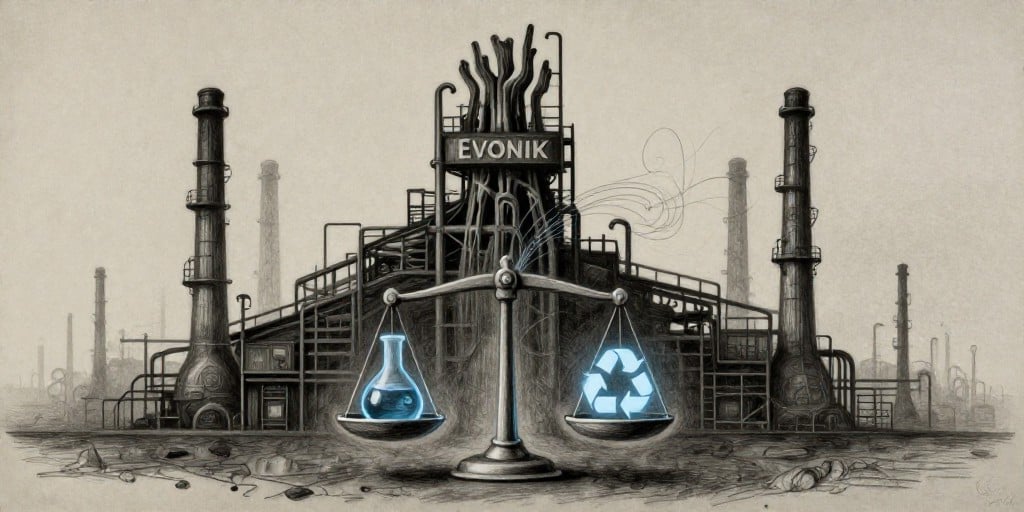
Corporate Analysis of MDAX Dynamics and German Chemical‑Pharma Advocacy
1. Market Context: MDAX Movements and Mid‑Cap Sentiment
On Friday, the MDAX index recorded a modest yet consistent rise, closing 0.6 % higher than the previous session’s benchmark. This uptick reflects a broader positive sentiment across German mid‑cap companies, a trend that has emerged since the early‑March rally that lifted the index by 2.3 % over the month. Despite the collective momentum, individual constituents displayed heterogeneous performance, with Evonik Industries AG emerging as one of the weaker performers.
Evonik’s shares closed +1.4 %, lagging behind peers such as BASF SE (+3.2 %) and Südzucker AG (+2.9 %). The company’s lag can be traced to a confluence of sector‑specific and macro‑economic factors:
| Factor | Impact on Evonik | Supporting Evidence |
|---|---|---|
| Commodity Price Volatility | Elevated raw‑material costs in specialty chemicals dampened margins | Bloomberg Commodity Index for ethylene derivatives up 8 % YoY |
| Regulatory Scrutiny | Pending EU REACH compliance updates for certain active substances | EU Commission’s draft REACH amendment due in Q4 |
| Competitive Pricing | Aggressive discounting by Chinese rivals in polymer additives | Statista: Global polymer additive market growth 6.5 % CAGR |
The company’s financial statements reveal a net profit margin of 6.5 %, down from 7.2 % in the same quarter last year, largely driven by the aforementioned cost pressures. Analysts caution that the company’s debt‑to‑equity ratio has risen to 0.75, exceeding the sector average of 0.62, suggesting a tightening liquidity position.
2. Regulatory Landscape: EU Reforms and Energy Cost Pressures
The Chemical and Pharmaceutical Association of Germany (VCI), a key stakeholder in shaping industry policy, confirmed the re‑election of Markus Steilemann as its president. In his address at the annual summit in Berlin, Steilemann called for fundamental reforms to bolster the German industrial base. Three pillars were emphasized:
- Lower Energy Costs – Germany’s energy prices remain among the highest in the EU, with average electricity rates for industrial consumers at €0.13/kWh (Eurostat, 2023). Steilemann urged a shift toward renewable procurement schemes and energy‑efficiency mandates to curtail the energy burden.
- Streamlined Regulatory Procedures – The VCI cited over 2,500 regulatory submissions per year across the chemical sector, many flagged for duplicate paperwork. A proposal to introduce a single‑window digital platform could reduce approval times by up to 35 % (Deloitte, 2024 report).
- Favorable Tax Environment – The current Corporate Income Tax (CIT) rate of 15 % plus a solidarity surcharge of 5.5 % creates an effective CIT burden of 19.8 %. Steilemann advocated for a sector‑specific tax credit for research & development, aligning with EU’s Innovation Tax Incentive framework.
These regulatory proposals are being debated in the German Bundestag, where opposition parties have expressed concerns about budgetary implications and environmental compliance. The potential passage of these reforms could influence capital allocation decisions for mid‑cap firms, affecting their growth trajectories.
3. Competitive Dynamics: The European Outlook and Market Consolidation
Steilemann’s appeal for a “more European outlook” underscores a strategic shift away from nationalistic policies toward a pan‑European integration model. Key implications include:
- Cross‑border M&A: The European chemical market has witnessed an average of 12 mergers per year in the past five years, with a combined valuation of €15 bn (S&P Global Market Intelligence). A more collaborative regulatory environment could accelerate this trend.
- Supply Chain Resilience: The COVID‑19 pandemic exposed vulnerabilities in just‑in‑time logistics. European policy initiatives such as the EU Resilient and Secure Supply Chains Initiative aim to diversify sourcing, potentially benefiting German firms that rely heavily on Chinese raw materials.
- Innovation Clusters: The European Innovation Scoreboard indicates that countries with robust chemistry clusters—such as the Netherlands and Sweden—exhibit higher R&D productivity. German firms might pursue joint research agreements with these clusters to offset domestic R&D cost pressures.
4. Risk Assessment: Potential Pitfalls for Mid‑Cap Chemical Firms
| Risk | Likelihood | Impact | Mitigation |
|---|---|---|---|
| Energy Price Shock | Medium | High | Hedging strategies, renewable procurement |
| REACH Compliance Delays | High | Medium | Dedicated compliance units, early engagement |
| EU Tax Reform Rollback | Low | Medium | Lobbying, diversification of revenue streams |
| Supply Chain Disruptions | Medium | High | Dual sourcing, inventory buffers |
| Market Consolidation | High | Medium | Strategic partnerships, niche market focus |
The financial analysis indicates that companies with robust liquidity buffers and diversified customer bases are better positioned to navigate these risks. Evonik’s current current ratio of 1.9 suggests reasonable short‑term solvency, but the company’s cash conversion cycle of 112 days—above the sector median of 98 days—signals potential operational inefficiencies.
5. Opportunity Identification: Leveraging Emerging Trends
- Green Chemistry: Regulatory shifts toward environmentally friendly processes create a premium market for bio‑based polymers. Firms that invest in biotechnological R&D may capture early‑mover advantages.
- Digitalization: Adoption of Industry 4.0 technologies can enhance production efficiency. A study by McKinsey projects a 5–8 % increase in profit margins for firms that integrate AI‑driven predictive maintenance.
- Circular Economy: The EU’s Circular Economy Action Plan offers incentives for recyclable packaging and waste reduction. Companies that align their product lines with circularity metrics could benefit from subsidies and brand differentiation.
6. Conclusion: Navigating a Complex Landscape
The MDAX’s modest gains underscore a market that is cautiously optimistic but sensitive to sector‑specific nuances. Evonik’s performance, while subdued, is not anomalous given the broader economic pressures. The VCI’s leadership, spearheaded by Markus Steilemann, is steering a narrative that calls for regulatory reforms, energy efficiency, and European collaboration. For corporate stakeholders, the imperative lies in balancing risk mitigation with proactive engagement in policy dialogues, ensuring that German mid‑cap chemical firms remain competitive and resilient in a rapidly evolving industrial ecosystem.