Market Overview
The German MDAX index advanced steadily in the early session, closing the morning trade up 0.48 % to 31,400 points. The index opened at 31,400 and remained within a modest daily range, peaking near 31,480 points before settling at 31,340 points.
Key Drivers and Sectoral Performance
Strong Performers
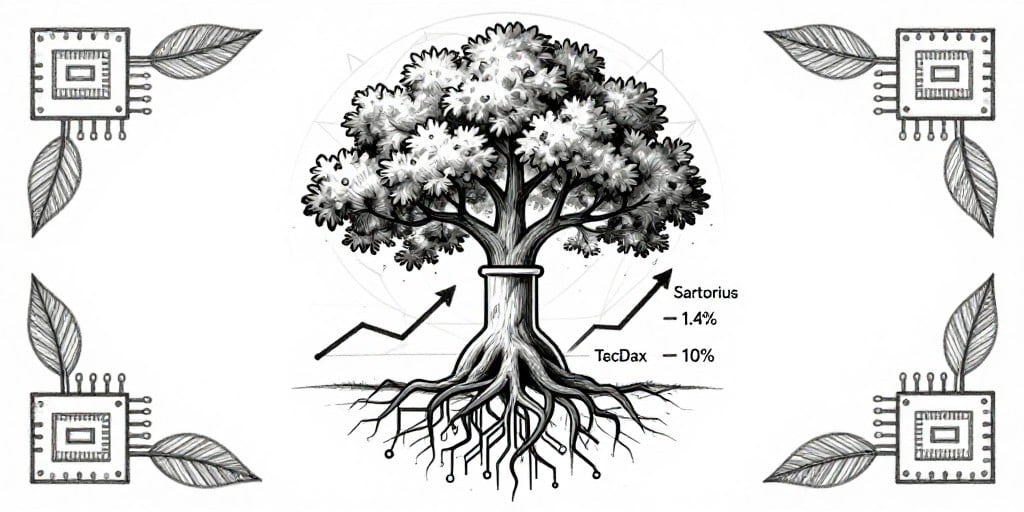
Nemetschek SE – up +3.0 % The software firm’s gains reflected renewed confidence in digital infrastructure solutions, a sector that continues to benefit from accelerated digitisation across industries.
Schaeffler – up +1.5 % The industrial‑engineering group posted gains as demand for automotive and industrial components remains resilient amid global supply‑chain optimisation efforts.
DEUTZ – up +2.0 % The agricultural‑machinery manufacturer’s performance was supported by a robust order backlog and strong pricing power in key growth markets.
Other notable double‑digit performers included HENSOLDT and AUMOVIO, whose advances were driven by heightened demand for defence‑grade electronics and healthcare technology, respectively.
Weak Performers
Evonik Industries – down -1.1 % The chemical group’s decline mirrored a broader slide among chemically focused constituents, indicating modest sectoral weakness.
Bilfinger SE, Wacker Chemie, K+S, and Lanxess – losses ranging from -1 % to -24 % These companies suffered from sector‑specific headwinds such as tightening commodity pricing, regulatory pressures, and competitive intensity in the specialty‑chemicals space.
Annual Trend and Market Context
From the beginning of 2026, the MDAX has advanced more than 1 %, underscoring a sustained upward trajectory despite intermittent sectoral volatility. The index remains in a phase of gradual consolidation, characterised by a balanced mix of upside and downside moves across individual constituents.
The broader economic backdrop features:
- Monetary policy: Continued tightening by the European Central Bank has exerted modest pressure on corporate earnings but has not deterred investor confidence in growth‑oriented sectors.
- Supply‑chain dynamics: Persistent disruptions have prompted a shift towards resilient logistics solutions, benefiting companies like Schaeffler.
- Technological acceleration: Digital transformation initiatives are driving demand for software and advanced manufacturing capabilities, benefitting firms such as Nemetschek SE.
Cross‑Sectoral Insights
The performance patterns observed in the MDAX highlight several cross‑sectoral themes:
- Digitalisation and Automation – Companies offering digital platforms or automation solutions consistently outperform, reflecting a universal shift towards efficiency and data‑driven decision‑making.
- Supply‑Chain Resilience – Firms with robust supply‑chain frameworks enjoy a competitive edge, as evidenced by Schaeffler’s gains amid global logistics challenges.
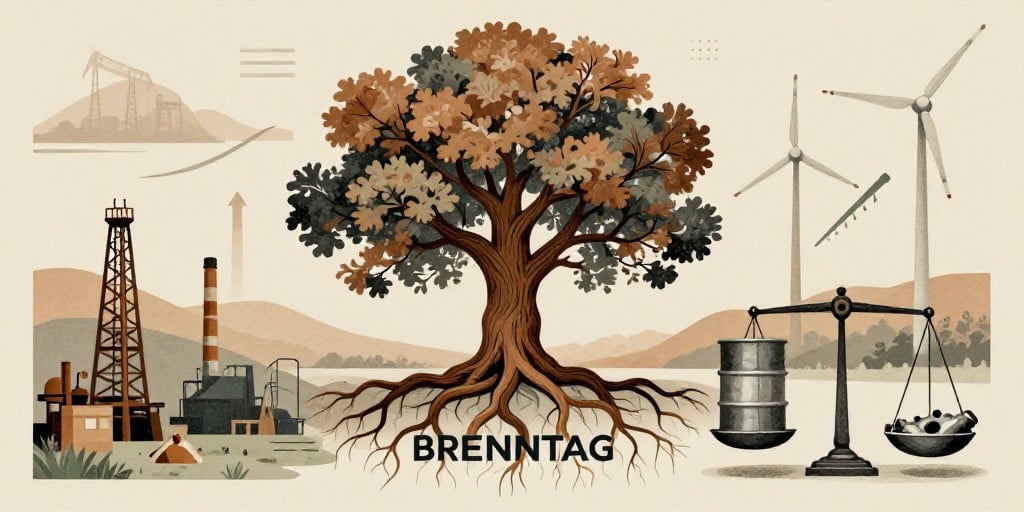
- Commodity Sensitivity – Chemical and materials companies remain sensitive to commodity price swings, illustrating the enduring link between raw‑material costs and valuation dynamics.
These insights underscore that, while individual sectors face unique risks, the overarching economic forces—digitisation, supply‑chain resilience, and commodity volatility—transcend industry boundaries and shape corporate performance across the board.