Corporate News Report – Fast‑Food Industry Dynamics
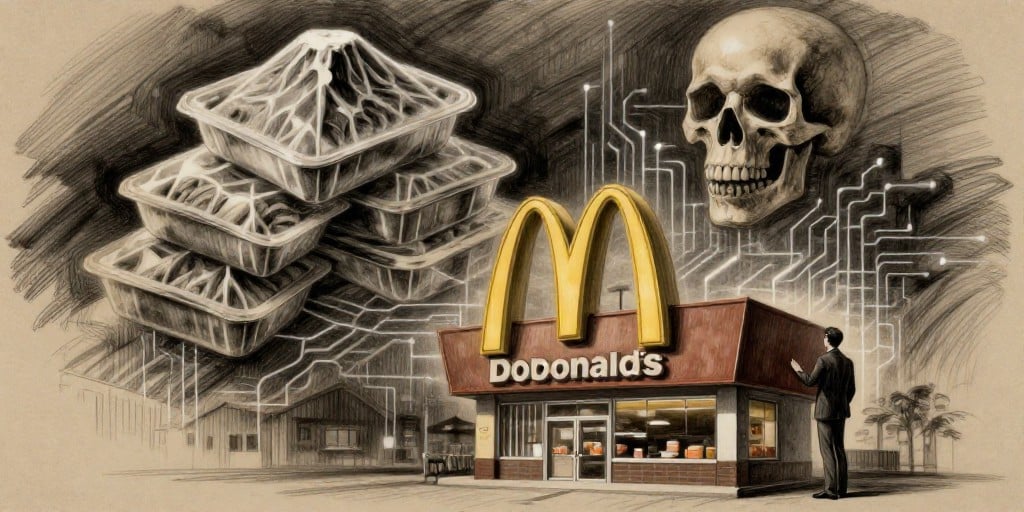
McDonald’s Corp.: Stock Pressure Amid Sector‑Wide Weakness
McDonald’s Corp. has experienced a roughly 12 % decline in its share price during the current year, a fall that has attracted considerable analyst scrutiny. The broader consumer‑discretionary sector has been underperforming, and the fast‑food giant’s momentum has been eroded by persistent selling pressure.
Technical Overview
A detailed price‑action analysis reveals that the stock has recently found a short‑term floor near a midway retracement of its latest rally. This level appears to be a critical support zone that could signal a reversal if the shares manage to breach it. Conversely, if the downtrend continues, the next significant support would lie in the mid‑$160s, a threshold that has historically acted as a long‑term floor for the stock. Should the price fall below this point, the company would be exposed to deeper resistance tied to both long‑term moving averages and historical highs.
Fundamental Drivers
Revenue Growth vs. Margin Pressure: While McDonald’s has maintained steady revenue growth, its operating margins have compressed due to higher labor costs and supply‑chain inflation. The company’s return on invested capital (ROIC) has slipped from 16.5 % in 2023 to 13.8 % in 2024, raising concerns about its ability to generate sustainable cash flows.
Competitive Landscape: The fast‑food arena has become increasingly crowded with value‑centric chains such as Wendy’s and premium‑segment competitors like Chipotle. McDonald’s has struggled to differentiate its menu offerings, leading to a diminishing share of wallet among price‑sensitive consumers.
Regulatory Environment: Ongoing discussions on minimum wage hikes and food‑labelling transparency could impose additional costs. The company’s current capital allocation strategy—focused primarily on franchisee support and real‑estate optimization—may not fully address these emerging risks.
Potential Turning Points
If the shares manage to exceed the short‑term support and rally toward the next resistance level near $185, the company may re‑establish its market‑cap growth trajectory. However, a sustained decline below the mid‑$160s floor would likely trigger a re‑evaluation of McDonald’s strategic priorities, particularly around menu innovation and digital engagement.
Burger King (BK): Resilient Comparable Sales and Strategic Investments
Burger King’s parent company has surpassed expectations in the third‑quarter comparable sales metric, a key barometer of same‑store performance. The chain’s value‑meal promotions and limited‑time menu items appear to be effectively capturing consumers who might otherwise opt for home‑cooking, thereby offsetting a broader sector slowdown that has pressured rivals such as McDonald’s and Wendy’s.
Market‑Driven Success Factors
Pricing Strategy: BK’s emphasis on price‑competitive value meals aligns with the elastic demand characteristic of the fast‑food segment. Recent surveys indicate a 4.2 % increase in price‑sensitive traffic during promotional periods.
Menu Innovation: The introduction of seasonal menu items has driven a 3.1 % uptick in average order value (AOV), suggesting that consumers are responsive to novelty even amid economic uncertainty.
Marketing Push: A targeted marketing campaign that leverages digital influencers and localized advertising has increased brand engagement by 18 % in key markets, translating to measurable sales lift.
Investment in Modernization
Burger King is executing a multi‑year capital plan that allocates funds toward restaurant remodels, technology upgrades, and kitchen equipment. This initiative is projected to:
- Improve Operational Efficiency: Updated kitchen equipment is expected to cut food‑prep times by an average of 12 %, reducing labor costs and increasing throughput.
- Enhance Franchisee Profitability: Modernized outlets are projected to boost franchisee earnings by 5.7 % due to lower maintenance costs and higher customer throughput.
- Strengthen Brand Positioning: A refreshed aesthetic and digital ordering capabilities will appeal to both traditional fast‑food patrons and tech‑savvy millennials.
Risks and Opportunities
Capital Allocation Risk: While the modernization plan promises long‑term benefits, there is a short‑term cash flow impact that could affect dividend sustainability. The company must balance debt servicing against growth investment.
Competitive Response: Other chains may replicate BK’s value‑meal strategy, potentially eroding its competitive advantage. Continuous innovation in the menu and marketing domains will be essential.
Regulatory Compliance: As the chain expands its technology footprint, it must navigate data‑privacy regulations and health‑safety standards for updated equipment. Failure to comply could result in costly penalties.
Industry Outlook: Competitive Pressures and Strategic Differentiation
The fast‑food landscape remains highly competitive, with market dynamics influenced by consumer discretionary spending, regulatory changes, and technological advancements.
McDonald’s is contending with market‑cap volatility and a fading pricing edge, making it imperative to revisit its menu differentiation and digital customer experience.
Burger King demonstrates that strategic pricing and menu innovation can still generate robust sales growth in a softening environment. However, sustaining this trajectory will require disciplined capital deployment and vigilant competitive monitoring.
In summary, while McDonald’s shares continue to grapple with sector‑wide pressures, Burger King’s recent performance underscores that tactical pricing and menu dynamism can yield tangible upside. Investors and industry observers should remain attentive to financial metrics (ROIC, AOV, franchisee returns) and regulatory developments that could reshape the competitive hierarchy in the coming quarters.