
McDonald’s Shares Survive Market Volatility Amid Shifting Consumer Dynamics
The fast‑food giant’s stock modestly outperformed the broader market in a session marked by widespread sell‑off across technology and industrial sectors. While the Nasdaq and S&P 500 recorded notable declines, McDonald’s shares exhibited a slight uptick, underscoring the firm’s defensive appeal in a climate of heightened risk sentiment. No corporate announcement or earnings release was the catalyst; the price action appears rooted in broader market dynamics and investors’ reassessment of exposure to higher‑growth, more volatile segments.
Digital Transformation Meets Brick‑and‑Mortar
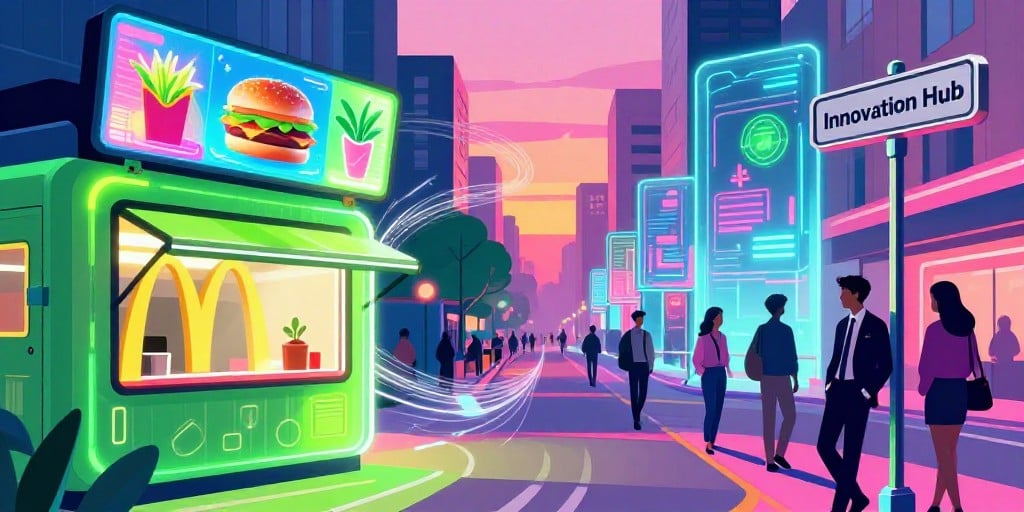
McDonald’s has accelerated its digital agenda for several years, deploying a mobile ordering platform that has captured a growing share of the “digital‑first” consumer. Yet the company’s resilient share performance today signals that the integration of technology with physical retail remains a compelling proposition. Consumers now expect seamless omnichannel experiences: a mobile‑app order, a drive‑through pickup, or a digital‑payment at the table. This convergence offers a blueprint for other consumer‑goods firms: digital tools can enhance the in‑store experience, reduce friction, and generate data that refine menu offerings and inventory management.
The ongoing shift towards “experience‑centric” consumption is a cultural movement that has reshaped the competitive landscape. Millennials and Gen Z, now the dominant consumer cohort, prioritize convenience, personalization, and ethical sourcing. McDonald’s has responded by expanding its plant‑based menu, experimenting with local‑sourced ingredients, and launching digital loyalty programs that reward sustainable choices. These initiatives resonate with a demographic that values transparency and social impact—factors that can translate into repeat patronage and higher lifetime value.
Generational Spending Patterns and Consumer Experience Evolution
The rise of Generation Z has amplified the importance of digital engagement in the fast‑food sector. This cohort’s spending patterns differ markedly from those of older generations: they are more price‑sensitive, yet willing to spend on experiential and ethical aspects of a brand. McDonald’s has tapped into this by leveraging social‑media‑friendly food designs, limited‑time collaborations with pop‑culture icons, and interactive digital menus that allow for extensive customization. Such tactics not only drive foot traffic but also create shareable moments that reinforce brand relevance among younger audiences.
Furthermore, the pandemic has accelerated the acceleration of remote and hybrid lifestyles, altering how people dine. A significant portion of consumers now order for delivery or pick‑up rather than dine in. McDonald’s extensive delivery partnerships and its “McDelivery” initiative demonstrate a strategic pivot to capture these new consumption patterns. By blending the speed of digital ordering with the physical presence of a global franchise network, McDonald’s positions itself to capture a broader share of the evolving dining ecosystem.
Market Opportunities and Forward‑Looking Implications
The resilience of McDonald’s stock during a period of market weakness underscores the attractiveness of consumer staples that blend physical retail with digital innovation. For investors, this suggests that companies offering stable earnings, consistent dividends, and a strong omnichannel strategy may serve as safe havens when volatility spikes. Firms that fail to integrate digital tools into their brick‑and‑mortar footprint risk being left behind in a world where consumers increasingly value convenience and personalization.
From a strategic standpoint, McDonald’s can further capitalize on cultural trends by:
- Expanding Sustainable Offerings: Introducing more plant‑based and locally sourced menu items to appeal to ethically minded consumers.
- Leveraging Data Analytics: Utilizing customer data from digital platforms to optimize supply chains and reduce waste.
- Enhancing In‑Store Experiences: Implementing digital kiosks, contactless payment systems, and AI‑driven personalization to create a future‑proof retail environment.
- Partnering with Tech Startups: Collaborating on innovations such as autonomous delivery vehicles or smart kitchen automation.
These initiatives not only align with shifting generational preferences but also position McDonald’s as a leader in the evolving consumer experience landscape.
In summary, the modest gain in McDonald’s shares amid broader market sell‑off reflects the firm’s defensive posture and its adeptness at marrying digital transformation with physical retail. As lifestyle trends and cultural movements continue to reshape how consumers interact with brands, companies that seamlessly integrate technology into their core business models—and do so in a way that resonates with the values of younger generations—stand to gain a competitive advantage in the consumer sector.