
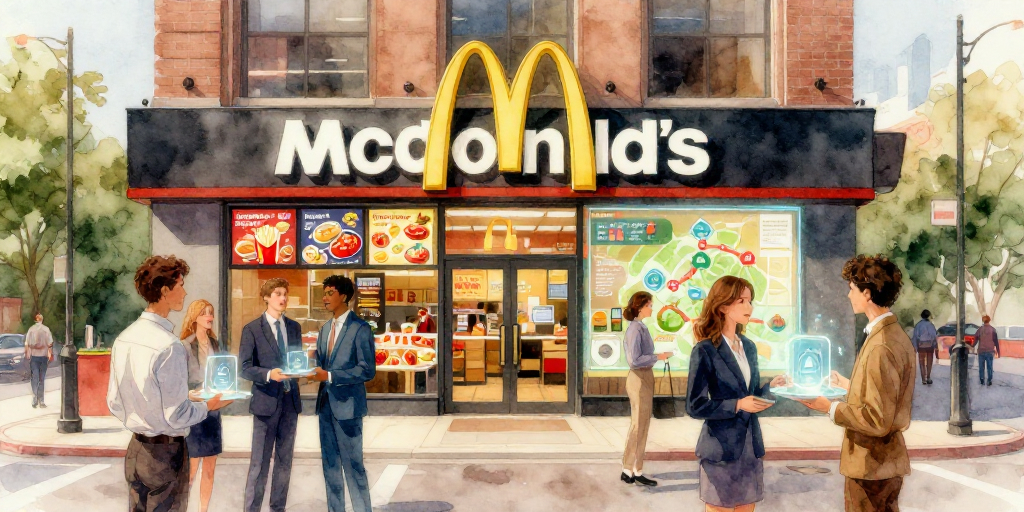
Corporate News Analysis: McDonald’s Navigating Global Market Dynamics
McDonald’s Corporation is actively adapting its global strategy in response to shifting consumer behaviors, evolving retail environments, and heightened expectations around sustainability. Recent developments in Germany, the United Kingdom, and the United States illustrate the company’s broader approach to balancing price, experience, and corporate responsibility across diverse markets.
1. Germany: Pricing Pressure and the Value‑Driven Consumer
In Germany, the price of the Big Mac has risen beyond five euros, reflecting a continent‑wide trend of menu inflation. The move is symptomatic of a broader shift in German consumer preferences, where health consciousness and local sourcing are increasingly linked to willingness to pay. The rise in price, while underlining cost‑management challenges, also opens opportunities for McDonald’s to reinforce its value proposition through digital ordering and delivery.
- Digital‑First Experience: Germany’s high mobile penetration and the popularity of contactless payment create a fertile ground for McDonald’s to introduce mobile‑app‑based loyalty programs that bundle discounts with personalized menu recommendations.
- Health‑Focused Innovation: By expanding its plant‑based menu and promoting locally sourced ingredients, the chain can align with the “slow food” movement, attracting younger, affluent consumers who are willing to pay a premium for perceived quality and sustainability.
These tactics would transform the traditional drive‑through model into a hybrid experience where price transparency and health narratives coexist.
2. United Kingdom: CSR‑Driven Expansion in Hospitality
The United Kingdom is witnessing McDonald’s rollout of a new Corporate Social Responsibility (CSR) platform slated for launch in the next quarter. This initiative seeks to streamline partnership and development processes with local providers while reinforcing the company’s sustainability agenda.
- Local Supplier Ecosystems: By digitizing supplier onboarding, McDonald’s can reduce lead times, cut waste, and build stronger community ties—key factors that resonate with Generation Z and Millennials who prioritize ethical sourcing.
- Integrated Sustainability Metrics: Embedding real‑time data on carbon footprints, water usage, and waste reduction into the platform will allow McDonald’s to benchmark progress against industry standards. Such transparency not only satisfies regulatory demands but also meets the expectations of socially conscious consumers.
The platform’s rollout positions McDonald’s as a partner rather than a vendor in local hospitality ecosystems, a strategic shift that may open new revenue streams through co‑branding and joint marketing initiatives.
3. United States: Operational Efficiency Meets Consumer Experience
In the United States, McDonald’s reports moderate growth driven by strategic menu updates and operational efficiencies across key markets. The company’s emphasis on sales and service performance is consistent with a broader industry trend towards experiential retail.
- Menu Diversification: Introducing limited‑time regional specialties and data‑driven menu optimization helps capture the “foodie” mindset that characterizes urban consumers, while also appealing to cost‑conscious families seeking value.
- Service Automation: Deployment of self‑serve kiosks, mobile ordering, and AI‑guided inventory systems reduces labor costs and improves order accuracy—critical for maintaining service quality amid increasing consumer expectations for speed and precision.
By integrating these technologies, McDonald’s can transform each restaurant into a multi‑modal hub that blends physical dining, digital ordering, and community engagement.
4. Cross‑Market Insights: The Intersection of Digital Transformation and Physical Retail
McDonald’s experiences across Germany, the United Kingdom, and the United States underscore several cross‑cutting themes:
- Demographic Shifts: Younger consumers are driving demand for healthier, sustainably sourced options, prompting menu innovation and supply‑chain transparency.
- Lifestyle Trends: The rise of on‑demand culture encourages digital ordering and delivery, compelling fast‑food chains to invest in mobile platforms that offer seamless experiences.
- Cultural Movements: The growing emphasis on corporate responsibility and local community engagement shapes brand perception and loyalty, necessitating CSR initiatives that are both authentic and measurable.
These forces collectively present significant market opportunities. By harnessing digital tools to personalize experiences, streamline operations, and reinforce ethical commitments, McDonald’s can convert societal changes into sustainable growth.
5. Forward‑Looking Outlook
- Investment in Digital Infrastructure: Continued expansion of mobile apps, AI‑driven analytics, and data‑integrated supply chains will be pivotal for capturing the value‑seeking, experience‑driven consumer.
- Localized Sustainability Commitments: Tailoring CSR efforts to specific regional priorities—such as carbon neutrality in the UK or waste reduction in Germany—will enhance brand relevance.
- Experiential Retail Models: Blending physical storefronts with digital convenience points will help McDonald’s remain competitive amid the rise of “fast‑food as service” and the broader trend of experiential commerce.
By aligning these strategies with evolving consumer expectations, McDonald’s positions itself to not only navigate current market pressures but also to thrive in the next decade of consumer‑centric retail transformation.