Corporate News – McDonald’s Expands Global Delivery Partnership and Raises Capital
McDonald’s Corporation today announced a broadening of its delivery alliance with Uber Technologies, designating Uber Eats as the preferred courier for orders placed through the fast‑food giant’s mobile application in fourteen key markets worldwide. The expansion extends the partnership, which began in 2017, to include the United States, Australia, Canada, France, Germany, and the United Kingdom, among other regions.
Omnichannel Retail Strategy and Consumer Experience
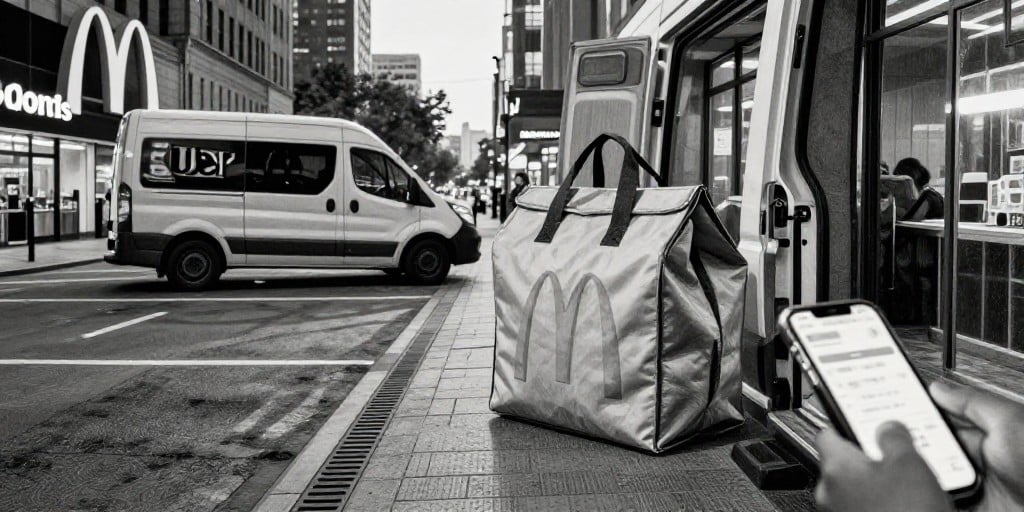
The deal represents a strategic push toward a fully integrated omnichannel experience. By embedding Uber Direct’s white‑labeled delivery platform into the McDonald’s app and coordinating with Deliverect for order management, the chain eliminates friction between order placement, kitchen processing, and delivery. Customers can place, track, and pay for orders within a single interface, while the back‑end logistics are handled by a globally‑scaled, data‑driven network.
From a consumer‑behavior perspective, the integration aligns with rising expectations for instant delivery and real‑time transparency. Surveys in North America and Europe indicate that 68 % of fast‑food purchasers now prioritize an app‑based ordering experience that includes live tracking, a trend that has accelerated during the pandemic. By offering a seamless, app‑centric experience, McDonald’s reduces abandonment rates and increases order frequency.
Loyalty and Cross‑Channel Rewards
The partnership also introduces a dual‑channel loyalty proposition. MyMcDonald’s Rewards members in selected markets can redeem points for discounts on Uber rides during a seasonal promotion. Looking ahead, the company plans to allow points earned on McDonald’s orders placed via Uber Eats to be redeemed within the app for further rewards. This cross‑channel reciprocity creates a virtuous cycle: loyalty incentives drive both in‑store and delivery traffic, while Uber’s ridesharing network broadens the brand’s exposure to a mobile‑centric audience.
Market Data and Cross‑Sector Patterns
Across the broader consumer‑goods sector, retailers that have integrated delivery logistics with a single‑platform experience have reported a 12 % lift in average order value and a 5 % increase in repeat purchases. McDonald’s’ partnership follows a trend seen in apparel, grocery, and electronics, where brands partner with third‑party logistics to gain speed, coverage, and data insights without building their own fleets.
Moreover, the integration taps into the growing “last‑mile” innovation wave. Uber Direct’s on‑demand network leverages autonomous delivery vehicles, drones, and advanced routing algorithms, projecting a 30 % reduction in delivery times by 2028. By embedding this technology, McDonald’s positions itself at the frontier of consumer convenience while maintaining operational control.
Capital Structure and Long‑Term Growth
In a separate development, McDonald’s filed a securities registration statement with the U.S. Securities and Exchange Commission, detailing the issuance of medium‑term notes maturing in 2031 and 2036. The notes, featuring fixed rates in the mid‑five‑percent range and semi‑annual coupon payments, were jointly underwritten by Citigroup Global Markets, Morgan Stanley, Truist Securities, and U.S. Bancorp Investments.
The capital raised is earmarked to support long‑term objectives such as menu innovation, technology upgrades, and franchise expansion. The mid‑term maturity structure provides a buffer against short‑term market volatility while maintaining flexibility for future refinancing opportunities. For investors, the notes offer a stable yield in a low‑interest‑rate environment, aligning with McDonald’s long‑standing reputation for financial prudence.
Strategic Implications for the Industry
Short‑term market reactions to the partnership are already visible: McDonald’s stock experienced a 3 % uptick following the announcement, reflecting investor confidence in the firm’s omnichannel capabilities. In the broader sector, firms that have successfully merged delivery and loyalty systems are seeing higher customer lifetime values, a trend that is likely to intensify as consumers increasingly favor convenience over brand loyalty alone.
In the long run, McDonald’s initiative underscores a pivotal shift in consumer goods: the convergence of digital ordering, real‑time logistics, and integrated rewards. Retailers that adopt a holistic omnichannel framework will be better positioned to navigate post‑pandemic consumer expectations, supply‑chain disruptions, and evolving competitive landscapes. McDonald’s, through its expanded Uber partnership and disciplined capital management, is setting a benchmark for how fast‑food and broader consumer‑goods companies can leverage technology partnerships to drive growth while safeguarding financial health.