
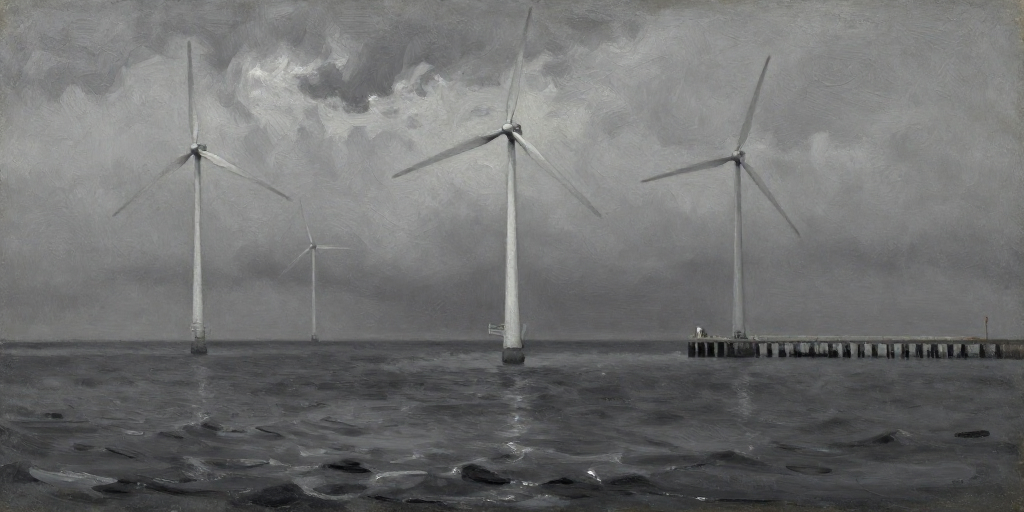
Massachusetts Judge Issues Temporary Injunction to Preserve GE Renewables’ Role in Vineyard Wind Offshore Project
A federal judge in Massachusetts has issued a temporary injunction that bars GE Renewables, the turbine manufacturer supplying the Vineyard Wind offshore wind project, from terminating its contractual relationship with the developer. The ruling underscores the critical nature of the manufacturer’s specialized design and installation work already underway and preserves a key element of the project’s supply chain during a contentious contractual dispute.
Context of the Dispute
Vineyard Wind, a joint venture between Avangrid and Copenhagen Infrastructure Partners, has been developing an offshore wind farm off the coast of Cape Cod. GE Renewables, a subsidiary of GE Power, was selected to supply the wind turbines and provide associated engineering and construction services. In the latest development, GE Renewables claimed that its services were no longer required and sought to terminate the agreement, asserting that any losses suffered by the developer were self‑inflicted. The developer countered that GE owed significant sums for work already performed and that the company remained responsible for costs associated with a blade failure that had delayed the project by two years.
The court’s decision was premised on the argument that removal of GE Renewables at this stage would cause substantial project delays. The judge noted that the design and installation work completed thus far is highly specialized, and the replacement of the manufacturer would require re‑engineering of critical components, re‑certification, and re‑coordination with subcontractors and regulatory bodies. These factors would inevitably extend the project schedule, jeopardizing the developer’s contractual obligations to its investors and to the regional grid operator.
Legal and Economic Implications
From a legal standpoint, the injunction affirms that contractual obligations remain in force unless a party demonstrates clear grounds for termination. The judge’s ruling underscores the principle that termination of a supplier contract during the critical phase of a large infrastructure project can have cascading effects, not only on the immediate project but also on the broader supply chain and market expectations.
Economically, the decision may influence the pace at which Vineyard Wind achieves full operational status. A delay in turbine installation or commissioning could affect the supply of renewable energy to the Massachusetts region and the broader New England grid, potentially impacting the region’s transition goals and the financial viability of the project. Investors in the joint venture may also face increased cost pressure as the project’s completion date shifts, while the broader market for offshore wind turbines may experience a temporary contraction in demand for GE Renewables’ products.
Broader Industry and Policy Context
The ruling must be viewed in the context of prior policy actions. During the Trump administration, construction on several offshore wind projects, including Vineyard Wind, was halted on grounds of national security concerns. Subsequent federal court decisions allowed those projects to resume, signaling a shift in the regulatory environment toward greater support for offshore renewable development. The injunction, by preserving the involvement of a major turbine supplier, aligns with that trend of promoting continuity in renewable energy projects.
The decision also highlights the importance of contractual diligence in complex, multidisciplinary projects such as offshore wind farms. Project developers are increasingly incorporating clauses that address specialized supply chain requirements, risk allocation, and contingency plans for component failures. These measures are designed to mitigate the risk of delays that can erode the economic feasibility of projects, particularly in a sector where the cost of capital is high and the competitive landscape is intensifying.
Market Dynamics and Competitive Positioning
The offshore wind sector is becoming increasingly competitive, with multiple turbine manufacturers—such as Siemens Gamesa, Nordex, and MHI Vestas—vying for market share in the United States. GE Renewables’ retention in the Vineyard Wind project reinforces its market position, particularly in the U.S. offshore wind market where regulatory uncertainty and supply chain logistics are significant hurdles. For competitors, the ruling underscores the strategic importance of maintaining robust supplier relationships and the potential ramifications of supply chain disruptions.
In summary, the temporary injunction issued by the Massachusetts judge is a pivotal moment for Vineyard Wind, preserving the manufacturer’s role during a critical phase of the project. It reflects broader economic and policy trends that favor continuity and reliability in renewable energy development, while also highlighting the strategic importance of contractual stability and supply chain resilience in the offshore wind industry.