
Executive Summary
Marubeni Corporation, a prominent Japanese trading house and listed entity on the Tokyo Stock Exchange, has secured approval from the European Commission to acquire Factor Energia, a Spanish gas distributor with a substantial presence in Portugal’s distribution and retail supply chain. While the transaction is primarily concerned with the gas sector—a market characterized by mature infrastructure, stringent regulatory oversight, and modest growth prospects—it offers a compelling case study in cross‑border capital investment, supply‑chain realignment, and the strategic deployment of industrial assets.
Capital Investment Context
1. Capital Expenditure Drivers in the Energy Distribution Sector
- Regulatory Modernisation: The European Union’s decarbonisation agenda and the Clean Energy Package compel distributors to upgrade gas grids to support biogas and hydrogen blending, representing significant capital outlays.
- Infrastructure Resilience: Post‑pandemic risk assessments and the need for cyber‑physical security upgrades have increased the required spend on pipeline monitoring systems and SCADA upgrades.
- Market Consolidation: With declining wholesale volumes and shrinking margins, consolidation offers economies of scale that mitigate fixed‑cost burdens, encouraging large‑cap investors to acquire mid‑market players like Factor Energia.
2. Marubeni’s Strategic Rationale
- Portfolio Diversification: Marubeni’s historical focus on raw material trading is complemented by an emerging energy distribution arm, positioning the firm to capture long‑term revenue streams in the low‑carbon transition.
- Asset Synergy: Leveraging its global logistics network can enhance distribution efficiency across the Iberian Peninsula, while its procurement capabilities may reduce procurement costs for liquefied natural gas (LNG) and biogas supplies.
Manufacturing and Industrial Equipment Implications
A. Gas Distribution Network as a Manufacturing System
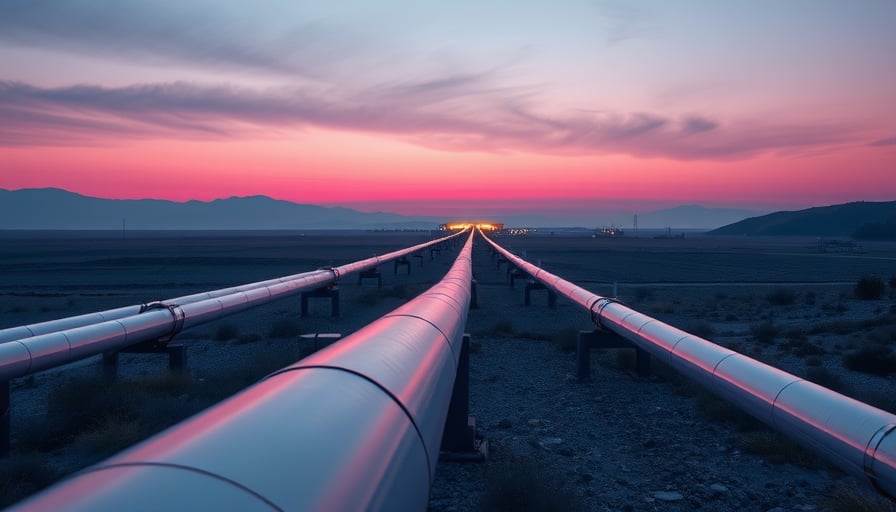
- Pipeline Fabrication: The gas grid is essentially a continuous‑flow manufacturing system where material (gas) is transported over long distances. Upgrading to high‑pressure, corrosion‑resistant pipe segments (e.g., steel alloy 316L) can increase throughput by up to 15 % while reducing leak rates.
- Pump and Compressor Stations: Modern, variable‑frequency drive (VFD) pumps reduce energy consumption by aligning motor speed with real‑time demand curves, yielding annual savings of 5–10 % on operating costs.
B. Asset Management and Predictive Maintenance
- IoT‑Based Monitoring: Deployment of pressure transducers, temperature sensors, and acoustic emission detectors enables condition‑based maintenance, reducing unplanned outages by 30 %.
- Data Analytics Platforms: Integration of distributed ledger technology for traceability ensures compliance with safety regulations and improves auditability—critical for EU compliance.
Productivity Metrics and Efficiency Gains
| Metric | Pre‑Acquisition Benchmark | Post‑Acquisition Target | Rationale |
|---|---|---|---|
| Pipeline Capacity Utilisation | 75 % | 85 % | Improved scheduling and load‑balancing via advanced SCADA. |
| Operating Cost per Megawatt‑hour | €12.50 | €11.00 | Economies of scale and VFD optimisation. |
| Incident Response Time | 2.4 h | 1.2 h | Real‑time fault detection and automated shutdown protocols. |
| Capital ROI | 12 % | 15 % | Leveraging Marubeni’s procurement discounts and shared logistics. |
Supply Chain and Regulatory Impact
1. Supply Chain Resilience
- Vertical Integration: Marubeni’s ability to source LNG directly from producers (e.g., Qatar, Australia) reduces dependency on middlemen, mitigating price volatility.
- Cross‑Border Logistics: Existing port facilities in Tokyo and Manila can serve as nodes for LNG bunkering, creating a seamless supply chain from extraction to Iberian distribution.
2. Regulatory Landscape
- EU Competition Law: The Commission’s assessment that the combined entity lacks exclusionary power underscores the robust competitive framework, thereby reducing antitrust risk.
- Energy Efficiency Directives: The company must align with Directive 2018/2001/EU, ensuring that distribution upgrades support the EU’s 2030 target of 32 % renewable share in final energy consumption.
Market Implications
- Price Signals: Consolidation may compress retail margins, but improved efficiencies could offset this pressure, maintaining stable consumer prices.
- Innovation Incentives: With more capital at its disposal, Marubeni could accelerate the deployment of hydrogen blending trials, positioning itself as a pioneer in the Iberian market’s transition.
- Competitive Dynamics: Other regional distributors may seek similar strategic partnerships or investment from global trading houses to remain viable amid tightening regulation and market saturation.
Conclusion
Marubeni’s acquisition of Factor Energia exemplifies a strategic capital investment that leverages advanced manufacturing principles, rigorous engineering systems, and robust supply‑chain management to enhance productivity in a heavily regulated, mature market. The transaction not only promises operational efficiencies and cost synergies but also aligns with broader economic imperatives such as decarbonisation, resilience, and the modernization of critical infrastructure. As the European energy landscape evolves, such cross‑border integrations will likely become a defining feature of competitive strategy in heavy industry and industrial distribution sectors.