Executive Summary
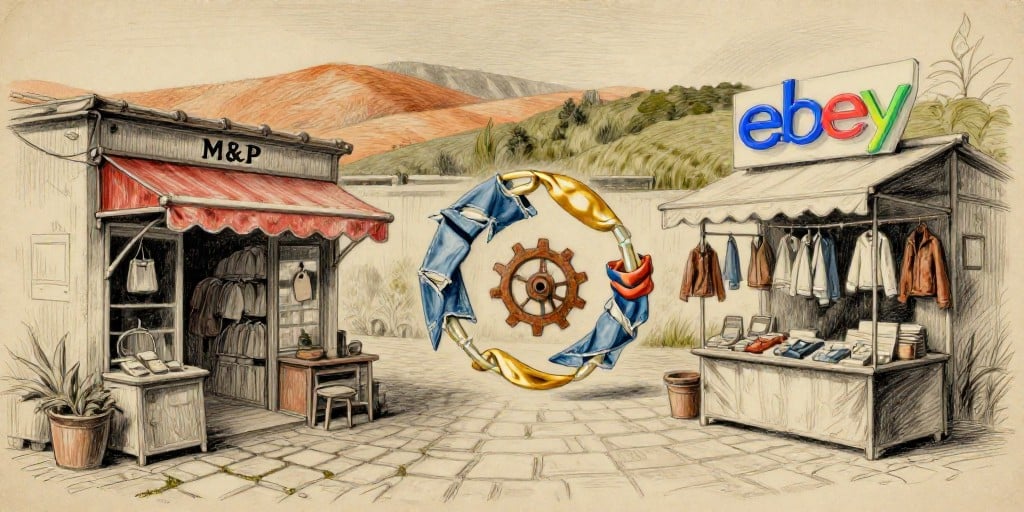
Marks & Spencer Group PLC has entered a partnership with eBay to deepen its footprint in the burgeoning second‑hand apparel market. This move aligns with the broader shift toward circular commerce, driven by consumer demand for sustainable fashion, tightening EU environmental regulations, and the accelerating growth of resale channels. The collaboration will enable Marks & Spencer to leverage eBay’s technology and logistics to curate and sell a diversified range of pre‑owned garments, thereby capturing a share of a segment that now outpaces traditional fashion retail growth.
Market Context
| Indicator | Current Trend | Implication for Retail |
|---|---|---|
| Resale market CAGR (2023‑2027) | 11 % | Accelerated revenue streams for brands that integrate resale early. |
| Sustainable fashion spend | 15 % YoY increase | Brands must embed sustainability into product lifecycles to stay competitive. |
| Regulatory pressure (EU) | New Circular Economy Action Plan | Compliance increasingly linked to brand reputation and market access. |
| Omnichannel penetration | 72 % of UK retailers report integrated online‑offline strategies | Successful brands blend physical and digital touchpoints for a seamless experience. |
The convergence of these forces creates an environment where a well‑executed resale strategy can provide both immediate financial upside and long‑term positioning within a circular economy framework.
Strategic Rationale
- Diversification of Revenue Sources
- Resale offers a low‑margin, high‑volume complement to new‑fashion sales, reducing volatility in traditional retail cycles.
- Enhanced Consumer Insights
- Data generated from resale transactions (e.g., brand preference, price sensitivity) can feed back into product development and merchandising.
- Sustainability Alignment
- Participation in the circular market strengthens Marks & Spencer’s ESG credentials, resonating with increasingly environmentally conscious consumers, especially Gen Z and Millennials.
- Regulatory Anticipation
- Early adoption of circular models positions the company favorably in light of forthcoming EU directives on waste reduction and product life extension.
Omnichannel Implications
| Channel | Current Capabilities | Enhancement Through eBay Partnership |
|---|---|---|
| E‑commerce | Direct website sales, limited used‑goods listings | Expanded inventory via eBay’s marketplace, unified checkout processes |
| Physical stores | In‑store pick‑up and returns | Potential for “buy‑back” kiosks that feed into eBay listings |
| Mobile app | Limited resale integration | App‑level notifications for second‑hand inventory, AI‑driven price recommendations |
| Customer service | Standard support | Cross‑platform support desk for resale queries, leveraging eBay’s dispute resolution |
A cohesive omnichannel architecture will ensure that consumers experience a consistent journey, whether they engage via a brand‑owned outlet or the eBay marketplace.
Consumer Behaviour Shifts
- Resale Value as Purchase Criterion – Surveys indicate that 37 % of Gen Z shoppers consider the future resale potential when buying new garments.
- Speed of Trend Adoption – Younger consumers are shifting from “buy‑once” to “buy‑many” models, valuing access over ownership.
- Trust in Authenticity – Partnerships with established marketplaces mitigate concerns about counterfeit or poor‑condition items, increasing conversion rates.
Marks & Spencer’s entry into resale responds directly to these behavioural patterns, offering an avenue to retain younger shoppers who might otherwise migrate to fast‑fashion competitors.
Supply Chain Innovations
- Reverse Logistics Integration
- Collaboration with eBay allows Marks & Spencer to tap into existing return‑processing hubs, reducing the cost of handling pre‑owned goods.
- AI‑Based Condition Assessment
- Machine learning algorithms can automatically grade items for resale eligibility, expediting inventory flow.
- Dynamic Pricing Models
- Real‑time pricing engines, informed by marketplace demand, enable Mark & Spencer to adjust resale prices competitively.
- Sustainability Tracking
- Blockchain or immutable ledgers can record the provenance of each garment, satisfying consumer and regulatory transparency demands.
These innovations not only streamline operations but also reinforce the brand’s commitment to circularity.
Cross‑Sector Patterns
- Fashion & Beauty – Brands like L’Oréal and Sephora have launched resale or refurbishment programs, indicating a broader industry pivot toward longevity.
- Automotive & Tech – Companies in these sectors routinely use secondary markets to extend product life; the strategies here provide a blueprint for apparel.
- Retail Giants – Walmart’s acquisition of ThredUp and Carrefour’s partnership with Vinted show that even non‑fashion retailers recognize resale’s value.
The convergence of these patterns underscores the mainstreaming of resale as a standard component of retail strategy.
Risks & Mitigation
| Risk | Potential Impact | Mitigation Strategy |
|---|---|---|
| Cannibalisation of new‑fashion sales | Reduced margin contribution | Segment marketing to differentiate resale as a premium “upcycle” offering |
| Brand dilution | Perception of lower quality | Strict condition guidelines, certified pre‑owned labels |
| Regulatory compliance gaps | Legal penalties, reputational risk | Continuous ESG audit, collaboration with eBay’s compliance framework |
| Operational complexity | Increased logistical burden | Phased rollout, dedicated cross‑functional team |
A proactive governance structure will be essential to balance the benefits against these potential pitfalls.
Long‑Term Outlook
The Marks & Spencer‑eBay partnership signals a strategic shift that positions the retailer within the next decade’s dominant retail narrative: the circular economy. By embedding resale into its core operations, Marks & Spencer can:
- Secure a foothold in a market segment that is projected to exceed £10 billion by 2030.
- Leverage consumer data to refine product design and pricing, creating a virtuous cycle of innovation.
- Differentiate the brand in a crowded marketplace, enhancing loyalty among sustainability‑savvy demographics.
In the short term, the partnership will generate incremental revenue and deepen consumer insights. Over the long haul, it will serve as a foundational pillar for a resilient, future‑proof business model that aligns profitability with planetary stewardship.