
Corporate Dynamics at Marks & Spencer: A Strategic Pivot Amid Shifting Consumer Paradigms
Refinancing in the Midst of a Digitally‑Driven Retail Landscape
In early February, Marks & Spencer Group PLC disclosed a significant tender offer to retire its 2027 bonds, simultaneously announcing the redemption of the 2026 issue. This move represents a calculated effort to optimise the company’s capital structure and reduce long‑term interest exposure. By tightening its debt profile, M&S gains flexibility to invest in areas where consumer behavior is converging digital convenience with experiential retail—particularly its evolving food‑hall concept.
The timing of the refinancing aligns with a broader pattern of consumer‑centric firms seeking to free up capital for technology integration and experiential store enhancements. As digital ecosystems become more intertwined with physical touchpoints, retailers must balance the cost of technological upgrades against the potential for higher footfall and increased basket size. M&S’s decision to shore up its balance sheet positions it to accelerate the rollout of data‑driven inventory management, AI‑enabled personalization, and omnichannel logistics—all critical for meeting the expectations of digitally savvy shoppers.
From Café Closures to Food‑Hall Innovation
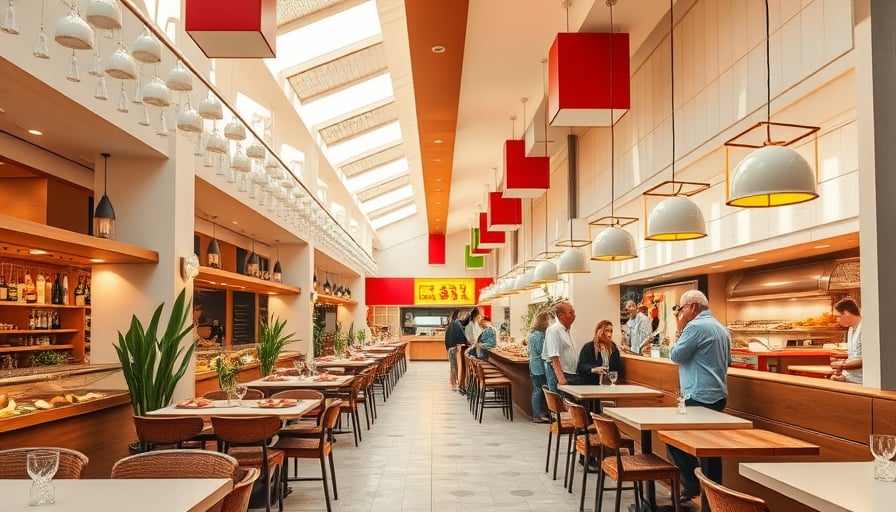
Concurrent with its financial restructuring, M&S confirmed the closure of four supermarket cafés in Kent, reallocating resources toward a revamped food‑hall concept. This strategic reorientation reflects a broader demographic shift: the rise of “experience‑first” consumers—particularly Millennials and Gen Z—who prioritize curated, high‑quality dining experiences over conventional quick‑service options.
The food‑hall model allows M&S to deliver a multi‑sensory retail experience that blends the familiarity of a supermarket with the ambiance of a boutique café. By leveraging localized sourcing, artisanal offerings, and digital ordering platforms, the food‑hall can attract both price‑conscious shoppers and premium‑spending consumers seeking convenience without compromising quality.
Moreover, the move acknowledges the decline in footfall at traditional in‑store cafés, driven by the proliferation of mobile‑order‑and‑collect services and the acceleration of home‑delivery solutions during the pandemic. By transforming its café operations into a scalable, experiential hub, M&S can capture a share of the growing “dine‑in‑retail” niche, which is projected to outpace conventional café revenue growth through 2030.
Market Context: European Stocks, the FTSE, and Global Outlook
European equities posted broadly positive returns during the period in question, underscoring investor confidence in the region’s resilience amid macro‑economic uncertainty. The FTSE 100, while only modestly impacted, reflected sectoral volatility, particularly within retail and consumer staples, as traders priced in expectations of shifting U.S. interest rates and inflationary pressures.
For M&S, the relative stability of the FTSE suggests a conducive environment for capital‑market initiatives. The firm’s ability to refinance at attractive rates will hinge on sustained investor confidence in the broader retail sector’s capacity to adapt to digital transformation and evolving consumer preferences.
Forward‑Looking Analysis: Translating Societal Change into Market Opportunity
- Digital‑Physical Synergy
- The convergence of online and offline channels is not merely a tactical necessity; it is reshaping consumer expectations. Retailers that seamlessly integrate mobile payment, real‑time inventory, and in‑store experiential cues will likely command higher engagement metrics. M&S’s refinancing can fund the acquisition of AI‑powered analytics platforms that deliver hyper‑personalized product recommendations, thereby driving incremental sales per visitor.
- Generational Spending Patterns
- Millennials and Gen Z exhibit a pronounced preference for experiences that combine sustainability, local provenance, and convenience. The food‑hall model, especially when coupled with digital ordering and loyalty rewards, aligns with these preferences. By positioning its food‑hall as a hub for community events—such as cooking workshops or pop‑up artisanal markets—M&S can deepen brand affinity and foster repeat visitation.
- Evolving Consumer Experiences
- Physical retail is evolving from a transactional space to a destination. Stores that curate a narrative—through design, storytelling, and curated product assortments—can command premium pricing and higher dwell times. M&S’s investment in experiential design, supported by its refined balance sheet, will enable it to differentiate from commodity supermarket competitors.
- Capital Allocation and Investor Perception
- The bond tender reflects prudent capital discipline. Investors increasingly reward firms that demonstrate the ability to free up resources for growth initiatives. As M&S allocates capital toward experiential retail and digital infrastructure, its share price is likely to benefit from both cost savings and revenue diversification.
- Risk Mitigation through Diversification
- By pivoting from traditional cafés to a food‑hall framework, M&S mitigates risks associated with fluctuating café profitability, particularly in post‑pandemic markets where consumer behavior remains fluid. Diversifying its food‑service offering also allows the retailer to tap into multiple revenue streams—dine‑in, takeaway, and online delivery—each with distinct margin profiles.
In conclusion, Marks & Spencer’s recent bond refinancing and strategic reallocation of café operations illustrate a broader trend within consumer retail: the imperative to fuse digital efficiency with immersive, experience‑driven physical environments. By aligning its financial strategy with demographic and cultural shifts, M&S positions itself to capture new opportunities in an increasingly competitive, digitally integrated market landscape.