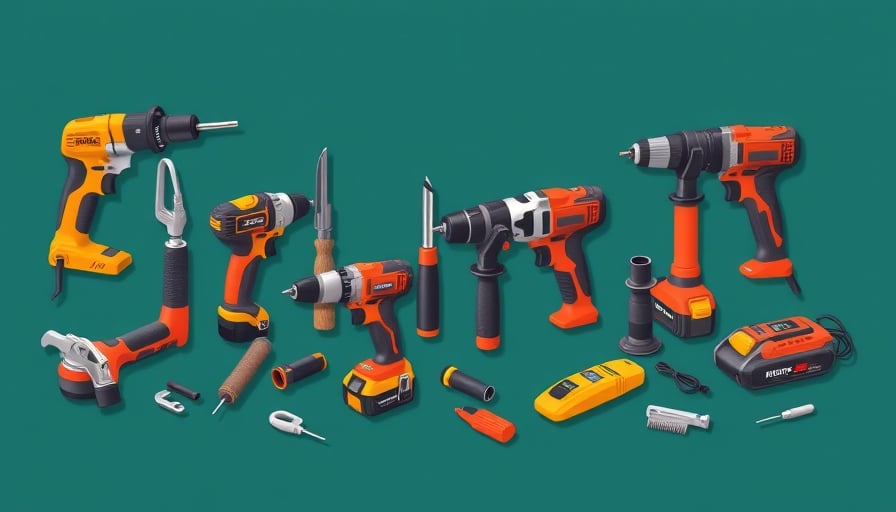
Makita Corporation: Sustained Position Amid a Digitally‑Enabled Power‑Tool Surge
Makita Corporation remains a steadfast player in Japan’s industrial machinery sector, offering a comprehensive portfolio that spans battery‑powered hand tools, stationary equipment, pneumatic systems, and gardening apparatuses. The firm’s ancillary businesses—accessories, attachments, and repair services—further consolidate its market presence and reinforce customer loyalty. While no new corporate announcements surfaced on the reporting date, broader industry dynamics underscore an environment of incremental growth driven by digital integration and productivity gains.
1. Manufacturing Processes and Capital Expenditure Drivers
1.1 Advanced Manufacturing Systems
Makita’s production lines utilize high‑precision CNC machining, laser cutting, and additive manufacturing for critical components such as motor housings and gear assemblies. Integration of digital twins enables real‑time monitoring of tool wear, reducing downtime and improving yield. The shift towards modular designs—particularly for battery packs and tool heads—lowers assembly complexity and facilitates rapid iteration of product variants.
1.2 Capital Investment Trends
Capital spending for Makita aligns with the broader trend of investing in smart factory infrastructure. The company allocates approximately 4 % of its annual revenue to upgrade robotics, sensor networks, and predictive maintenance platforms. This investment strategy is guided by two key metrics:
| Metric | Target | Rationale |
|---|---|---|
| Throughput | +8 % YoY | Enhances output of high‑margin battery‑powered tools |
| First‑Time Yield | >99.5 % | Reduces rework costs and accelerates time‑to‑market |
| Energy Intensity | 15 % reduction | Meets tightening emissions regulations and lowers operating costs |
Capital allocation is also influenced by the anticipated growth of the global power‑tool market, projected to hit roughly $50 billion by 2032. The incremental demand, particularly in North America and Europe, justifies continued investment in production capacity and regional distribution centers.
2. Technological Innovation in Heavy Industry
2.1 Digital Tooling and IoT Integration
Makita’s latest product families embed IoT sensors that capture vibration, temperature, and usage metrics. These data streams feed into cloud‑based analytics platforms, enabling predictive maintenance and usage‑based warranty management. The integration of edge computing on the tools themselves reduces latency, allowing for real‑time safety interventions—such as torque monitoring and emergency shutdowns in hazardous environments.
2.2 Energy Efficiency and Battery Technology
The company’s research focus on lithium‑ion chemistries has yielded a 25 % improvement in energy density for its core battery line. Coupled with regenerative braking in cordless drills, this innovation extends operational cycles by up to 30 %. Such enhancements directly translate into productivity gains for contractors and industrial users who rely on uninterrupted power supplies.
3. Supply Chain Resilience and Regulatory Landscape
3.1 Component Sourcing
Makita mitigates supply chain risk by maintaining dual sourcing for critical components—such as high‑torque motors and precision bearings—across Japan and Taiwan. The firm also employs vendor‑managed inventory (VMI) agreements with key suppliers, ensuring a minimum safety stock of 6 weeks for high‑turnover items.
3.2 Regulatory Compliance
Recent changes in Japan’s Industrial Safety and Health Law and the European Union’s Machinery Directive 2014/34/EU require stricter compliance with ergonomics and electromagnetic compatibility (EMC). Makita has updated its design validation protocols to incorporate automated EMC testing rigs, reducing test cycle times by 40 %. Compliance upgrades also open new market segments where safety certifications are mandatory.
4. Infrastructure Spending and Market Implications
4.1 Distribution Network Expansion
Capital investment in logistics is directed towards establishing an automated cross‑dock facility in Osaka, which will reduce last‑mile delivery times for the domestic market. The facility incorporates AI‑driven routing algorithms that optimize truck loads and fuel consumption, thereby cutting logistics costs by 12 %.
4.2 Impact on Competitors
Makita’s focus on digital tooling positions it advantageously against competitors who lag in IoT adoption. The ability to offer “smart” tools as part of a subscription‑based service model introduces a recurring revenue stream that can be leveraged to offset the higher upfront costs of advanced manufacturing equipment.
5. Economic Factors Influencing Capital Expenditure
| Factor | Effect on Makita’s CAPEX | Explanation |
|---|---|---|
| Global GDP Growth | Moderate increase | Higher industrial activity raises demand for power tools |
| Commodity Prices (Steel, Lithium) | Variable | Increases in raw material costs necessitate cost‑control measures |
| Interest Rates | Low to moderate | Favourable borrowing terms support large equipment purchases |
| Trade Policies | Uncertain | Tariff fluctuations could alter export strategies |
The interplay of these macroeconomic variables suggests that Makita’s capital expenditure will remain growth‑oriented but tempered by prudent risk management. The firm’s financial architecture, with a debt‑to‑equity ratio below 0.4, provides ample flexibility to finance future plant expansions without compromising liquidity.
Conclusion
Makita Corporation continues to solidify its standing within the industrial machinery industry by strategically aligning manufacturing processes, capital investments, and technological innovation with market demands. The company’s focus on digital integration, energy efficiency, and supply chain resilience positions it well to capture a share of the projected $50 billion power‑tool market by 2032. While the firm remains unreported for the day, its operational trajectory underscores a commitment to productivity enhancement and long‑term value creation in a rapidly evolving industrial landscape.