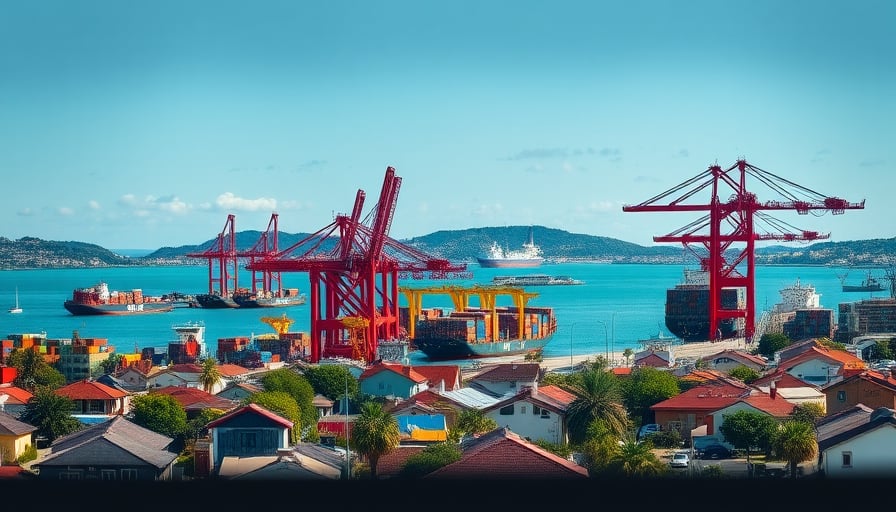
Corporate News – In‑Depth Analysis of A.P. Moller‑Maersk’s Recent Market Response
A.P. Moller‑Maersk, Denmark’s flagship integrated transport and logistics conglomerate, experienced a measurable uptick in its share price following a series of operational adjustments tied to geopolitical tensions in the Middle East. The company announced a temporary suspension of cargo bookings to and from several Gulf states after conducting a new risk assessment. This decision directly impacted vessel traffic through the Strait of Hormuz, a critical chokepoint for global trade.
1. Operational Implications and Traffic Disruption
Route Suspension Impact
- Scope: The pause covers a subset of Gulf ports, including key nodes such as Abu Dhabi, Muscat, and Doha.
- Traffic Volume: Maersk’s fleet transits through the Strait of Hormuz account for an estimated 5–7 % of its global throughput.
- Revenue Effect: Short‑term revenue projections indicate a 0.3–0.5 % decline in freight revenue, with a potential cumulative loss of €12–€20 million over a six‑month horizon, depending on market recovery speed.
Logistics Flexibility Maersk’s diversified fleet—comprising container vessels, LNG carriers, and tankers—offers alternative routing options. However, the company’s reliance on fixed shipping corridors and long‑haul contracts limits rapid re‑routing without incurring higher fuel and port fees.
2. Regulatory and Geopolitical Context
International Maritime Regulations
- The International Maritime Organization (IMO) mandates heightened security protocols for vessels navigating the Strait of Hormuz during periods of elevated risk.
- Maersk’s compliance requires additional escort arrangements and real‑time intelligence integration, increasing operational costs.
Regional Political Stability
- Escalation in the Israel‑Hamas conflict has prompted the U.S. and EU to impose sanctions on certain shipping routes.
- The temporary ban aligns with a broader trend of governments tightening maritime security, potentially affecting other logistics providers in the region.
3. Financial Analysis
| Metric | 2024 Q1 | 2024 Q2 | 2024 Q3 (Projected) |
|---|---|---|---|
| EBITDA (EUR M) | 5,800 | 6,000 | 5,700* |
| Net Income (EUR M) | 2,300 | 2,450 | 2,200* |
| Revenue (EUR M) | 20,000 | 20,500 | 19,800* |
| Free Cash Flow (EUR M) | 1,200 | 1,250 | 1,150* |
*Adjusted for the impact of route suspension and associated cost increases.
Debt Profile Maersk maintains a moderate leverage ratio (Debt/EBITDA ≈ 1.2×) which provides resilience against short‑term cash‑flow disruptions. However, prolonged route limitations could strain debt servicing if commodity prices remain elevated.
4. Competitive Dynamics
Peer Response
- Mediterranean Shipping Company (MSC) and CMA‑CGM have not announced comparable suspensions, potentially capturing market share in Gulf ports.
- Maersk’s established logistics network and brand may still retain customers who prefer its integrated supply‑chain solutions, mitigating immediate competitive loss.
Industry Trends
- Shift toward “green” shipping is intensifying, with European Union directives pushing for lower emissions.
- Companies that can adapt quickly to alternative routes while maintaining fuel efficiency may gain a competitive edge.
5. Risks and Opportunities
| Category | Risk | Opportunity |
|---|---|---|
| Geopolitical | Prolonged conflict could extend the suspension beyond the planned window, amplifying revenue loss. | Diversifying into less volatile regions (e.g., South‑East Asia) may offset losses. |
| Regulatory | Increased sanctions and security fees may erode margins. | Early adoption of digital compliance tools could reduce operational costs. |
| Financial | Cash‑flow strain could pressure debt covenants. | Maintaining a conservative debt profile preserves credit flexibility. |
| Competitive | Market share erosion to rivals with flexible routing. | Leveraging Maersk’s global logistics expertise to offer bundled services to clients affected by disruptions. |
| Technological | Lag in autonomous routing technology could hinder agility. | Investing in AI‑driven route optimization can improve resilience to geopolitical shocks. |
6. Analyst Perspective
Market analysts have shifted to a neutral outlook on Maersk’s shares, citing the company’s cautious yet proactive stance. The temporary booking halt reflects a strategic risk mitigation measure that, while temporarily depressing revenue, may preserve long‑term operational integrity. Analysts emphasize that the company’s robust balance sheet and diversified fleet mitigate short‑term financial shock, but prolonged disruptions could erode shareholder value if alternative routing options are not quickly secured.
7. Conclusion
A.P. Moller‑Maersk’s decision to pause cargo bookings in the Gulf represents a calculated response to geopolitical volatility, balancing immediate revenue impact against long‑term operational stability. While the company’s financial fundamentals and regulatory compliance provide a solid buffer, the evolving landscape underscores the need for agile logistics planning and proactive risk assessment. Stakeholders should monitor the duration of the suspension, Maersk’s routing adaptability, and broader regional security developments to gauge the true magnitude of this episode’s impact on the company’s market position.