
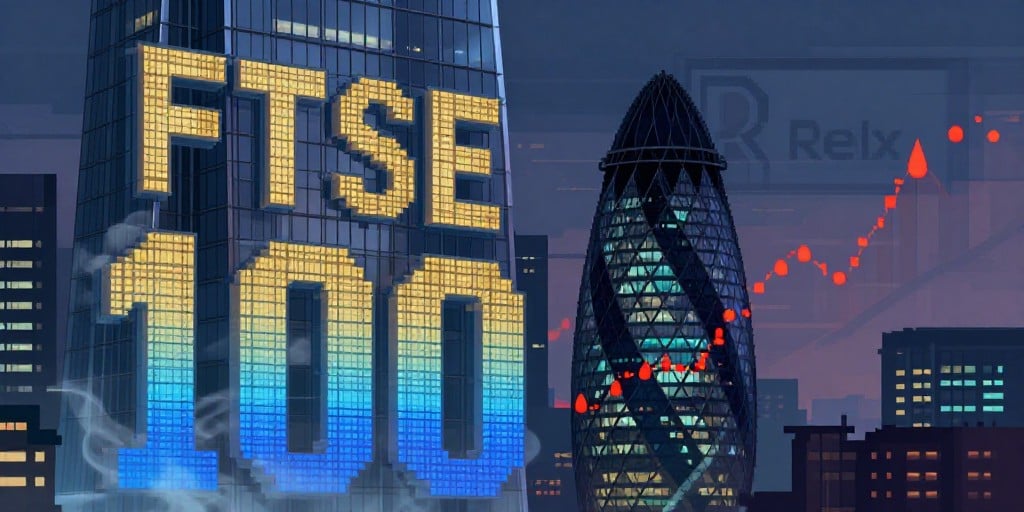
London Market Concludes on a Subdued Note
The FTSE 100 closed lower on Tuesday, reflecting heightened geopolitical tension and domestic political uncertainty. The decline was mirrored across related indices, including the FTSE 250 and the AIM All‑Share, as investors weighed a range of risks that cut across sectors.
Geopolitical and Domestic Drivers
- US–China Talks – Diplomatic negotiations between Washington and Beijing stalled, leaving the Middle‑East conflict unresolved. The lack of progress intensified concerns over potential supply‑chain disruptions and regional stability, both of which can weigh on corporate earnings and commodity markets.
- UK Political Instability – Speculation over a leadership challenge at Westminster added further pressure. The prospect of a change in government, or a shift in fiscal policy, introduced uncertainty into corporate outlooks and bond markets alike.
- Energy‑Price Concerns – Brent crude rallied on fears that the Strait of Hormuz could become a flashpoint. The rise in oil prices, driven by geopolitical risk, heightened inflationary expectations and exerted upward pressure on energy‑sector valuations.
Sector Performance
Gains
- Relx – The diversified publishing and information services group posted a modest gain, underscoring its ability to weather volatility in advertising spend and subscription markets.
- Hiscox – The specialist insurer benefited from a broader risk‑management narrative, as investors sought defensive plays amid geopolitical risk.
- JD Sports Fashion – The retailer’s shares rose on positive retail sentiment, suggesting that consumer confidence in discretionary spending remains resilient.
- BP – The oil major posted a gain as higher crude prices boosted its revenue outlook, despite pressure on downstream margins.
Declines
- Mining and Utilities – Several firms in these sectors saw significant losses. Falling metal prices and tighter credit conditions eroded profitability, while rising borrowing costs increased debt servicing burdens.
- Broad Market – The FTSE 100’s overall decline was compounded by the underperformance of commodity‑linked shares and the lack of a clear catalyst for corporate earnings growth.
European Context
The Stoxx 600 closed lower, echoing London’s cautious sentiment. Inflationary concerns—driven by the oil‑price spike—and uncertainty surrounding the US–China summit weighed on European equities. Germany’s DAX and France’s CAC 40 also slipped, illustrating the breadth of the risk‑aversion that has spread across major European markets.
Macro‑Economic Implications
The day’s trading activity highlighted a convergence of risk factors that transcend specific sectors:
- Energy‑Price Volatility – A key driver of inflation expectations, influencing both consumer spending and corporate cost structures.
- Geopolitical Instability – Heightened uncertainty can dampen investment in growth‑sensitive sectors such as technology, consumer discretionary, and infrastructure.
- Political Uncertainty – Domestic policy shifts can affect fiscal spending, regulatory frameworks, and capital‑market conditions, thereby influencing corporate profitability.
In sum, the London market closed on a cautious note, with modest gains confined to a handful of resilient names. The broader sectoral weakness, coupled with persistent geopolitical and domestic uncertainties, tempered overall optimism and underscored the importance of maintaining diversified exposure in an environment where risk factors can quickly shift.