
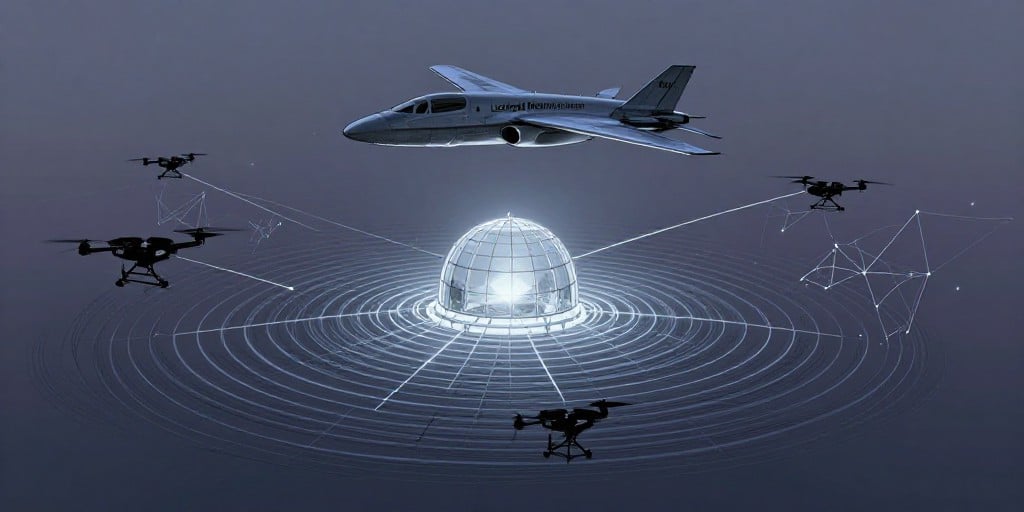
Corporate Analysis: Lockheed Martin’s Emerging Position in the Counter‑Drone Defense Market
The recent series of high‑profile drone incidents has intensified scrutiny of the global airspace security landscape, drawing investor focus toward companies that are positioned to supply advanced counter‑drone and autonomous weapons solutions. Lockheed Martin Corporation (LMT), alongside peers such as Rheinmetall AG and Volatus Aerospace, has emerged as a potential beneficiary of this heightened demand.
Market Context and Drivers
Unmanned aerial systems (UAS) are increasingly deployed by both state and non‑state actors for reconnaissance, logistics, and offensive operations. The escalation of drone‑related incidents has exposed systemic vulnerabilities in traditional air defense architectures, compelling governments and commercial entities to seek more sophisticated detection, tracking, and neutralization technologies. Key drivers for this market include:
- Geopolitical Tensions – Rising conflicts in the Middle East, Eastern Europe, and the South China Sea have spurred defense budgets aimed at bolstering airspace resilience.
- Technological Advancements – Rapid improvements in sensor fusion, AI‑driven threat recognition, and directed‑energy weapons have lowered entry barriers for new counter‑drone platforms.
- Regulatory Pressure – International bodies and national regulators are instituting stricter airspace protocols, thereby encouraging the adoption of automated defense systems.
These dynamics create a favorable environment for firms that can deliver end‑to‑end solutions, integrating radar, electronic warfare, and kinetic or non‑kinetic neutralization methods.
Lockheed Martin’s Competitive Positioning
Lockheed Martin’s portfolio includes the Integrated Air and Missile Defense (IAMD) suite, the AN/TPQ-53 radar, and the Aegis Combat System—all of which incorporate advanced detection and engagement capabilities that are readily adaptable to counter‑drone operations. The company’s recent strategic initiatives highlight several facets of its competitive advantage:
- Technological Breadth – The company’s expertise spans radar, electronic warfare, and autonomous platforms, enabling cross‑domain integration.
- Industrial Base – With a long‑standing supply chain in aerospace and defense, Lockheed Martin can rapidly scale production to meet emergent needs.
- Partnerships and Alliances – Collaborations with national defense agencies and NATO partners provide early access to procurement pipelines.
While specific contracts tied to counter‑drone systems remain confidential, industry analysts note that Lockheed Martin has secured funding for research and development in autonomous weapons and airspace defense. This involvement signals potential revenue streams as defense agencies seek comprehensive solutions that combine detection, tracking, and engagement.
Economic Implications for Investors
The counter‑drone market, while niche, is expected to grow at a compound annual growth rate (CAGR) of 8–10 % over the next decade, driven by the factors above. For investors, Lockheed Martin’s exposure to this sector offers:
- Diversification Across Defense Sub‑segments – The company’s diversified product lines reduce reliance on a single market, mitigating sectorial risk.
- Potential for Upside – As demand for integrated defense solutions rises, contracts may command premium pricing, enhancing margins.
- Strategic Importance – Lockheed Martin’s status as a key supplier may influence sovereign procurement decisions, providing a degree of political resilience.
However, potential risks include tightening export controls, fluctuating defense budgets, and competitive pressure from emerging firms that specialize exclusively in counter‑drone technologies.
Cross‑Sector Linkages and Broader Trends
The emergence of advanced drone counter‑measures illustrates a broader convergence between defense technology and sectors such as cybersecurity, AI, and communications. For instance, the same AI algorithms used for threat detection are applicable to autonomous vehicle navigation and network intrusion detection. Consequently, Lockheed Martin’s investments in AI and machine learning are likely to generate spillover benefits across its aerospace and civil defense businesses.
Furthermore, the global supply chain disruptions that have affected semiconductor and aerospace components underscore the importance of resilient manufacturing capabilities. Lockheed Martin’s integrated production facilities and vertical supply chain positioning provide a competitive edge in this context.
Conclusion
Lockheed Martin Corp. is positioned at the intersection of a growing counter‑drone defense market and a broader landscape of technological convergence. While specific contractual details remain undisclosed, the company’s established technology base, strategic partnerships, and industrial capabilities suggest a favorable trajectory for commercial prospects in this domain. For investors seeking exposure to evolving defense technology markets, Lockheed Martin’s role as a key supplier in counter‑drone solutions represents a strategically relevant opportunity that aligns with broader economic and geopolitical trends.