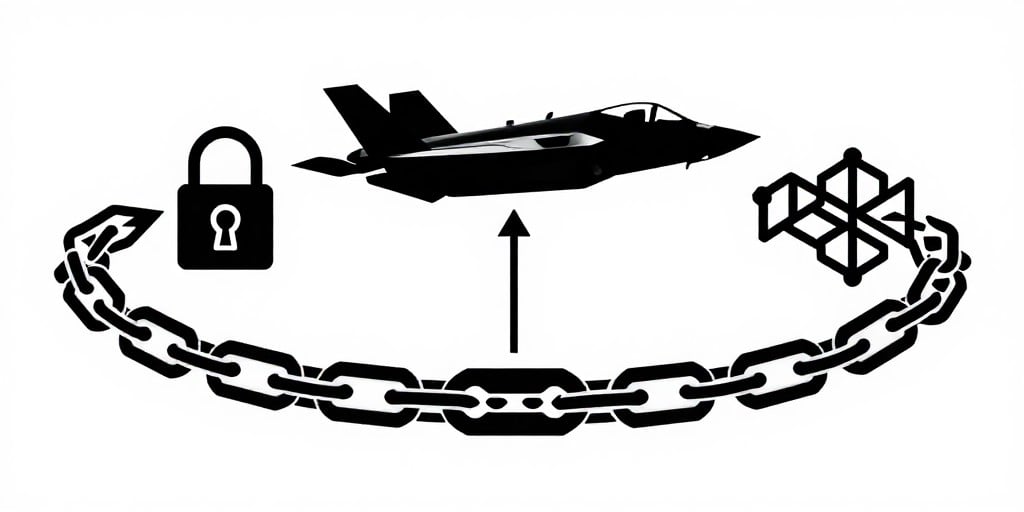
Corporate News Analysis: Lockheed Martin Corp. and the Dual Challenge of Supply‑Chain and Geopolitical Risk Management
Lockheed Martin Corp. is confronting a complex, dual‑front challenge that underscores the interplay between supply‑chain logistics and geopolitical risk in the defense sector. The incidents and strategic responses detailed below illustrate how a single corporation must navigate immediate operational disruptions while aligning with broader national security imperatives.
1. Incident Overview: Interception of Sensitive F‑35 Components
In late May, a shipment of classified F‑35 stealth components, originally destined for the United States, was intercepted by Chinese authorities in Hong Kong. The parts, coated with radar‑absorbing material, were unexpectedly routed from Australia via South Korea to Hong Kong, deviating from the conventional supply routes. Chinese officials seized the items, and the cargo has not yet been returned.
1.1. Regulatory Response
- Multiple U.S. congressional committees have initiated investigations, calling for stricter oversight of logistics for classified military equipment.
- The incident has highlighted gaps in existing transportation protocols for sensitive defense assets and the necessity of robust compliance mechanisms.
1.2. Lockheed’s Position
- Lockheed Martin asserts that the transport carrier was selected in line with Department of Defense directives.
- The company is collaborating with the carrier and other stakeholders to prevent recurrence, indicating a willingness to engage with regulatory bodies and supply‑chain partners in remediation efforts.
2. Strategic Shift: Securing Critical Materials for Advanced Aerospace and Defense
Concurrently, Lockheed Martin is engaging directly with mineral suppliers to secure strategic metals such as scandium and germanium, which are critical for high‑performance aerospace and defense systems. This initiative aligns with Washington’s broader strategy to reduce reliance on foreign sources, particularly China, for key strategic metals.
2.1. Domestic Supply‑Chain Resilience
- The company’s discussions with North American mining firms signal a shift toward consolidating a more resilient domestic supply chain for high‑technology components.
- By focusing on domestic sourcing, Lockheed aims to mitigate the risk of geopolitical disruptions that could affect the availability of essential materials.
2.2. Industry Implications
- Lockheed’s approach reflects a wider trend across the defense and aerospace industries, where raw‑material sourcing is increasingly recognized as a cornerstone of national defense capability.
- The emphasis on scandium and germanium underscores their growing importance in next‑generation radar, stealth, and propulsion technologies.
3. Broader Economic and Sectoral Context
The dual developments illustrate the convergence of supply‑chain vulnerabilities and geopolitical risk within a highly regulated, high‑tech industry. Key points of intersection include:
- Regulatory Oversight: The interception event has prompted calls for tighter government oversight, a trend observable across the defense sector where export controls and logistics are critical.
- Supply‑Chain Resilience: The pivot to domestic mineral sourcing reflects broader economic shifts toward supply‑chain diversification and strategic stockpiling, a strategy adopted by multiple sectors beyond defense, such as semiconductors and renewable energy.
- Technological Interdependence: The materials in question are essential not only for defense but also for commercial aerospace, telecommunications, and advanced manufacturing, highlighting cross‑industry dependencies.
4. Conclusion
Lockheed Martin’s response to the F‑35 component interception and its proactive engagement in securing critical raw materials demonstrates a dual‑pronged strategy: immediate risk mitigation coupled with long‑term supply‑chain fortification. This approach illustrates how defense companies must balance operational compliance, geopolitical considerations, and strategic material sourcing to sustain national security objectives while maintaining competitive positioning in a rapidly evolving global market.