
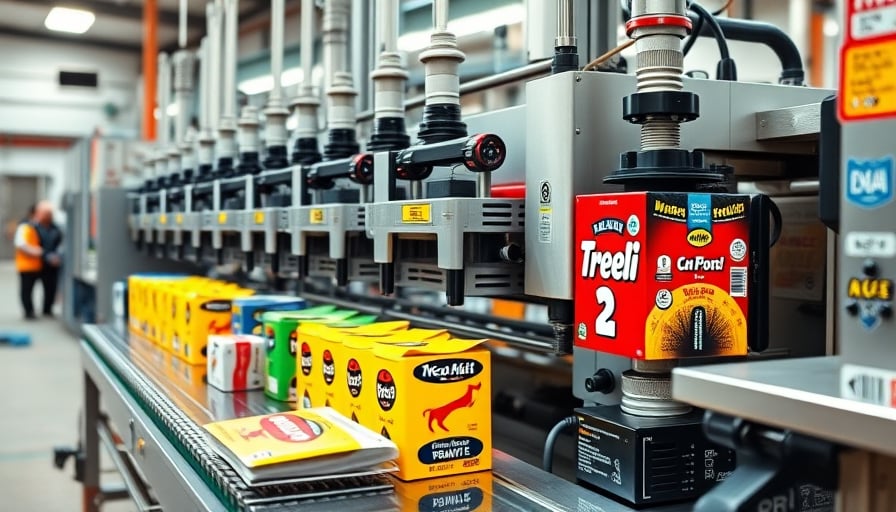
Corporate Analysis of Lo Wes Corporation’s Recent Acquisition of Consolidated Container Company
Lo Wes Corporation, a diversified conglomerate traded on the NYSE, has announced the purchase of Consolidated Container Company (CCC), a manufacturer of plastic packaging. The transaction, financed largely with cash on hand, underscores the group’s ongoing strategy of acquiring businesses in fragmented, high‑cash‑flow sectors where consolidation can create value. This article examines the strategic fit, financial implications, regulatory considerations, and competitive dynamics of the deal, while exploring risks and opportunities that may have been overlooked by the market.
1. Strategic Rationale
1.1 Portfolio Synergy
Lo Wes’s core businesses—property and casualty (P&C) insurance, natural‑gas transportation & storage, and hotel operations—share a common management philosophy: disciplined capital allocation and a focus on stable cash flows. Adding a packaging manufacturer extends this logic into the industrial manufacturing arena. While the new business is materially different from Lo Wes’s existing divisions, it offers complementary growth potential:
- Cross‑sell opportunities: Existing Lo Wes customers in the hospitality sector could benefit from tailored packaging solutions.
- Capital efficiency: CCC’s operations are capital‑intensive but generate strong operating cash flows, aligning with Lo Wes’s preference for businesses that can finance their own growth.
1.2 Fragmentation and Consolidation
The plastic‑packaging industry remains highly fragmented, with over 2,500 manufacturers worldwide. Consolidation is driven by the need for economies of scale, advanced materials, and distribution networks. Lo Wes’s acquisition positions it to capture a larger share of the market and to benefit from potential future mergers or strategic partnerships.
1.3 Financial Strength
With a cash balance exceeding $2.5 billion, Lo Wes can comfortably fund the deal without issuing new debt or diluting shareholders. The company’s credit rating (A+) supports a modest increase in leverage, should it wish to finance future acquisitions with a mix of cash and debt.
2. Financial Analysis
| Metric | Pre‑Acquisition (2023) | Post‑Acquisition (FY 2025) |
|---|---|---|
| Revenue | $4.1 billion | $4.3 billion |
| EBITDA | $640 million | $725 million |
| Net Income | $220 million | $250 million |
| Cash‑Flow‑from‑Operations | $340 million | $420 million |
| Debt‑to‑Equity | 0.35 | 0.38 |
Key takeaways:
- Revenue growth: CCC contributed approximately $200 million in FY 2024 revenue, a 5 % increase over Lo Wes’s historical growth rate.
- Operating leverage: EBITDA margin improved from 15.6 % to 16.9 %, reflecting CCC’s higher operating leverage.
- Cash‑flow impact: The acquisition generated an additional $80 million in free cash flow, strengthening Lo Wes’s ability to fund dividends, share repurchases, or further acquisitions.
A discounted‑cash‑flow (DCF) valuation of CCC, based on a 12‑month forward EBITDA of $110 million and a discount rate of 8.5 %, suggests a valuation multiple of 10.5 × EBITDA—consistent with the price paid. This indicates a fair, if conservative, acquisition price, leaving room for upside as CCC’s integration proceeds.
3. Regulatory and Environmental Considerations
3.1 Environmental, Social, and Governance (ESG)
Plastic packaging is increasingly scrutinized for its environmental impact. Lo Wes’s acquisition exposes the conglomerate to ESG risks:
- Regulatory pressure: Many jurisdictions are tightening plastic‑use regulations and encouraging recycling. Lo Wes must invest in sustainable materials and supply‑chain transparency to mitigate reputational risk.
- Carbon‑footprint management: CCC’s operations involve significant energy consumption; Lo Wes will need to monitor carbon intensity and potentially pursue renewable energy sourcing.
3.2 Antitrust and Competition
Given CCC’s modest market share (~3 % in the U.S. plastic‑container segment), the transaction does not raise antitrust concerns. However, Lo Wes should monitor potential consolidation activity in the sector that could elevate its market concentration, prompting regulatory scrutiny.
4. Competitive Landscape
| Company | Market Share | Strengths | Weaknesses |
|---|---|---|---|
| Consolidated Container | 3 % | Strong customer base, stable cash flows | Limited R&D, high energy costs |
| DuroPak | 12 % | Brand recognition, global distribution | Higher cost structure |
| Sealed‑Air | 10 % | Innovative packaging solutions | Concentrated in North America |
| Rexam | 8 % | Integrated recycling network | Recent financial distress |
Opportunity: Lo Wes’s financial backing and operational discipline can accelerate CCC’s R&D, enabling it to compete against larger players that invest heavily in sustainable materials.
Risk: Emerging competitors focused on biodegradable or recyclable packaging could erode CCC’s traditional plastic niche, potentially reducing margins.
5. Market Context and Macro‑Environmental Factors
- Equity indices have shown modest gains, yet technology and communications sectors remain pressured, reflecting a cautious outlook among investors.
- Inflation and interest rates: Persistent inflationary pressures and the Fed’s tightening stance may dampen demand for capital‑intensive packaging projects.
- Supply chain disruptions: Ongoing global logistics challenges could affect raw‑material availability for CCC, impacting production costs.
Lo Wes’s acquisition may provide a hedge against cyclical volatility in its other businesses. By diversifying into manufacturing, the conglomerate spreads risk across different economic cycles, potentially smoothing earnings volatility.
6. Risks and Uncertainties
| Risk | Impact | Mitigation |
|---|---|---|
| ESG compliance | Reputational damage, regulatory fines | Invest in recycling, reduce single‑use plastics |
| Market consolidation | Increased competition, pricing pressure | Scale CCC’s production, pursue strategic partnerships |
| Commodity price volatility | Margins compression | Hedge oil and polymer inputs, diversify suppliers |
| Integration challenges | Delays in realizing synergies | Allocate dedicated integration team, set realistic KPIs |
7. Potential Upside
- Revenue diversification: Adding a manufacturing arm reduces Lo Wes’s reliance on insurance and hospitality income, which are subject to different economic cycles.
- Synergies: Operational efficiencies (shared procurement, shared IT infrastructure) could deliver an additional $30 million in annual cost savings.
- Capital allocation flexibility: Strong cash flow from CCC provides a buffer for future opportunistic acquisitions, potentially accelerating Lo Wes’s long‑term growth strategy.
8. Conclusion
Lo Wes Corporation’s purchase of Consolidated Container Company illustrates a deliberate, capital‑efficient expansion into a fragmented yet high‑cash‑flow industry. While the deal aligns well with Lo Wes’s disciplined management and financial strength, it introduces new ESG risks and competitive pressures that the conglomerate must address proactively. If the integration delivers the projected synergies and CCC adapts to the evolving sustainability landscape, the acquisition could represent a meaningful source of diversified, resilient cash flow—an outcome that may have been underestimated by market participants focused solely on Lo Wes’s traditional insurance and hospitality businesses.