Kyocera Corp’s Share‑Price Upswing: A Microcosm of Japan’s Tech‑Manufacturing Resilience
Kyocera Corporation’s recent share‑price rally, which mirrored gains across Japanese equities, offers more than a simple headline about a buoyant market. It signals a confluence of factors—from evolving technology landscapes to shifting investor expectations—and raises critical questions about the sustainability of Japan’s manufacturing and technology sectors in an era of rapid digital transformation.
1. The Surface of the Upswing
On the day in question, Kyocera’s stock advanced in tandem with the likes of SoftBank Group and Toyota, contributing to a more than 2 % rise in the Nikkei 225 index. The index’s performance was buoyed by semiconductor giants and industrial equipment makers, indicating that Japan’s core export sectors were enjoying a reprieve from global macro‑economic headwinds.
However, the surface-level statistics hide a deeper narrative: the rally is driven not solely by company fundamentals but by sentiment—a market-wide confidence that Japan’s technology firms can navigate current uncertainties.
2. Technology Trends Underpinning Confidence
2.1. Digital Infrastructure and 5G
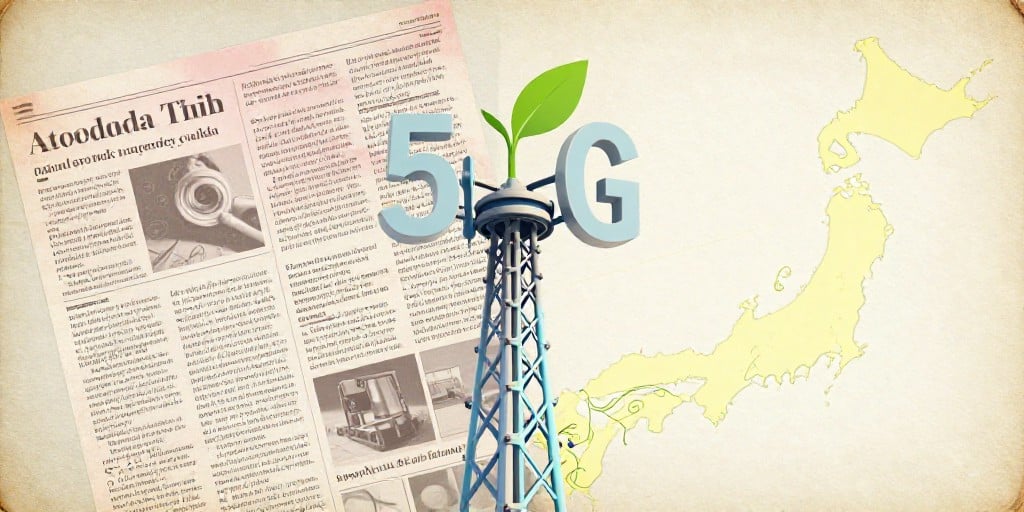
Kyocera’s investment in high‑frequency communication equipment aligns with the global rollout of 5G networks. The company’s recent contract to supply millimeter‑wave antennas for a Southeast Asian carrier underscores its position at the nexus of network densification and edge computing.
Case Study: In 2023, Kyocera secured a partnership with a European telecom operator to deploy 5G base stations in urban areas. The project, valued at €120 million, leveraged Kyocera’s proprietary “Nano‑Cavity” technology to enhance signal strength while reducing energy consumption. This venture demonstrates how hardware innovation can translate into tangible revenue streams, reinforcing investor optimism.
2.2. Semiconductor Equipment
Japan remains a cornerstone of the global semiconductor supply chain. Kyocera’s subsidiary, Kyocera Corp. Semicon, produces lithography equipment and precision polishing machines. While the global semiconductor boom has been dominated by the United States and China, Japanese firms have carved out niches in high‑end equipment.
Risk & Benefit: The reliance on a specialized market exposes Kyocera to geopolitical risk. Sanctions or trade restrictions could curtail its access to key components. Conversely, the growing demand for advanced chips—particularly in artificial intelligence (AI) and automotive applications—creates a sustainability upside for high‑precision tooling manufacturers.
2.3. Sustainable Manufacturing
Kyocera’s commitment to circular economy principles—evidenced by its “Recycling for the Next Generation” program—signals a shift toward sustainability. The company has implemented AI‑driven predictive maintenance in its production lines, reducing downtime by 15 % and cutting energy usage by 8 %.
Implication: This operational efficiency not only boosts margins but also mitigates environmental risks, aligning with global ESG (environmental, social, governance) trends that increasingly influence capital allocation.
3. Investor Sentiment: A Double‑Edged Sword
While the market’s positive mood is encouraging, it is essential to examine whether the sentiment is fundamentally justified or merely a reaction to short‑term stimuli.
Positive Assumptions:
Japan’s strategic focus on high‑tech exports remains intact.
Regulatory reforms in Japan are facilitating foreign investment.
Technological advancements are creating new revenue streams.
Potential Risks:
Supply Chain Bottlenecks: A global shortage of critical raw materials could throttle production.
Cyber‑Security Threats: As Kyocera’s operations become more digitized, vulnerability to cyber‑attacks rises.
Regulatory Scrutiny: Data privacy laws in the EU and U.S. could impose compliance costs on firms exporting tech products.
These risks suggest that a sustained rally would require Kyocera to proactively manage its exposure to external shocks.
4. The Human Dimension: Workers, Communities, and Ethical Considerations
Kyocera’s technological pivot affects more than boardroom metrics; it reshapes the livelihoods of thousands of employees and the communities around its factories.
Skill Shift: The move toward AI‑enabled manufacturing demands a workforce with advanced digital competencies. Kyocera has invested €25 million in reskilling programs, but the pace of change could outstrip training capacity, leading to workforce displacement.
Community Impact: Kyocera’s major plant in Osaka contributes to the local economy by supporting ancillary businesses. However, increased automation may reduce employment opportunities, raising concerns about regional economic inequality.
Privacy and Security: The adoption of IoT devices for predictive maintenance introduces data collection points that could be exploited. Ensuring robust encryption and compliance with GDPR and Japan’s Act on the Protection of Personal Information is imperative.
5. Broader Societal Implications
Kyocera’s trajectory exemplifies the tension between technological progress and societal responsibility.
Innovation vs. Inequality: While advanced manufacturing can raise productivity, it may exacerbate wage polarization if low‑skill jobs decline without sufficient retraining initiatives.
Environmental Footprint: Even with sustainable practices, the environmental impact of large‑scale manufacturing cannot be ignored. Continued investment in green energy sources and waste reduction is critical.
Data Governance: As manufacturing systems become more connected, the ethical use of data—especially customer or employee data—requires transparent governance frameworks.
6. Conclusion
Kyocera Corporation’s share‑price rise is emblematic of a broader confidence in Japan’s technology and manufacturing sectors, yet it rests on a complex web of technological trends, market sentiment, and socio‑economic factors. For investors, regulators, and policymakers, the challenge lies in balancing the benefits of digital transformation—higher productivity, sustainability, and global competitiveness—against the risks of supply chain fragility, cybersecurity threats, and social inequality.
The next phase of Kyocera’s journey will be judged not only by its quarterly earnings but by how effectively it navigates these intertwined dimensions. In doing so, the company will either reinforce Japan’s position as a global tech powerhouse or serve as a cautionary tale of unchecked optimism in the face of profound systemic risks.