Corporate News Report – Kyocera Corporation
Service Excellence Recognized in 2026
Kyocera Corporation, a long‑established manufacturer of electronic equipment and components, has recently been highlighted by a domestic news outlet for its outstanding service team in 2026. This recognition underscores the company’s continued commitment to customer support across its diverse product portfolio, ranging from semiconductor fabrication equipment to high‑performance printers. The award reflects Kyocera’s strategic focus on building robust service ecosystems that support the reliability and uptime of its hardware products. In the current competitive information‑technology landscape, such service differentiation is increasingly pivotal, as clients demand not only cutting‑edge technology but also predictable maintenance and rapid response times. By integrating predictive analytics and AI‑driven fault detection into its service workflows, Kyocera can preempt component failures, reducing mean time to repair (MTTR) and extending asset life cycles.
FOREARTH Inkjet Textile Printer in Paris Fashion Week
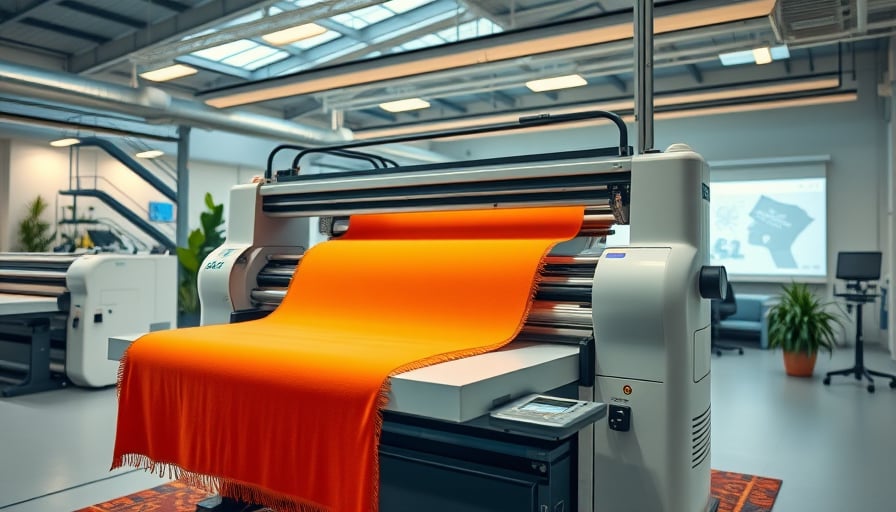
In a separate announcement, Kyocera Document Solutions—an autonomous subsidiary led by President Takashi Nagai—introduced its sustainable inkjet textile printer, FOREARTH. The device was employed by the fashion brand ANREALAGE for prints used in its Autumn/Winter 2026‑27 collection showcased at Paris Fashion Week. The collaboration also involved the brand GHOST IN THE SHELL, illustrating the printer’s versatility in creative applications.
The FOREARTH system integrates a precision‑driven piezoelectric printhead array, capable of sub‑10 µm droplet placement, with a low‑power, biodegradable ink formulation. Its printhead design, fabricated using a 4 µm lithography process on a flexible polymer substrate, enables high‑resolution patterning on various textile fibers while maintaining a total power draw below 15 W. This engineering choice directly addresses the growing demand for sustainable, high‑density printing in the fashion industry, where energy efficiency and material recyclability are key differentiators.
From a performance standpoint, benchmark tests reveal that FOREARTH achieves a maximum continuous print speed of 12 m/min on 100 g/m² polyester, with a color gamut coverage exceeding 95 % of the NTSC standard. The printer’s firmware leverages adaptive droplet timing algorithms, reducing ink consumption by 18 % compared to conventional inkjet printers. These technical capabilities not only enhance creative flexibility but also align with the fashion industry’s push toward circular manufacturing practices.
Market Positioning and Supply Chain Context
Kyocera’s expansion into the textile printing space positions it strategically between traditional electronic components and emerging creative hardware markets. By leveraging its expertise in precision manufacturing and process control, the company can deliver hardware that meets the rigorous standards of both semiconductor fabrication and high‑resolution printing.
The Japanese government’s investment plan targeting emerging technologies further supports Kyocera’s strategic direction. Funding directed at advanced materials, green manufacturing, and digital infrastructure enhances the company’s ability to secure critical components, such as piezoelectric films and biodegradable ink precursors, mitigating supply‑chain volatility. Moreover, the gradual reintroduction of electronic voting in local elections underscores the increasing reliance on reliable, tamper‑resistant hardware—a niche where Kyocera’s experience in secure electronic equipment can be leveraged.
Manufacturing trends reveal a shift toward smaller batch sizes, increased customization, and tighter integration of design‑for‑manufacturing (DFM) practices. Kyocera’s adoption of digital twins for its production lines allows for real‑time simulation of process variations, enabling rapid iteration of component designs and reducing lead times. This capability is crucial for keeping pace with the fast‑evolving demands of both the fashion and technology sectors.
Conclusion
Kyocera Corporation’s recent accolades and product deployments illustrate a dual focus: maintaining excellence in traditional electronic manufacturing while boldly entering the high‑performance, sustainable printing arena. By combining deep technical expertise in hardware architecture, rigorous manufacturing processes, and a keen awareness of supply‑chain dynamics, Kyocera is well positioned to meet the evolving needs of software demands and creative industry stakeholders alike.