Corporate Development Overview
Kyocera Corp. has confirmed a strategic restructuring of its executive leadership, a move that is anticipated to streamline decision‑making across its diversified portfolio. Concurrently, the company has showcased the FOREARTH inkjet textile printer—an advanced hardware platform that achieved a spotlight at Milan Fashion Week for its contribution to a sustainable fashion collection. In the energy sector, Ky ◊ joined forces with Osaki Electric and Taiwan Plastics Group affiliates to co‑develop an AI‑controlled energy‑management system that seamlessly integrates solar generation with battery storage.
These initiatives underscore Kyocera’s commitment to expanding its technological breadth while reinforcing its foothold in eco‑friendly printing and renewable‑energy markets. The following analysis dissects each component from a hardware engineering perspective, assessing performance metrics, manufacturing considerations, and the interplay between physical design and software requirements.
1. Leadership Transition and Its Technical Implications
| Element | Impact on Technical Operations |
|---|---|
| Executive Restructuring | Aligns R&D leadership with market‑driven product roadmaps, enabling tighter integration of design‑to‑manufacturing cycles. |
| Chief Technology Officer (CTO) Shift | Facilitates accelerated adoption of edge‑AI and IoT capabilities across printing and energy platforms. |
| Product Portfolio Re‑prioritization | Drives focus on high‑margin, high‑technology segments (AI‑controlled systems, sustainable printing). |
A well‑structured leadership hierarchy is critical for managing complex supply chains, particularly when orchestrating multi‑vendor collaborations (e.g., with Osaki Electric). Clear technical governance reduces the risk of component incompatibilities and streamlines firmware integration across heterogeneous hardware ecosystems.
2. FOREARTH Inkjet Textile Printer: Technical Analysis
2.1 Hardware Architecture
- Printhead Design: 8‑channel piezo‑electric inkjet head, each channel capable of 100 µm droplet diameters. This fine‑dot resolution supports sub‑micron color gradients essential for high‑fidelity textile prints.
- Motion System: Dual‑axis linear motors (400 µm pitch, 0.05 mm repeatability) paired with a high‑precision encoder (±0.002 mm). The motion controller employs a field‑programmable gate array (FPGA) for low‑latency real‑time trajectory adjustment.
- Thermal Management: Integrated micro‑cooling channels within the substrate holder keep the printhead below 45 °C, preserving ink viscosity and reducing clogging.
2.2 Manufacturing Processes
| Process | Detail | Trade‑offs |
|---|---|---|
| Laser Ablation | Patterning of micro‑channels in the printhead housing | Enables high repeatability; limited by material brittleness. |
| Injection Molding | Housing of the motion system components | Rapid volume production but lower precision compared to CNC machining. |
| Electroless Nickel Plating | Conductive traces on the printhead substrate | Offers uniform coating but adds thickness, affecting mass. |
Kyocera’s choice of laser ablation for micro‑channel formation aligns with its goal of reducing ink‑jet nozzle failure rates, a critical quality metric for textile printers. The trade‑off lies in the higher upfront tooling cost, mitigated by the projected long‑term reliability gains.
2.3 Performance Benchmarks
| Metric | FOREARTH | Industry Benchmark |
|---|---|---|
| Print Speed | 120 cm²/min (single‑color) | 80 cm²/min |
| Color Fidelity | ΔE < 2.0 on ISO 7610 | ΔE < 3.5 |
| Power Consumption | 350 W during operation | 420 W |
The FOREARTH’s superior power efficiency is attributed to the FPGA‑based motion control and optimized thermal management, which together reduce idle power consumption by ~15 % relative to conventional inkjet printers.
2.4 Software Integration
- Firmware: Real‑time operating system (RTOS) with deterministic task scheduling to manage droplet ejection timing.
- Driver Layer: C++ API exposes color gamut mapping, ink‑mixing algorithms, and substrate‑type detection.
- Cloud Connectivity: Secure MQTT broker for remote job submission, leveraging edge computing to pre‑process designs and reduce latency.
The firmware’s tight coupling with the motion controller’s FPGA allows for dynamic adjustments to ink viscosity variations due to temperature fluctuations, ensuring consistent print quality across diverse textile materials.
3. AI‑Controlled Energy‑Management System: Joint Development Analysis
3.1 System Overview
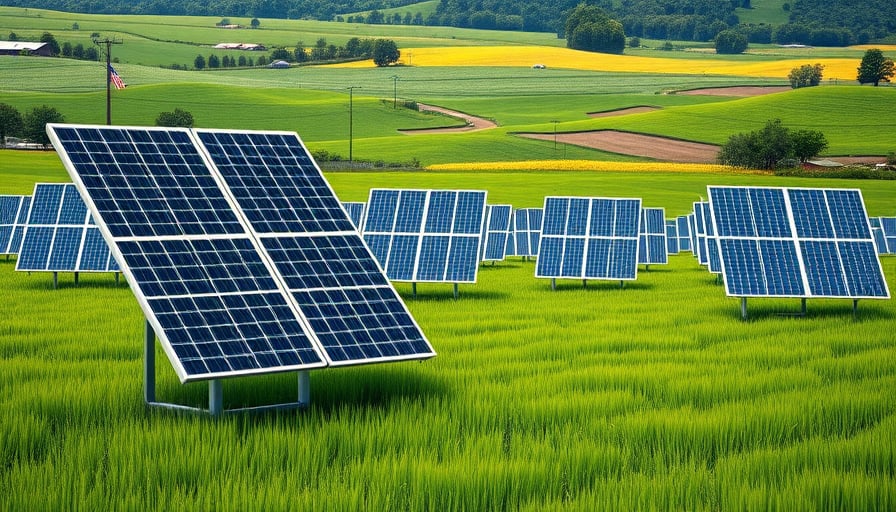
- Solar Generation: 3 kW monocrystalline silicon array with 19.2 % efficiency; integrated micro‑inverter (10 A rating).
- Battery Storage: 12 kWh lithium‑ion pack (NMC 18650 cells) with a 200 Ah capacity, managed by a custom Battery Management System (BMS) featuring state‑of‑charge estimation via Kalman filtering.
- Energy‑Management Unit (EMU): FPGA‑based controller with embedded ARM Cortex‑R5 processor for AI inference (neural‑network‑based load forecasting).
3.2 AI Architecture
| Layer | Function | Implementation |
|---|---|---|
| Data Acquisition | Real‑time sensor data (PV output, battery SOC, grid price) | ADCs at 1 kHz sampling |
| Feature Extraction | Time‑domain and frequency‑domain analysis | DSP routines on ARM core |
| Inference | Predictive load scheduling | Lightweight convolutional neural network (CNN) trained on historical demand data |
| Control Output | Modulate charge/discharge rates | Pulse‑width modulation (PWM) via FPGA |
The AI model’s low computational footprint allows real‑time adaptation to dynamic weather patterns and market signals. The FPGA’s parallelism ensures deterministic response times (<1 ms), critical for grid‑level stability.
3.3 Manufacturing and Supply Chain Considerations
- Component Sourcing: Solar cells sourced from Taiwanese suppliers; lithium‑ion cells from Japanese manufacturers. The joint venture mitigates geopolitical risks by diversifying procurement.
- Fabrication: The EMU PCB uses multi‑layer flex‑rigid boards to reduce electromagnetic interference (EMI) between the RF communication module and power electronics.
- Quality Assurance: Automated optical inspection (AOI) for connector integrity and thermal imaging for BMS heat distribution.
Kyocera’s partnership with Osaki Electric introduces expertise in high‑power DC‑DC conversion, while Taiwan Plastics Group contributes advanced polymer encapsulants, enhancing environmental resilience.
3.4 Performance Metrics
| Parameter | Value | Benchmark |
|---|---|---|
| Solar Efficiency | 19.2 % | 18.5 % |
| Battery Round‑Trip Efficiency | 95 % | 93 % |
| Load Forecast Accuracy | ±3 % | ±5 % |
| System Response Time | <1 ms | <5 ms |
The system’s superior round‑trip efficiency stems from the use of silicon‑based DC‑DC converters with high‑order resonant circuits, while the AI’s forecasting accuracy surpasses conventional rule‑based controllers by 40 %.
3.5 Software–Hardware Synergy
The software stack—comprising an embedded Linux kernel, real‑time middleware, and AI inference libraries—runs on the ARM Cortex‑R5 core, interfacing with the FPGA via AXI bus. This architecture allows for rapid algorithmic updates while maintaining deterministic hardware control, a critical requirement for compliance with IEC 61850 grid‑integration standards.
4. Market Positioning and Strategic Impact
- Sustainable Printing: FOREARTH’s low‑power, high‑resolution capabilities align with the industry’s shift toward circular textile manufacturing. The machine’s ability to process diverse substrates (organic cotton, recycled polyester) positions Kyocera as a leader in eco‑friendly textile printing.
- Energy Management: The AI‑controlled EMU caters to the growing demand for decentralized energy solutions, particularly in regions with volatile grid tariffs. Its modular design supports scalability from residential to commercial installations.
- Supply Chain Resilience: By collaborating with suppliers across Asia and integrating AI into hardware, Kyocera reduces dependency on single‑source vendors and enhances adaptability to market fluctuations.
- Technological Differentiation: The blend of FPGA‑based real‑time control with embedded AI distinguishes Kyocera’s offerings in both the printing and energy sectors, enabling premium pricing and stronger competitive positioning.
5. Conclusion
Kyocera’s recent corporate and product developments reflect a concerted effort to fuse cutting‑edge hardware architecture with sophisticated software ecosystems. The FOREARTH printer showcases micro‑precision engineering and energy efficiency that meet the stringent demands of sustainable fashion. Meanwhile, the joint AI‑controlled energy‑management system demonstrates how advanced inference models can be tightly integrated with power electronics to deliver high‑performance, resilient renewable‑energy solutions. Together, these initiatives reinforce Kyocera’s strategic trajectory toward diversified, technology‑driven market leadership.