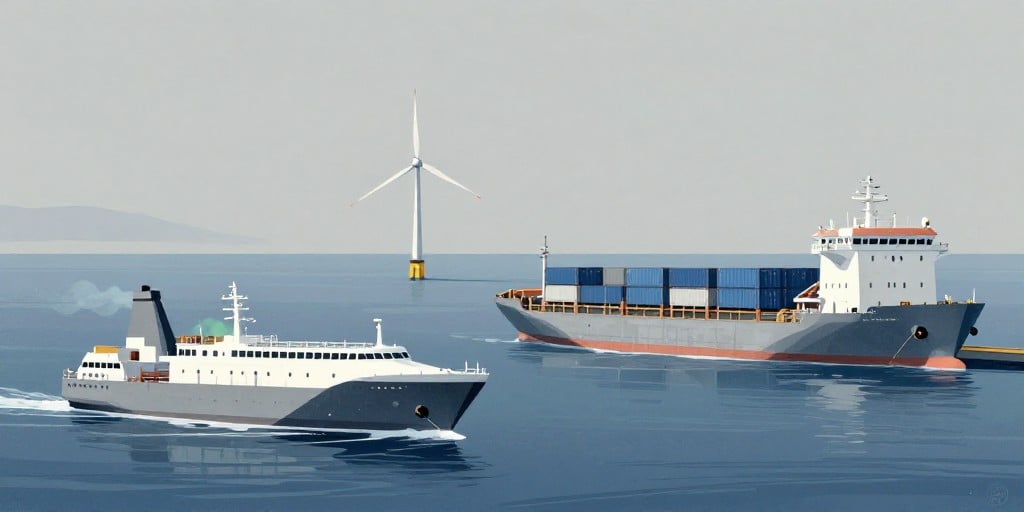
Kawasaki Kisen Kaisha Ltd. Navigates Dual‑Sector Dynamics
Kawasaki Kisen Kaisha Ltd. (KKK) continues to assert a significant presence within the global container shipping arena, as evidenced by recent trading patterns observed among its contemporaries. In mid‑October, the Japanese carrier’s share price registered a modest intraday uptick, contributing to a slight rally in the broader sector. Nonetheless, sentiment across Asian container operators remained uneven, with several peers registering declines while others posted only marginal gains.
Shipping Performance in Context
KKK’s market performance is closely tied to broader macro‑economic variables that shape the shipping industry. Fluctuating freight rates, evolving regulatory requirements, and geopolitical developments—particularly in the Asia‑Pacific region—exert a decisive influence on vessel utilization and profitability. The modest price movement observed for KKK underscores the sector’s sensitivity to short‑term market noise, yet it also reflects the company’s enduring role in a highly competitive environment.
Diversification through the Ghana FPSO Joint Venture
Beyond its core shipping activities, KKK is actively engaged in a major joint‑venture project involving a floating production, storage, and offloading (FPSO) vessel off the coast of Ghana. In October, the joint venture finalized a lease extension and upgrade agreement. KKK, holding a minority stake alongside other Japanese partners, secured an additional contract backlog estimated at several hundred million dollars. This arrangement is expected to prolong the economic life of the offshore installation and enhance its gas export capacity, thereby aligning with the partner’s long‑term operational strategy.
The projected upgrade work is slated for completion in the first quarter of 2028, a timeline that dovetails with the maritime industry’s broader shift toward integrating offshore energy operations with traditional shipping logistics. By participating in this venture, KKK demonstrates strategic diversification, mitigating exposure to the cyclical nature of container transport while capitalizing on the steady demand for maritime logistics in the energy sector.
Implications for Stakeholders
The dual‑sector engagement presents both opportunities and risks. On one hand, the FPSO project offers a steady revenue stream and positions KKK favorably in an industry increasingly focused on energy transition and resource diversification. On the other hand, the company remains subject to the volatility inherent in shipping markets, where freight rates can swing rapidly in response to supply‑demand imbalances and macroeconomic shocks.
For investors, KKK’s diversified portfolio underscores the importance of evaluating companies on both their core operations and ancillary ventures. The Ghana FPSO project, in particular, may serve as a buffer against downturns in container traffic, providing a more resilient revenue base that could enhance long‑term shareholder value.
Conclusion
Kawasaki Kisen Kaisha Ltd. remains a salient participant in the container shipping market while simultaneously advancing its footprint in offshore energy logistics. The recent developments surrounding the Ghana FPSO joint venture signal a sustained commitment to long‑term infrastructure investment, reflecting a broader industry trend toward synergizing maritime logistics with energy operations. As market dynamics among Asian carriers continue to fluctuate, KKK’s dual‑sector strategy positions it to navigate the evolving economic landscape with greater agility and resilience.