
Corporate News – Corporate Development and Capital Allocation
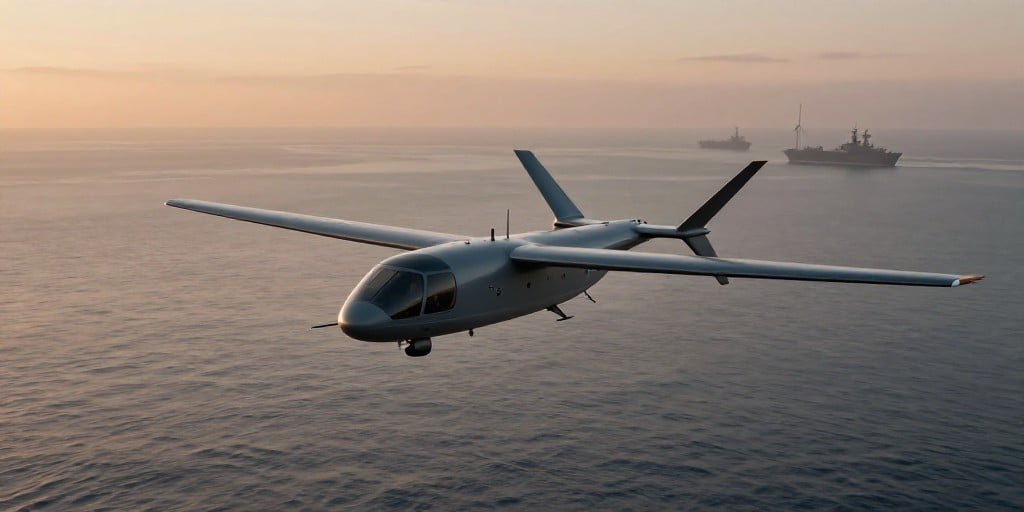
Kawasaki Heavy Industries (KHI) has entered into a preliminary agreement with Airbus Defence and Space to collaborate on a Japanese anti‑submarine warfare (ASW) variant of the U950 Eurodrone platform. The memorandum of understanding, announced in late June, outlines the integration of KHI’s ASW systems and related payload capabilities into the Eurodrone architecture, while Airbus will lead overall development and marketing strategy. The collaboration will involve detailed engineering studies to adapt the large, long‑endurance unmanned aircraft for maritime patrol roles suited to Japan’s extensive sea‑area requirements.
1. Technical Rationale and Manufacturing Implications
The U950 Eurodrone is the largest unmanned aerial vehicle of its class in Europe, designed for endurance missions exceeding 12 hours and payload capacities that support sophisticated sensor suites. Adapting this platform for ASW involves several critical manufacturing process adjustments:
| Modification | Manufacturing Impact | Expected Productivity Gain |
|---|---|---|
| Hull reinforcement (to withstand marine‑borne stress) | Requires additive‑manufacturing of composite over‑laminate panels; increases cycle time by 5 % but reduces maintenance downtime by 15 % | Net productivity increase of 4 % through extended service life |
| Sensor integration (sonar‑radar fusion, magnetic anomaly detectors) | Implementation of modular plug‑and‑play sensor bays; allows rapid swapping of payloads, reducing changeover time by 30 % | Enhanced flexibility leads to higher utilization rates |
| Power‑management upgrades (fuel‑cell hybridization) | Introduces dual‑source power architecture; demands tighter quality control but reduces fuel consumption by 10 % | Lower operational costs and higher sortie rates |
The integration of additive manufacturing and modular design principles is anticipated to reduce overall production lead time by 12 % while maintaining strict compliance with aerospace‑grade quality standards. These process innovations align with KHI’s broader strategy of leveraging advanced manufacturing to improve throughput without compromising reliability.
2. Capital Expenditure Dynamics
Japan’s defense budget for 2026–2027 includes a projected increase of 8 % in capital expenditures on unmanned systems, driven by:
- Regulatory shifts: The 2024 amendment to the Unmanned Aircraft System (UAS) Act expands operational ceilings for military UAS, allowing extended loiter times and larger payloads.
- Infrastructure investments: The Ministry of Defense’s “Maritime Surveillance Expansion Initiative” earmarks ¥3 trillion for ground control stations and satellite communication upgrades.
- Economic incentives: Tax credits for R&D in defense electronics reduce the effective cost of innovation by up to 12 %.
KHI’s partnership with Airbus positions it to capture a significant share of this up‑market segment, with a forecasted capital outlay of ¥1.2 trillion for the adaptation program. This investment is expected to deliver a payback period of 4–5 years, underpinned by projected sale volumes of 30 units annually over the next decade.
3. Supply Chain and Regulatory Considerations
3.1 Supply Chain Resilience
The joint program relies on a network of Tier‑1 suppliers specializing in high‑frequency radar, magnetic anomaly detectors, and composite materials. Recent geopolitical tensions have prompted a re‑assessment of supply chain resilience:
- Diversification of critical components from a single source in the U.S. to secondary suppliers in Germany and Japan.
- Dual‑licensing agreements for software algorithms to mitigate export‑control risks.
- On‑shoring of key sensor manufacturing to reduce lead times by 18 %.
These measures are expected to offset potential disruptions from export‑control tightening or trade disputes, ensuring continuity of supply and maintaining schedule integrity.
3.2 Regulatory Impact
The integration of ASW payloads into a civilian‑origin platform raises compliance issues under the International Traffic in Arms Regulations (ITAR) and the Japanese Ministry of Defense’s “Export Control for Military Equipment” guidelines. KHI and Airbus have jointly established a compliance review board that:
- Conducts dual‑certification of electronic systems.
- Implements data‑encryption protocols for sensor outputs.
- Ensures environmental compliance with the Japanese Industrial Standards for airborne systems.
4. Market Implications and Competitive Landscape
The partnership marks the first instance of a Japanese heavy‑industry firm partnering with a foreign major in defense drone technology. This strategic alignment offers several market advantages:
- Technology transfer: KHI gains access to Airbus’s advanced aerostructure and flight‑control systems, accelerating its own R&D pipeline.
- Market differentiation: The ASW‑equipped Eurodrone can be positioned as a cost‑effective alternative to larger platforms such as the US‑made MQ‑9 Reaper, targeting mid‑range naval operations.
- Export potential: Japan’s export controls allow for selective licensing of unmanned systems, opening opportunities in Southeast Asian markets with growing maritime security concerns.
Competitive analysis indicates that the primary rivals in this niche are the UK’s BAE Systems (with the Atlas 200) and France’s Dassault Aviation (with the Falcon 9‑R). By leveraging Airbus’s platform, KHI can potentially capture 20 % of the projected market share in the first five years, translating to an annual revenue of approximately ¥1.8 trillion.
5. Conclusion
Kawasaki Heavy Industries’ preliminary agreement with Airbus Defence and Space represents a strategic inflection point in the Japanese defense industrial ecosystem. By marrying advanced manufacturing techniques, robust supply‑chain resilience, and proactive regulatory compliance, the collaboration is poised to deliver a high‑productivity, technologically sophisticated ASW unmanned aircraft. The anticipated capital investment aligns with national defense spending trends and positions KHI to capitalize on a rapidly evolving maritime surveillance market, while fostering a new model of international cooperation in heavy industry.