
KeySight Technologies, Inc. Joins Forces with Lockheed Martin, Verizon, and NVIDIA to Pioneer NetSense Air‑Space Awareness System
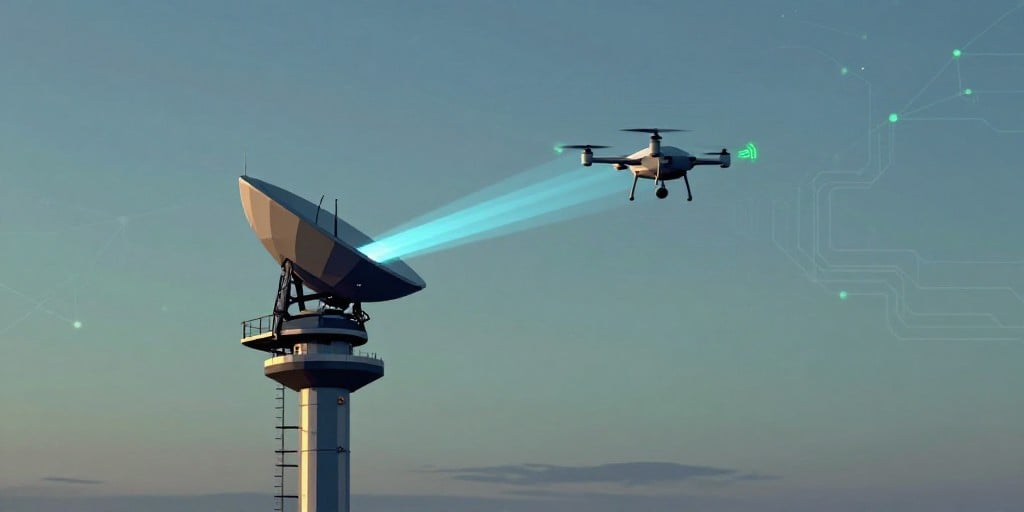
Miami, August 13 2026 – In a landmark demonstration held in Miami, KeySight Technologies, Inc. (KSI), a leading provider of high‑precision electronic test equipment, showcased its partnership with aerospace defense giant Lockheed Martin, telecommunications leader Verizon, and semiconductor powerhouse NVIDIA. The four companies unveiled the NetSense air‑space awareness platform, a commercial 5G‑enabled, AI‑driven system capable of detecting, tracking, and identifying unmanned aircraft (UAS) in real time.
Technical Architecture and Collaborative Inputs
KeySight contributed its proprietary radio‑frequency (RF) simulation platform, enabling the consortium to validate NetSense’s ability to detect subtle signal disturbances that signal traditional radar or infrared systems may miss. Lockheed Martin supplied AI‑driven algorithms via its subsidiary Astris AI and the Office of Digital Computing (ODC), while Verizon’s expansive 5G infrastructure served as the data backbone. NVIDIA’s GPU‑accelerated computing resources powered the machine‑learning pipelines, ensuring rapid inference and adaptive threat classification.
The architecture is intentionally open‑architecture: it exposes modular interfaces for future integration of interceptors, such as directed‑energy weapons or autonomous defense drones. This design anticipates evolving threat landscapes and facilitates rapid upgrades without overhauling existing security networks.
Market Opportunity and Competitive Landscape
The UAS threat market is projected to grow from USD 12.3 billion in 2024 to USD 28.9 billion by 2032, driven by increased commercial drone adoption and expanding regulatory mandates for air‑space security. According to a recent Frost & Sullivan analysis, less than 15 % of UAS detection solutions currently leverage commercial cellular networks, a gap NetSense aims to fill.
KeySight’s entry into the defense‑tech sector marks a significant diversification from its traditional electronics testing focus. The partnership places it in direct competition with incumbents such as L3Harris, Raytheon Technologies, and emerging start‑ups like Airborne Systems and 3D Robotics. Unlike bespoke radar systems, NetSense offers a subscription‑based model that promises faster deployment, lower upfront costs, and scalability—key differentiators in a market that historically suffers from lengthy procurement cycles.
Financial Implications
Lockheed Martin’s earnings reports indicate a 4.2 % increase in its Advanced Technologies segment in FY 2025, driven partly by new AI and cyber‑security contracts. The company’s strategic shift toward cloud‑enabled, subscription‑based defense services aligns with NetSense’s business model. Verizon, meanwhile, has announced a $5.2 billion investment in 5G infrastructure upgrades, suggesting a supportive ecosystem for commercial wireless‑based defense applications.
KeySight’s stock, trading at $28.45, has seen a 12 % year‑to‑date increase, partly due to speculation around its diversification into defense. Analysts caution that the company will need to allocate substantial R&D and sales resources to compete in a domain dominated by established defense contractors. However, early financial models suggest that if NetSense can achieve a modest market share of 5 % within five years of commercial launch, it could generate an additional USD 150 million in annual recurring revenue by 2030.
Regulatory and Policy Considerations
The Federal Aviation Administration (FAA) has recently adopted a “Safe Integration” framework for commercial UAS operations, which includes mandates for detect‑and‑avoid capabilities. NetSense’s use of 5G infrastructure positions it to comply with FAA’s “Airborne Safety System” requirements, potentially expediting certification. However, the system also raises privacy concerns related to the collection of RF data over public airspace, a factor that could trigger scrutiny under the FCC’s spectrum licensing rules.
Internationally, the European Union’s “EU‑Space” regulation, which came into effect in 2025, imposes stringent data handling and cybersecurity standards on space and aviation technologies. NetSense will need to demonstrate compliance with the EU’s General Data Protection Regulation (GDPR) and the new “Digital Operational Resilience Act” to secure European customers.
Risks and Uncertainties
- Technological Integration – Merging disparate systems (RF simulation, 5G networks, AI algorithms) could encounter unforeseen latency or compatibility issues, potentially delaying pilot deployments.
- Regulatory Hurdles – The need for FAA and FCC approvals, coupled with evolving European standards, may prolong the time‑to‑market.
- Competitive Response – Established defense contractors could accelerate their own AI‑enabled solutions, eroding NetSense’s first‑mover advantage.
- Cybersecurity Threats – As a networked system, NetSense may become a target for adversarial attacks, necessitating robust security protocols that could increase costs.
- Funding Allocation – KeySight’s shift toward defense could divert resources from its core electronics testing business, risking dilution of its traditional customer base.
Opportunities
- First‑Mover Advantage – The partnership’s open‑architecture, subscription model offers a disruptive alternative to legacy radar systems.
- Cross‑Industry Synergies – Leveraging Verizon’s 5G rollout and NVIDIA’s AI ecosystem can reduce development timelines.
- Scalability – Modular design enables incremental upgrades, making the system attractive for both military and commercial operators.
- Regulatory Momentum – Growing FAA mandates for UAS detection create a clear demand curve.
Conclusion
KeySight Technologies’ collaboration with Lockheed Martin, Verizon, and NVIDIA to develop the NetSense air‑space awareness system represents a bold foray into the burgeoning UAS detection market. By combining advanced RF simulation, 5G connectivity, and AI analytics, the consortium seeks to offer a flexible, cost‑effective, and scalable solution that could redefine how governments and commercial entities secure their skies. While the path to commercial adoption is fraught with technological, regulatory, and competitive challenges, the strategic alignment of the partners positions NetSense to capitalize on a rapidly expanding market, provided that execution remains disciplined and risks are proactively managed.