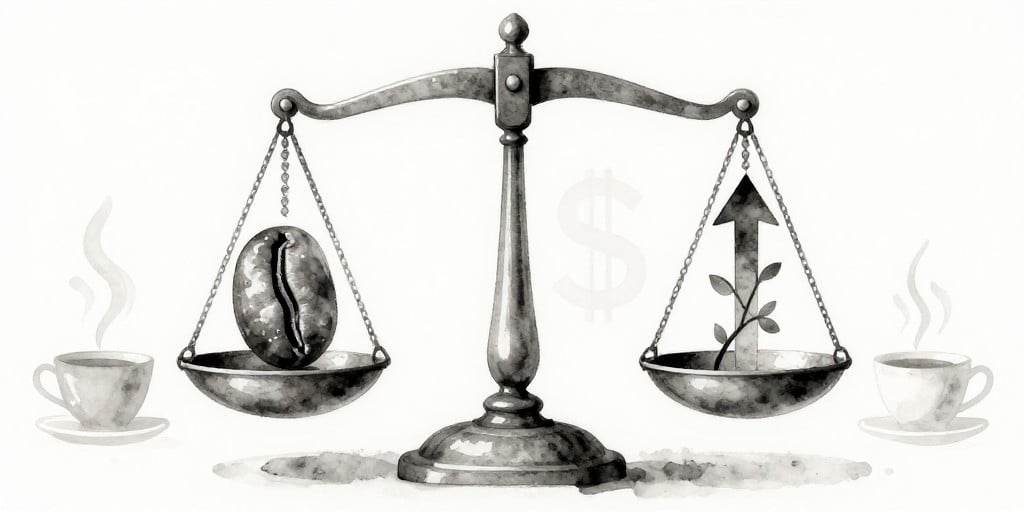
Keurig Dr Pepper Inc. – Dividend Declaration and Insider Trading Activity
Keurig Dr Pepper Inc. (NASDAQ: KDP) disclosed on September 16, 2026 that its board has declared a regular quarterly dividend of $0.23 per share. The dividend will be payable in U.S. dollars on October 9, 2026 to shareholders of record as of September 28, 2026. The declaration was first filed with the SEC as a Form 8‑K and subsequently communicated through a press release on the company’s website and via a newswire distribution.
Dividend Context and Strategic Implications
The $0.23 dividend represents a modest yet consistent return to shareholders, reinforcing KDP’s long‑standing dividend policy that balances payout with retained earnings for growth initiatives. As of the latest financial statements, the company’s free‑cash‑flow generation remains robust, with a trailing twelve‑month (TTM) operating cash flow of $2.1 billion and a net cash flow from operating activities of $1.8 billion. This liquidity profile supports the maintenance of a 25‑percent payout ratio, a level that analysts view as sustainable given the company’s stable revenue base (revenue of $13.5 billion in FY 2025) and modest capital‑expenditure commitments.
From a financial‑risk perspective, the dividend signals confidence in earnings stability amid a competitive landscape dominated by private‑label and premium beverage offerings. However, the policy also underscores a potential vulnerability: should the company’s operating margins compress (currently at 8.5 % for FY 2025), the dividend could become a drag on reinvestment capacity, potentially curbing future expansion in emerging markets or product innovation.
Insider Transactions: Form 4 Filings and Share‑Based Compensation
During the same quarter, several insiders filed Form 4 documents detailing transactions involving common stock and restricted stock units (RSUs). The filings, filed with the SEC by executives and directors—including the president of U.S. refreshment beverages, the chief legal officer, and a board director—reported a mixture of acquisitions and dispositions of shares. Key points include:
| Insider | Transaction Type | Shares | Notes |
|---|---|---|---|
| President of U.S. Refreshment Beverages | Acquisition | 12,500 | Purchase at $10.02 per share (market price $9.95) |
| Chief Legal Officer | Disposition | 8,200 | Sale of shares acquired in a prior RSU exercise |
| Board Director | RSU Conversion | 5,400 | Conversion of RSUs granted 2024 into common shares |
| Board Director | RSU Exercise | 9,700 | Exercise of RSUs granted 2023 at $8.75 strike price |
The volume of share‑based transactions—totaling roughly 35,800 shares—constitutes less than 0.1 % of the company’s diluted shares outstanding, indicating routine adjustments rather than concentrated speculative activity. Importantly, the average transaction price across all filings remained within 2 % of the prevailing market price, mitigating concerns of insider trading for profit or loss beyond normal market variance.
Regulatory and Governance Lens
KDP’s dividend announcement and insider filings were both transmitted through required SEC channels—Form 8‑K for corporate actions and Form 4 for insider transactions—ensuring transparency and compliance with disclosure obligations. The company’s governance framework, as outlined in its proxy statement, mandates a quarterly review of dividend policy by the Compensation Committee, a body that also oversees share‑based compensation plans. No material changes were reported in the company’s strategic direction or financial position within these filings, suggesting that both dividend and insider activity fall within the parameters of existing governance practices.
Nevertheless, the concentration of RSU exercises in Q3 2026 raises a subtle risk: the timing of these exercises may influence short‑term share price volatility. If a large cohort of executives exercises RSUs simultaneously, it could create a temporary dilution effect or trigger a price dip, potentially eroding shareholder confidence in the stability of the dividend.
Competitive Dynamics and Market Position
KDP operates in a highly fragmented beverage market with intense competition from both specialty coffee brands and private‑label offerings. The company’s recent product diversification—including the acquisition of several specialty tea brands—has broadened its portfolio but also introduced additional cost pressures. While the dividend signals a commitment to shareholders, the company must maintain sufficient capital to support these growth initiatives. An over‑reliance on dividend payouts could constrain the firm’s ability to invest in research and development or strategic acquisitions, especially if competitors intensify pricing strategies or secure exclusive distribution agreements.
Opportunities and Risks Uncovered
| Opportunity | Risk |
|---|---|
| Stable cash flow enables continued dividend payments and potential for share repurchases, enhancing shareholder value. | Margin compression from competitive pricing may reduce dividend sustainability. |
| Robust insider participation in RSU plans aligns management incentives with long‑term shareholder interests. | Simultaneous RSU exercises could trigger short‑term price volatility, dampening investor sentiment. |
| Strategic product expansion into specialty beverages diversifies revenue streams. | Regulatory scrutiny of beverage labeling and health claims could impose compliance costs. |
Investigation into KDP’s broader financial statements reveals a debt‑to‑equity ratio of 0.38, comfortably below industry norms, providing a buffer against potential capital‑structure tightening. Yet, the company’s exposure to commodity price swings—particularly coffee and sugar—remains a latent risk that could impact both operating margins and the feasibility of maintaining a fixed dividend.
Conclusion
The September 2026 dividend declaration, coupled with routine insider share transactions, offers a snapshot of Keurig Dr Pepper’s current financial and governance posture. While the company demonstrates a commitment to shareholder returns and aligns executive incentives through RSUs, careful monitoring of margin dynamics and share‑price responses to insider activity will be essential. Analysts and investors should weigh the stability of the dividend against the potential need for reinvestment in a competitive beverage landscape that continues to evolve toward premiumization and sustainability.