
Strategic Alliance and Capital Market Implications for Keppel Ltd.
Partnership Overview
Keppel Ltd. has entered into a strategic collaboration with Midea Building Technologies to accelerate the deployment of AI‑enabled cooling solutions across Asia. The partnership merges Midea’s manufacturing expertise in HVAC and intelligent building equipment with Keppel’s established Cooling‑as‑a‑Service (CaaS) platform and digital optimisation capabilities. Together, the companies aim to produce standardized, pre‑engineered cooling modules that can be rapidly deployed and scaled across multiple verticals—including data centres, advanced manufacturing facilities, healthcare and educational campuses, aviation hubs, and integrated mixed‑use developments.
Technological Architecture
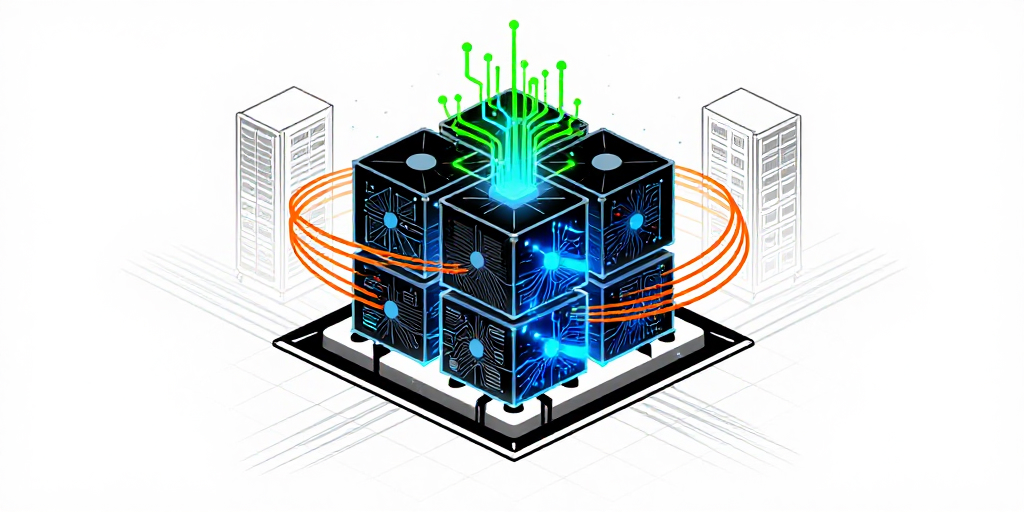
Modular Cooling Modules The modules will be designed for plug‑and‑play integration, featuring modular compressor banks, advanced heat‑pipe arrays, and high‑efficiency condenser units. Each module incorporates sensors and actuators that feed real‑time data to Keppel’s Operations Nerve Centre.
Operations Nerve Centre (ONC) The ONC is a digital platform that leverages artificial intelligence (AI) and machine learning (ML) algorithms to monitor system performance, predict maintenance events, and optimise load distribution across multiple units. By ingesting data from thousands of temperature, pressure, and vibration sensors, the ONC can reduce downtime by up to 15 % and improve energy utilisation by 10–12 % in early pilot deployments.
AI‑First Centre of Excellence The joint effort will establish a Centre of Excellence focused on engineering standardisation and the rapid replication of solutions across projects. The centre will serve as an innovation hub, providing a feedback loop between field deployments and iterative design improvements, thereby accelerating time‑to‑market for future modules.
Capital Expenditure Drivers
The partnership reflects a broader trend in the heavy‑industry sector where capital investment is increasingly directed toward systems that deliver measurable productivity gains and reduced operational costs. Key economic drivers include:
Energy Cost Pressure Global electricity prices have risen in the past two years, prompting data‑centre operators and large‑scale manufacturing plants to seek cooling solutions that offer lower power consumption without sacrificing reliability.
Carbon‑Reduction Mandates Stricter environmental regulations in major markets (e.g., the EU’s Energy Efficiency Directive and China’s carbon neutrality targets) incentivise the adoption of low‑carbon HVAC technologies. The partnership’s emphasis on reduced lifecycle emissions positions it favorably against regulatory benchmarks.
Digitalisation of Facility Management The shift toward digital twin modelling and predictive maintenance is a decisive factor in CAPEX allocation. Systems that integrate seamlessly with digital platforms—such as the ONC—enable facility managers to achieve higher utilisation rates, translating to a higher return on investment (ROI).
Supply Chain and Production Implications
Component Sourcing Midea’s global supply chain will provide critical components such as variable-speed compressors and advanced fan assemblies. Leveraging economies of scale, the partnership can negotiate lower unit costs, thereby enhancing the competitive pricing of the final modules.
Manufacturing Footprint The modular approach allows for decentralized manufacturing. By setting up production cells in regions with favorable labour costs—while maintaining strict quality controls—Keppel and Midea can mitigate supply chain disruptions, a concern highlighted by recent semiconductor shortages.
Logistics and Deployment Pre‑engineered modules reduce installation time from weeks to days. This efficiency translates directly into lower deployment CAPEX, especially for complex sites such as aviation hubs where downtime must be minimised.
Market Performance Snapshot
In a parallel development, Keppel’s real‑estate investment trust (REIT) focused on data‑centre assets announced a notable increase in its distribution per unit for the first quarter of the year. This uptick is attributed to a robust investment portfolio and the growing demand for high‑density, energy‑efficient data‑centre infrastructure. The rise in unit yield reflects positively on the REIT’s asset quality and operational performance, reinforcing investor confidence in the sector’s resilience and growth prospects.
Conclusion
The collaboration between Keppel Ltd. and Midea Building Technologies exemplifies a strategic convergence of manufacturing excellence, digital innovation, and sustainable design. By integrating modular, AI‑enhanced cooling systems with a sophisticated digital operations platform, the partnership addresses key productivity metrics—energy efficiency, reliability, and lifecycle cost—while aligning with macroeconomic trends that drive capital expenditure in heavy industry. The resulting synergy not only delivers tangible operational benefits across a spectrum of sectors but also positions the joint venture as a competitive force amid evolving regulatory and market landscapes.