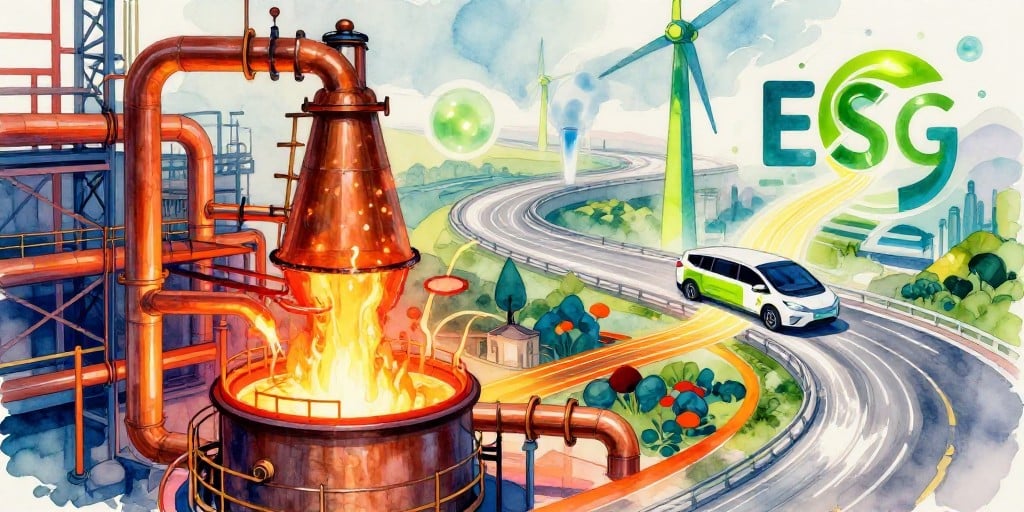
Journey Energy Inc. Expands Asset Portfolio and Refines Strategic Outlook Amid Shifting Energy Landscape
Journey Energy Inc. announced on Thursday, September 12, 2026 that it has completed a transaction securing a small working interest in the Keyera Rimbey natural‑gas processing facility. The deal, valued at a modest sum, is projected to generate additional processing revenue from third‑party activity while simultaneously lowering operating costs for the company’s own gas production in the Duvernay play. Management stated that the benefits of the transaction should materialise within the next few years, driven by the combined effect of the new revenue stream and anticipated cost savings.
In conjunction with the transaction, the company refreshed its corporate presentation on its website. The updated deck incorporates revised guidance for the current fiscal year following recent divestments and presents an initial outlook for the next year. Journey also confirmed its participation as a speaker at the Peters & Co. Annual Energy Conference in Toronto, where executives will discuss the company’s strategy in Alberta, including its focus on unconventional oil development and the expansion of its power‑generation projects.
Strategic Implications for Supply–Demand Dynamics
The Keyera Rimbey acquisition positions Journey to capitalize on the growing demand for natural‑gas processing capacity in Western Canada, a region currently experiencing a gradual shift in supply dynamics due to increasing unconventional gas production. By securing a working interest in a mature processing facility, Journey can:
- Generate Additional Revenue – Third‑party processing fees provide a steady income stream that is largely insulated from the cyclical nature of commodity prices.
- Reduce Production Costs – Access to on‑shore processing infrastructure lowers the cost of bringing Duvernay‑derived gas to market, improving margins even when spot prices dip.
- Enhance Flexibility – The facility’s proximity to existing pipelines allows Journey to adjust output volumes in response to market signals without incurring significant capital expenditures.
These factors help buffer the company against short‑term price volatility while reinforcing its long‑term asset base.
Technological Innovation and Energy Transition
Journey’s strategy to expand production through secondary and tertiary flooding projects reflects an emphasis on enhancing reservoir performance using advanced injection technologies. The company’s commitment to implementing accretive acquisitions further signals a willingness to adopt proven innovations from smaller operators, potentially accelerating the deployment of digital monitoring and automation systems that increase recovery rates and reduce energy consumption per barrel.
The announced focus on power‑generation projects aligns with the broader transition toward renewable and hybrid energy portfolios. While Journey remains rooted in unconventional oil development, the integration of power‑generation assets—particularly those leveraging natural‑gas‑fired combined‑cycle plants—provides a bridge to a cleaner energy mix. Such facilities can serve as baseload support while the company explores renewable integration options, such as solar or wind co‑generation.
Regulatory and Market Context
Canadian policy frameworks continue to incentivize the development of clean‑energy technologies and the reduction of greenhouse‑gas emissions. Recent amendments to the federal Carbon Pricing regime and provincial initiatives in Alberta have made it financially viable for oil‑and‑gas companies to invest in low‑carbon processes. By securing a stake in a processing hub, Journey can better align its operations with these regulatory imperatives, potentially qualifying for tax credits or rebates linked to emission reductions.
Commodity price analysis for the North American natural‑gas market indicates a steady upward trend for the next two years, supported by a gradual increase in U.S. LNG exports and a tightening of Canadian pipeline capacity. Meanwhile, crude oil spot prices have experienced a mild recovery after the 2025 mid‑stream contraction, suggesting a favorable environment for Journey’s unconventional oil projects.
Infrastructure developments, such as the expansion of the Alberta Energy Pipeline Network, will further facilitate the efficient movement of gas and oil to export markets. Journey’s strategic alignment with these infrastructural upgrades positions it to capture a larger share of the North American energy supply chain.
Conclusion
Journey Energy Inc.’s acquisition of a working interest in the Keyera Rimbey natural‑gas processing facility and its refreshed corporate guidance underscore a deliberate approach to balancing short‑term operational efficiencies with long‑term transition objectives. By leveraging technological innovations in reservoir management, pursuing accretive acquisitions, and aligning with evolving regulatory frameworks, the company aims to secure a resilient asset portfolio that can adapt to both current commodity cycles and the gradual evolution toward a more sustainable energy future.