
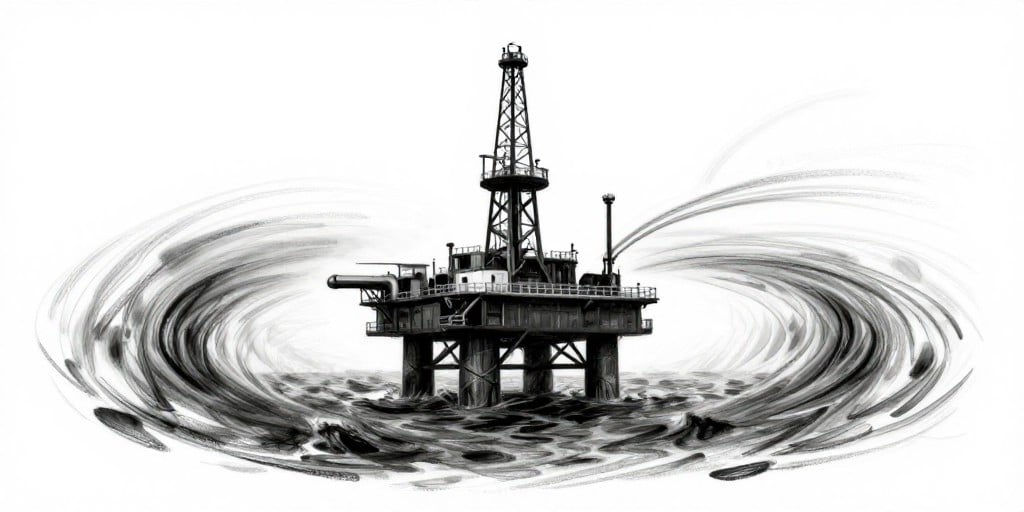
Corporate Analysis of the Johan Sverdrup Phase 4 Development
Aker BP has noted Equinor’s recent announcement that the potential Phase 4 development in the northern sector of the Johan Sverdrup field is progressing toward maturation. The company’s appraisal activities in the Tonjer and Geitungen areas have identified additional resources, with a preliminary estimate suggesting several tens of millions of barrels of oil equivalent (BOE). Aker BP holds a 31.7 % stake in the field and is collaborating with Equinor, Petoro and TotalEnergies on a subsea tie‑back concept that would leverage the existing Johan Sverdrup infrastructure. The plan aims to achieve a short lead time from investment decision to first production, targeting a potential start around 2029. The development strategy is intended to maximise value from already‑installed capacity and to phase adjacent resources in alignment with the partners’ broader objectives.
Supply–Demand Fundamentals
The Johan Sverdrup field, located in the North Sea, remains a cornerstone of Norway’s upstream sector. The North Sea’s supply side is stabilised by a mature fleet of offshore platforms, yet demand continues to be driven by global energy consumption patterns and geopolitical tensions. Recent data indicate that global oil demand is expected to plateau by the late 2020s, with a modest decline in the next decade as renewable penetration accelerates. In this context, the addition of Phase 4—comprising an estimated 20–30 million BOE—will reinforce supply in a region that is strategically positioned to meet European demand while mitigating the impact of supply disruptions from other basins.
Commodity price analysis underscores the relevance of this development. Brent crude futures have traded in the range of US $70–80 per barrel over the past six months, reflecting a balance between supply constraints in the Middle East and an uptick in demand from emerging economies. An incremental supply of 20 million BOE is unlikely to exert downward pressure on prices in the short term, given the field’s capacity to deliver 20–30 mboe/day. However, the project’s execution will be sensitive to fluctuations in crude prices, as the capital expenditure (CAPEX) for Phase 4 is projected at €3–4 billion, with an internal rate of return (IRR) of 10–12 % under current price assumptions.
Technological Innovations in Production and Storage
The subsea tie‑back concept proposed by the partners will capitalize on advanced subsea production technology, including remotely operated vehicles (ROVs) for installation and real‑time monitoring systems for production optimisation. The use of a floating production, storage, and offloading (FPSO) vessel—already installed for the main Johan Sverdrup production—will enable rapid deployment of tie‑back wells, reducing installation time and associated operational expenditures.
In parallel, the project will explore enhanced oil recovery (EOR) techniques such as CO₂ injection, aligning with Norway’s ambition to become a carbon capture and storage (CCS) hub. Early-stage feasibility studies suggest that CO₂ injection could increase recovery factors by 3–5 %, translating into an additional 2–3 million BOE over the field’s life. This technological integration not only improves recovery efficiency but also supports the European Union’s carbon neutrality goals by offering a pathway to offset the carbon intensity of the produced hydrocarbons.
Regulatory Impacts on Traditional and Renewable Energy Sectors
Norway’s regulatory framework has recently evolved to balance the expansion of fossil fuel infrastructure with the country’s renewable energy targets. The 2024 Energy Act amendments require any new offshore development to conduct a comprehensive environmental impact assessment (EIA) that explicitly considers the life‑cycle emissions of the project. Furthermore, the Ministry of Climate and Environment has introduced a carbon pricing mechanism that applies to upstream operations, with a projected increase to €60 per tonne of CO₂-equivalent by 2030.
These regulatory shifts directly influence the economics of Phase 4. The inclusion of CO₂ injection not only enhances recovery but also qualifies the project for a carbon credit offset under the EU Emissions Trading System (ETS). Additionally, the project’s alignment with the Norwegian Oil and Gas Sector’s Transition Plan—aimed at reducing the sector’s CO₂ intensity by 35 % by 2030—provides a potential incentive structure through government subsidies or tax deferrals.
On the renewable side, Norway’s aggressive expansion of offshore wind capacity—anticipated to reach 20 GW by 2035—creates a complementary market for the electricity generated by the Johan Sverdrup field’s associated gas plants. This synergy could reduce the need for new gas infrastructure, thereby mitigating regulatory risks associated with the “stranded asset” scenario.
Infrastructure Developments and Market Dynamics
The proposed tie‑back will utilise the existing Johan Sverdrup subsea infrastructure, including the 300 km pipeline that delivers produced hydrocarbons to the onshore processing facility. By integrating new wells into the established pipeline network, the project circumvents the need for costly new subsea lines and reduces the overall environmental footprint. Moreover, the proximity to the existing processing plant allows for a streamlined logistics chain, enabling efficient storage and transport to market.
From a market perspective, the project’s timing coincides with a window of high demand for upstream services in the North Sea. The region has witnessed a 12 % increase in subsea work orders over the past year, driven by the need to extend the life of mature fields. This upward trend enhances the potential for cost synergies across the partner group, as shared services—such as engineering, procurement, and construction (EPC)—can be optimised across multiple projects.
Balancing Short‑Term Trading with Long‑Term Transition Trends
In the short term, Phase 4 is expected to contribute positively to the cash flow of the partner consortium, with first production anticipated around 2029. The rapid deployment model—capitalising on existing infrastructure and advanced subsea techniques—minimises the lead time, thereby reducing financial risk associated with commodity price volatility. Trading strategies that hedge against price swings will become critical, as the field’s output will add to the supply mix in a market that is increasingly sensitive to geopolitical shocks, such as the recent Eastern European conflicts.
In the long term, the integration of EOR and CCS technologies positions the project within the broader energy transition narrative. By reducing the carbon intensity of the extracted hydrocarbons and providing a platform for CO₂ storage, the development aligns with both national and EU climate objectives. This dual focus on traditional energy security and renewable transition offers a balanced portfolio for investors, enabling a gradual shift towards more sustainable energy production without compromising immediate operational returns.
Conclusion
Aker BP’s involvement in the Phase 4 development of the Johan Sverdrup field exemplifies a strategic approach to capitalise on existing offshore assets while incorporating technological and regulatory innovations. By leveraging subsea tie‑back infrastructure, exploring EOR and CCS pathways, and aligning with Norway’s regulatory framework, the project seeks to maximise value for all partners. The development’s timing—aligned with both short‑term market dynamics and long‑term energy transition goals—positions it as a pivotal contributor to Norway’s evolving energy landscape.