
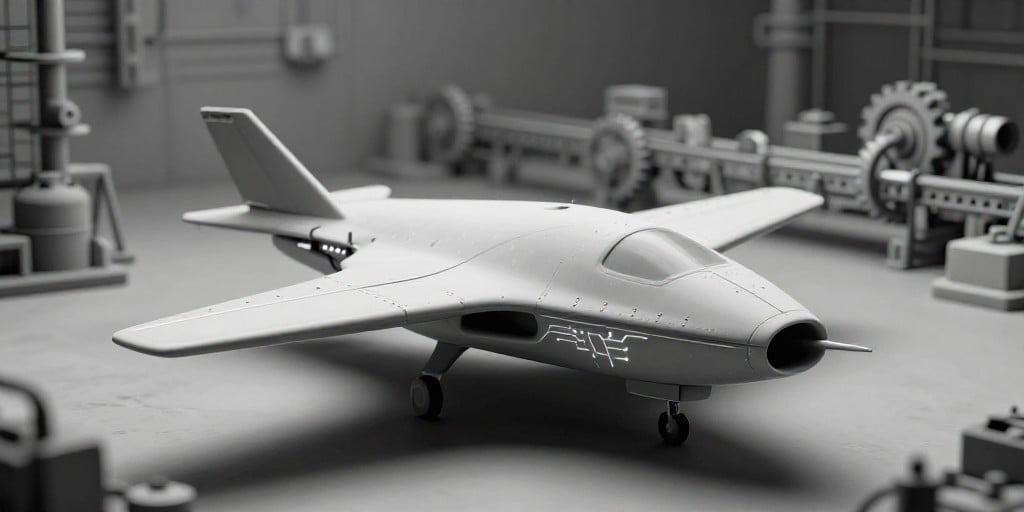
Corporate Update: Mitsubishi Heavy Industries Advances Unmanned Aerial System Capabilities
Mitsubishi Heavy Industries (MHI) has announced the rapid development of a prototype interceptor drone designed to counter incoming attack drones. The initiative aligns with Japan’s evolving defense strategy, which increasingly favors unmanned aerial systems (UAS) and artificial intelligence integration. By leveraging its longstanding expertise in helicopter technology, MHI plans to transition the prototype into small‑batch production, enabling continuous refinement of the drone’s specifications.
Accelerated Development Through Cross‑Functional Collaboration
The prototype was completed in an unusually short timeframe, a result of close coordination between MHI’s research division and business units. This approach reflects a broader trend in defense manufacturing, where iterative development cycles are becoming a competitive advantage. While start‑ups often dominate early‑stage innovation, established firms like MHI can capitalize on their manufacturing infrastructure, quality assurance processes, and existing supply chains to move swiftly from concept to production.
Strategic Context and Market Dynamics
MHI’s advancement comes against a backdrop of intensified governmental efforts to integrate UAS into national security operations. The conflict in Ukraine has underscored the strategic value of drones, prompting many countries to accelerate their own unmanned capabilities. In Japan, collaborations between defense contractors and civilian drone manufacturers are under increasing scrutiny, raising questions about public acceptance and the potential impact on civilian infrastructure safety.
MHI’s focus on a defensive interceptor aligns with the broader ecosystem of Japanese firms—such as Kawasaki Heavy Industries and international partners—working to modernize Japan’s military assets. By offering a small‑batch production model, MHI positions itself to respond more rapidly than purely commercial start‑ups, potentially securing a competitive edge in a market that values both speed and reliability.
Implications for Stakeholders
- Defense Sector: The interceptor drone enhances Japan’s aerial defense posture, providing a countermeasure against the growing threat of hostile drones.
- Industrial Competitors: MHI’s rapid prototyping and iterative production cycle may set a new benchmark for efficiency and responsiveness in the defense electronics market.
- Civil Society: The deployment of advanced unmanned systems invites debate over civilian safety and the ethical dimensions of increasingly autonomous warfare technologies.
Mitsubishi Heavy Industries’ initiative exemplifies how a legacy industrial player can pivot into high‑tech defense arenas while maintaining its core competencies. The company’s strategy underscores the importance of agile development, cross‑departmental collaboration, and a willingness to engage with emerging regulatory and societal concerns as the landscape of unmanned warfare evolves.