
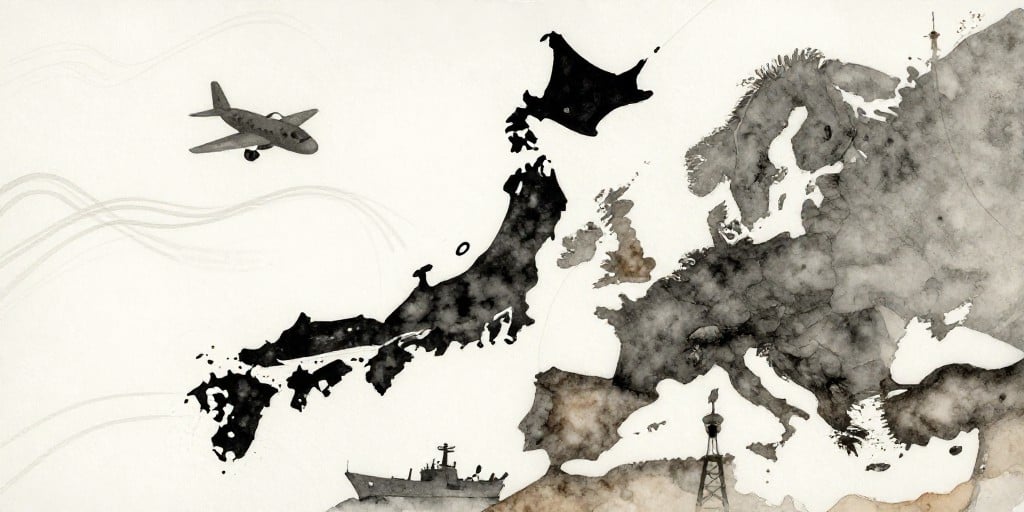
Japan’s Defence Sector Shifts Toward an Integrated Industrial Approach under the Global Combat Air Programme
Overview
Japan’s defence sector is transitioning toward a more integrated industrial model, exemplified by the Global Combat Air Programme (GCAP). The programme, spearheaded by Mitsubishi Heavy Industries, BAE Systems PLC, and Leonardo, has moved from preliminary design to concrete production planning. BAE Systems, the British partner, is actively developing the advanced fighter and is positioned to become a significant contributor to the programme’s future earnings profile.
Strategic Positioning of BAE Systems
Recent remarks from BAE Systems’ leadership indicate that the company expects GCAP to have a measurable impact on its financial performance in the near future. While specific earnings timelines remain undisclosed, executives suggest that the project could begin generating positive revenue within a few years of operational launch. This aligns with BAE’s broader strategy to expand its defence portfolio and leverage international collaborations.
- Revenue Anticipation: The partnership with Japan and Italy underscores a growing trend of cross‑border cooperation in defence manufacturing, aiming to streamline development, shorten production timelines, and share technological expertise.
- Market Impact: BAE’s involvement is expected to strengthen its position in the European defence market while reinforcing ties with key Asian partners.
Cross‑Sector Collaboration and Economic Implications
The GCAP collaboration illustrates a broader movement toward integrated, multinational defence projects that combine the strengths of domestic and foreign industrial ecosystems. Such alliances have several economic and strategic ramifications:
| Aspect | Description |
|---|---|
| Technology Transfer | Sharing of advanced avionics, propulsion systems, and weapons integration techniques enhances the capabilities of all partners. |
| Supply Chain Optimization | Joint procurement and shared logistics reduce unit costs and improve lead times across the programme. |
| Market Expansion | Each partner gains access to new customer bases, particularly in regions where the partner has an established presence. |
| Risk Mitigation | Diversified investment spreads financial risk and aligns long‑term R&D goals with short‑term production objectives. |
These dynamics mirror trends observed in other high‑tech sectors, such as semiconductor manufacturing and renewable energy, where cross‑border collaboration accelerates innovation and spreads capital expenditure burdens.
Industry‑Specific Dynamics
Within the aerospace defence sector, the GCAP represents a pivot toward platform‑centric development rather than siloed national programmes. Key drivers include:
- Strategic Autonomy: Nations seek to reduce dependence on single‑source suppliers for critical military assets.
- Cost Efficiency: Shared R&D and production economies of scale lower the per‑unit cost of advanced fighters.
- Technological Advancement: Integrated platforms facilitate rapid incorporation of cutting‑edge technologies, such as stealth coatings and advanced sensor suites.
By aligning with these drivers, GCAP positions itself as a benchmark for future defence programmes that balance national security imperatives with commercial viability.
Broader Economic Trends
The GCAP’s progression into an industrial build‑up phase reflects a global shift toward multi‑national defence projects that enhance both national security and economic competitiveness. Comparable initiatives include the Eurofighter Typhoon programme and the F‑35 Joint Strike Fighter, both of which demonstrate how cross‑border collaboration can yield significant commercial opportunities alongside strategic benefits.
- Export Potential: Mature programmes often generate secondary revenue streams through export sales and maintenance contracts.
- Innovation Spillover: Technological developments in defence can catalyze civilian aerospace and high‑performance material sectors.
- Industrial Base Strengthening: Domestic suppliers benefit from long‑term contracts, fostering skilled workforce retention and technological up‑skilling.
Conclusion
The developments surrounding BAE Systems and the GCAP highlight a concerted effort among leading defence companies to advance a next‑generation fighter platform while pursuing greater commercial viability. The programme’s evolution into an industrial build‑up phase signals a strategic alignment of technological, economic, and geopolitical objectives, positioning the partners to capture emerging market opportunities in the rapidly evolving global defence landscape.