
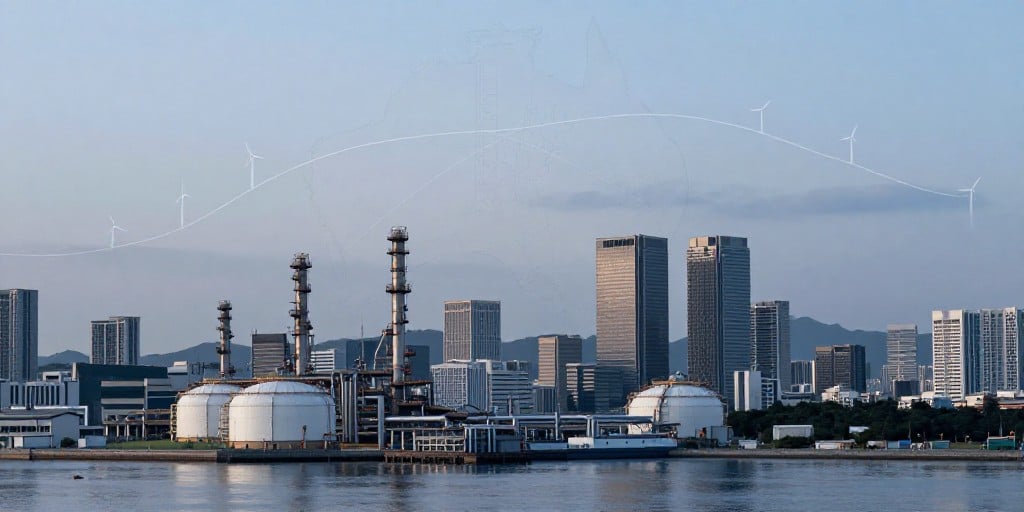
Japanese Equity Index Gains on Strength in Financial, Technology, and Energy Sectors
Recent trading data reveal a modest rise in Japan’s benchmark equity index, a movement that stands in contrast to the slight downturn observed in many Western markets. The up‑trend is largely attributable to solid performance in Japan’s financial and technology sectors, complemented by incremental gains from energy and industrial stocks. This combination underscores a broader narrative of investor confidence in domestic natural‑resource assets amid evolving global energy dynamics.
Energy Spotlight: INPEX Corp.
Among the energy names driving the index’s ascent is INPEX Corp., whose shares have appreciated following developments in Japan’s liquefied natural gas (LNG) sector. The company’s active participation in LNG infrastructure projects—especially those tapping nascent domestic gas supplies—has reinforced investor sentiment. Analysts highlight INPEX’s strategic positioning in a region increasingly attractive to foreign capital for LNG development. This alignment with market expectations of sustained demand for energy exports positions INPEX favorably for both domestic and international trade.
Key factors influencing INPEX’s valuation include:
- Infrastructure Expansion: Recent contracts for LNG export terminals and pipeline systems reinforce the company’s supply chain resilience.
- Domestic Supply Growth: Japan’s pivot toward LNG to offset dwindling coal and nuclear output has bolstered domestic demand forecasts.
- Foreign Investment Appeal: The region’s regulatory environment and resource abundance continue to draw international partners, adding liquidity to the market.
Global Links: U.S. Shale Operators Eye Australian Gas
Simultaneously, U.S. shale operators and private‑equity investors are turning their attention to Australia’s Beetaloo Basin, situated north of Kakadu National Park. The basin’s vast potential for large‑scale production has attracted interest from major U.S. shale firms. The strategic objective is to integrate this development with existing LNG export facilities, thereby creating a seamless supply chain that could enhance Australia’s gas output.
The implications of a successful Beetaloo Basin development are multi‑faceted:
- Supply Chain Synergy: Integration with LNG terminals can reduce transportation bottlenecks and lower export costs.
- Market Diversification: Additional gas output can help meet the rising global demand, particularly from Asian economies.
- Capital Flow: Inflows from U.S. shale operators and private‑equity investors could stimulate ancillary sectors such as engineering, drilling, and logistics.
Market Sentiment and Macro‑Economic Context
While energy and industrial stocks have posted incremental gains, the broader market remains cautiously optimistic. Geopolitical tensions, especially those influencing oil prices, continue to inject volatility into investor behavior. Nonetheless, sustained attention to domestic gas projects and potential LNG infrastructure expansion are viewed as pivotal drivers that could uphold growth momentum in the sector and maintain the attractiveness of companies like INPEX in the near term.
In conclusion, Japan’s equity index performance reflects a confluence of sectoral strengths and emerging global energy trends. The interplay between domestic infrastructure projects, foreign investment inflows, and evolving supply dynamics presents a compelling case for continued investor engagement in the region’s financial and technological arenas.