Executive Summary
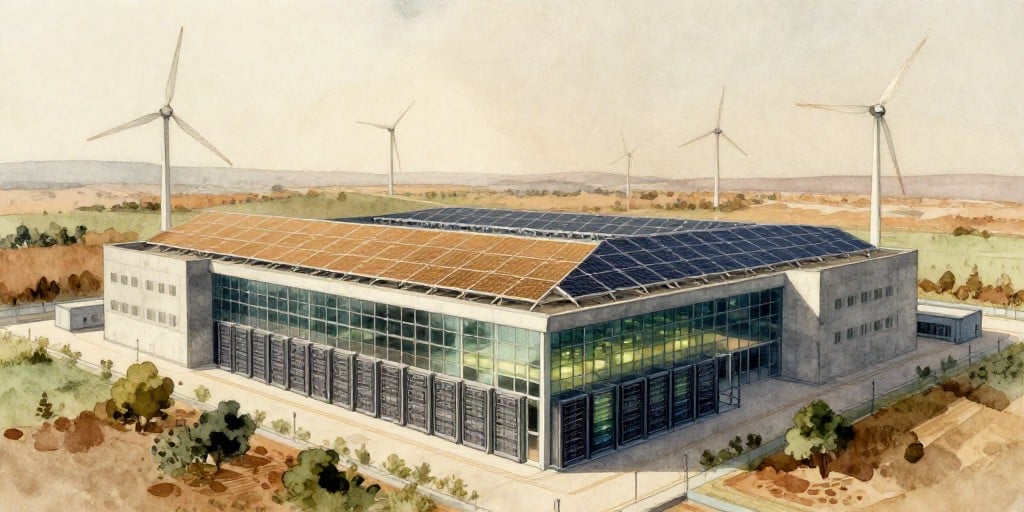
Jabil Inc. has entered a strategic partnership with India’s Adani Group to develop an AI‑ready data‑center and infrastructure manufacturing platform. The collaboration envisions a gigawatt‑scale AI rack‑manufacturing facility capable of serving both domestic and international data‑center operators. By integrating Adani’s renewable‑energy, construction, and logistics assets with Jabil’s manufacturing expertise, the joint venture seeks to establish a vertically integrated supply chain for high‑performance computing (HPC) hardware, thereby reducing reliance on imported components and positioning India as a global hub for AI infrastructure.
Technical Context
Gigawatt‑Scale AI Rack Manufacturing
A gigawatt‑scale facility implies the ability to produce and assemble racks that collectively provide up to 1 GW of power consumption capacity. Each rack would house dense compute nodes, high‑bandwidth interconnects, and advanced cooling solutions. The scale requires:
| Component | Typical Specification | Impact on Manufacturing |
|---|---|---|
| CPU/Accelerator | 8–16 core Xeon W / Nvidia H100 | High power density, requires precise thermal management |
| Memory | 1 TB DDR4/DDR5 | Large form‑factor DIMM integration and error‑correction |
| Storage | 4–8 PB NVMe SSD | High‑speed I/O, needs low‑latency chassis design |
| Interconnect | 100 GbE / 400 GbE | Requires multi‑stage optical switching and cable management |
| Cooling | Direct‑liquid / immersion | Demands custom heat‑exchanger modules and coolant flow control |
| Power | 48 V DC / 400 V AC | Modular PSU design with redundant supply paths |
The facility must support rapid re‑tooling for new processor generations and evolving AI workloads, which demands modular architecture and standardized interfaces.
Manufacturing Process & Product Development Cycle
Jabil’s manufacturing process aligns with the Design‑for‑Manufacturing (DFM) methodology:
- Design Validation: Simulation of thermal, mechanical, and electrical performance under full load conditions.
- Rapid Prototyping: 3‑D printed chassis components and CNC‑milled brackets for quick iteration.
- Process Integration: SMT (Surface‑Mount Technology) assembly for high‑density PCB layouts, with inline inspection (AOI) and X‑ray analysis.
- Yield Optimization: Statistical Process Control (SPC) to monitor component reliability and defect rates.
- End‑to‑End Testing: Automated test rigs that emulate real‑world AI workloads, measuring throughput, latency, and power draw.
The product development cycle is compressed from a typical 18–24 months to 12–18 months through shared IP, component pre‑qualification, and a dual‑site production model (India and the U.S.).
Performance Benchmarks & Trade‑offs
Computational Throughput
- Baseline: 10 TFLOPS per rack with H100 GPUs.
- Projected: 15 TFLOPS after incorporating next‑generation H100s (H100x) and 4 TB memory per node.
This represents a 50% increase in raw compute capacity, aligning with the growing demand for large‑scale AI training and inference.
Power Efficiency
- Current: 7.5 W per GFLOPS.
- Target: 5.0 W per GFLOPS via advanced cooling and power‑distribution design.
This trade‑off reduces operational expenses but increases the need for higher‑grade cooling infrastructure, necessitating deeper integration with Adani’s renewable‑energy systems.
Cooling & Thermal Management
- Direct‑Liquid Cooling: 30 °C temperature differential, enabling tighter rack spacing.
- Immersion Cooling: 10–15 °C temperature differential but requires higher initial capital for coolant systems.
Jabil’s hybrid cooling approach—direct‑liquid for core modules and immersion for peripheral components—balances cost and performance.
Supply Chain Considerations
Component Sourcing
| Component | Current Supplier | Local Alternative | Impact |
|---|---|---|---|
| GPUs | Nvidia (USA) | Indicated partnership with local fab | Reduces import risk |
| Memory Modules | Micron / Samsung | Potential Indian OEM | Cost savings |
| PCBs | TSMC / Samsung | 2nd‑tier local PCB fabs | Lower lead times |
| Cooling Fluids | Custom | Local chemical firms | Supply chain resilience |
By establishing a vertically integrated supply chain, the joint venture mitigates geopolitical risks and currency volatility.
Logistics & Construction
Adani’s existing Port of Kandla, Visakhapatnam, and Chennai ports enable rapid inbound logistics for raw materials and outbound finished racks. Their construction arm can deliver purpose-built data‑center enclosures within 9–12 months, a significant advantage over third‑party construction contracts.
Intersection of Hardware Capabilities & Software Demands
The rise of foundation models and edge AI places stringent demands on hardware:
- Low‑latency interconnects for distributed training across multiple racks.
- Large‑batch inference requires high memory bandwidth and persistent memory pools.
- Software frameworks (TensorFlow, PyTorch) benefit from FP32/FP64 mixed precision enabled by GPUs and specialized ASICs.
Jabil’s design philosophy emphasizes software‑first architecture, incorporating PCIe 5.0, CXL (Compute Express Link), and NVLink to support seamless integration with contemporary AI frameworks. The collaboration will also focus on secure enclaves for data privacy, leveraging Intel SGX and AMD SEV technologies.
Market Positioning & Strategic Impact
- Competitive Differentiation: The gigawatt‑scale facility will enable Jabil‑Adani to offer end‑to‑end AI solutions—hardware, software, cooling, and power—at a competitive price point.
- Local Talent Development: The joint venture will create high‑skill employment opportunities, fostering an ecosystem for semiconductor engineering and data‑center operations.
- Renewable‑Powered AI: By integrating Adani’s renewable energy assets, the platform can achieve carbon‑neutral operation, appealing to ESG‑conscious customers.
- Global Expansion: The supply chain model can be replicated in other emerging markets, enabling rapid deployment of AI infrastructure in Africa, Southeast Asia, and Latin America.
Conclusion
The partnership between Jabil Inc. and the Adani Group represents a strategically significant convergence of advanced manufacturing, renewable energy, and AI infrastructure. By addressing technical challenges—from high‑density compute, power efficiency, and cooling to supply‑chain resilience—the joint venture positions itself as a formidable player in the global AI hardware market. The outcome will likely catalyze broader industry shifts toward vertically integrated, energy‑efficient AI data‑center manufacturing and solidify India’s role as a pivotal hub in the global digital economy.