A Strategic Pivot in the Digital Mining Landscape: IREN Ltd.’s Transition to AI‑Centric Operations
IREN Ltd. is navigating a pronounced shift in its core business model, moving from a legacy Bitcoin‑mining paradigm toward a cloud‑based artificial‑intelligence (AI) infrastructure platform. This reorientation is anchored by substantial contracts with Microsoft and a sweeping procurement of Nvidia B300 GPUs, underscoring a broader industry trend toward commoditizing AI workloads on high‑performance computing platforms.
The AI Migration Blueprint
| Item | Details |
|---|---|
| Hardware Acquisition | 150,000 Nvidia B300 GPUs (currently in procurement) |
| Capital Structure | Combination of sizable loan financing and Microsoft advances covering the bulk of capital expenditures |
| Data‑Center Development | Sweetwater 1 sub‑station and a 1.6 GW campus in Oklahoma; projected 50 MW/month incremental capacity upon Texas ERCOT grid integration |
| Revenue Trajectory | Anticipated modest rebound in Q3 revenue, yet analysts predict a small loss per share due to transitional costs |
| Equity Strategy | Planned at‑the‑market offering to mitigate dilution concerns |
The company’s upcoming quarterly report, slated for mid‑May, will serve as a litmus test for the operational tempo of this transformation and whether the capital injections are beginning to yield measurable revenue.
Why the Shift Matters
IREN’s pivot is emblematic of a larger industry recalibration. While Bitcoin mining has historically attracted attention for its energy intensity and volatile returns, AI‑centric workloads offer a more predictable revenue stream tied to the proliferation of machine‑learning applications across enterprises. The partnership with Microsoft, which provides both financial support and strategic integration pathways, positions IREN to tap into the growing demand for cloud‑based AI services.
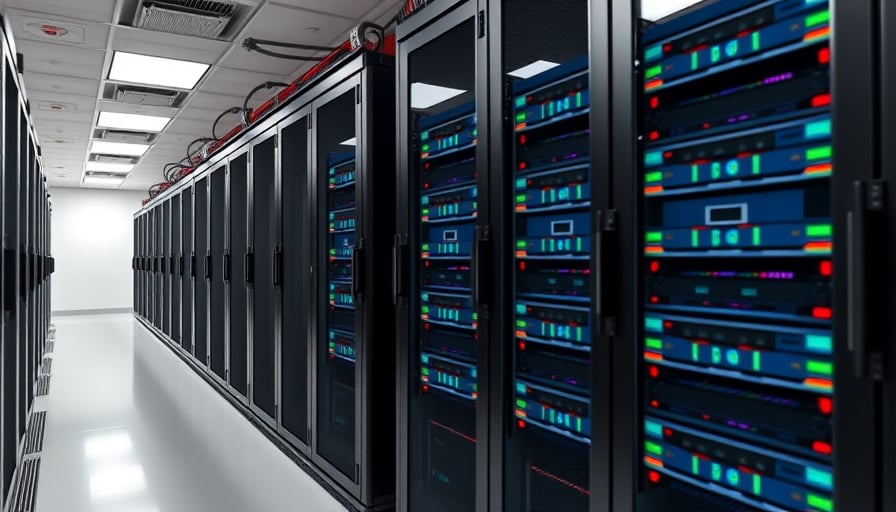
However, this transition is not without risk. The deployment of 150,000 GPUs requires robust cooling, power distribution, and network infrastructure—areas where IREN must ensure operational excellence to prevent costly downtimes. The reliance on large loans and Microsoft advances also raises questions about debt servicing and potential conflicts of interest if Microsoft’s strategic priorities shift.
Technical and Societal Implications
Energy Footprint and Grid Dependence
The planned 1.6 GW campus in Oklahoma is designed to deliver a 50 MW/month incremental capacity, a figure that reflects the escalating demand for computational power in AI. Yet, this expansion underscores a significant energy commitment. If IREN’s facilities lean heavily on fossil‑fuel‑based power, they could contribute to carbon emissions, counteracting broader sustainability goals. Conversely, integration with renewable energy sources—such as Oklahoma’s growing wind capacity—could mitigate these environmental concerns. A recent case study from the University of Texas’s AI research center demonstrates that coupling AI workloads with grid‑timed renewable energy reduces emissions by 30 % without sacrificing performance.
Data Privacy and Security
Deploying AI workloads in a cloud environment introduces new layers of data exposure. IREN must implement rigorous encryption, access controls, and compliance frameworks (e.g., GDPR, CCPA) to safeguard sensitive datasets. Failure to do so could result in regulatory penalties and reputational damage. A notable example is the 2023 data breach at a mid‑size AI service provider that exposed proprietary models and customer data, resulting in a $45 million fine and a 12‑month market share loss.
Workforce Dynamics
The migration from mining to AI shifts the skill set required within IREN’s workforce. Engineers must transition from ASIC optimization to GPU‑cluster management, software engineering, and data science. This upskilling presents an opportunity for internal talent development but also poses a risk if the company cannot retain or attract the necessary expertise, potentially slowing implementation timelines.
Financial Footing and Investor Sentiment
IREN’s current earnings from Bitcoin mining have contracted, mirroring the broader market softness in cryptocurrency mining profitability. Analysts forecast a modest revenue rebound in the next quarter, yet they also anticipate a small loss per share due to the high upfront capital expenditures associated with the AI transition. Investor sentiment remains mixed:
- Cautious Analysts emphasize the implementation risk, noting that the time lag between GPU procurement and fully operational data‑center capacity could erode expected returns.
- Optimistic Viewpoints point to diversified funding sources, long‑term Microsoft contracts, and the growing AI market as mitigating factors.
The forthcoming earnings release will be pivotal in assessing whether these substantial investments are beginning to materialize into tangible progress toward IREN’s AI revenue targets.
Risk–Benefit Analysis
| Risk | Benefit | Mitigation Strategy |
|---|---|---|
| Capital Intensity | Access to AI‑driven revenue streams | Leverage Microsoft advances to reduce debt load |
| Operational Complexity | Positioning as a leading AI infrastructure provider | Adopt modular data‑center designs and automated workload orchestration |
| Regulatory Exposure | Ability to meet compliance for diverse clients | Implement a dedicated compliance officer and third‑party audits |
| Energy Sustainability | Potential to partner with renewable projects | Secure Power Purchase Agreements (PPAs) with local utilities |
Conclusion
IREN Ltd.’s strategic pivot from Bitcoin mining to a cloud‑based AI infrastructure model illustrates the broader shift within the digital asset and technology sectors. While the partnership with Microsoft and the procurement of 150,000 Nvidia GPUs signal strong commitment, the path ahead is laden with technical, financial, and societal challenges. The upcoming quarterly report will be a crucial barometer, not only for IREN’s operational momentum but also for the industry’s evolving perspective on balancing profitability with sustainability, security, and ethical considerations in AI deployment.